Pennsylvania considers whether to delay enforcing Medicaid work requirements
Nov 24, 2026 | 3:36 pm ET
Description
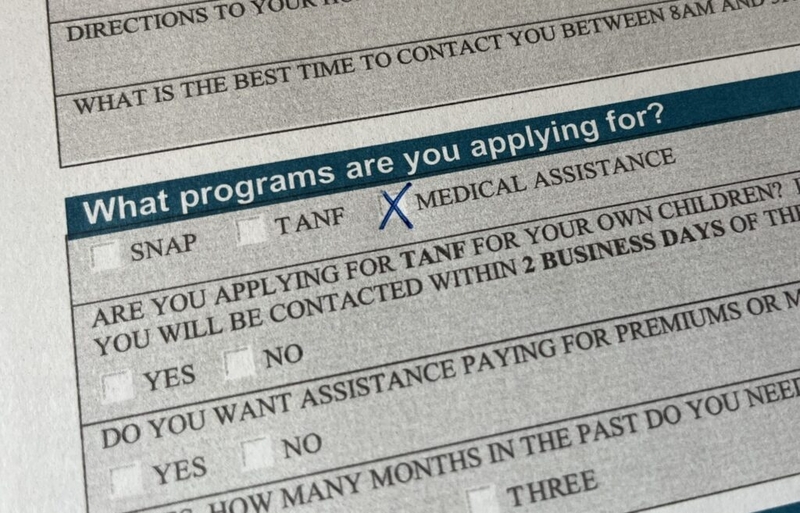
Economic assistance application for the South Dakota Department of Social Services. (Makenzie Huber/South Dakota Searchlight)
Earlier this month, states learned that they could delay enforcing work requirements for their residents on Medicaid. But Pennsylvania is “reviewing” guidance from the Centers for Medicare and Medicaid Services (CMS) “to determine next steps” before a December deadline.
“It is important to understand that this option is not a full delay of Medicaid work requirements or any other change to Medicaid required by (the law),” said a DHS spokesperson. “Taking advantage of this hold harmless option would only delay eligibility determinations and disenrollments made based on compliance with the new rules, it does not suspend the need for individuals to complete their Medicaid renewal.”
According to health policy researchers at KFF, 16 states have said they will delay, while another three said they would “likely” adopt the “hold harmless” option. Pennsylvania is one of 18 states that has yet to decide.
Amy Lowenstein, the director of policy with the Pennsylvania Health Law Project, noted that the commonwealth will still need to check if someone complies during that time, but won’t have to terminate anyone’s coverage.
“They’ll still go through the actions, but if someone turns out to be non-compliant, then they’re not supposed to take negative action,” Lowenstein said in a recent webinar.
The state has until Dec. 11 to reach a decision, and the hold harmless period would last until the end of June. Otherwise, the work requirements — or volunteer hours — begin in January.
The new rules are a priority for the Trump administration and only impact a select number of enrollees. There are exemptions for caregivers, students and others, but advocates warn that documenting these exemptions and tracking new requirements will be a barrier for people in need of health coverage.
“While this is an important option that all states should pursue, merely delaying the harm of a horrible law is not a sustainable solution,” said the Legal Action Center in a recent release, adding that participants may be confused by several rule changes.
“For people with substance use disorders and people leaving incarceration, such confusion could lead them to delay or stop seeking treatment and other care they need. That’s an enormous harm in itself, and yet another reason that Congress must repeal the rules once and for all,” the statement continued.
The organization pointed to newly imposed work requirements for food benefits. The state Department of Human Services estimates that 98,000 Pennsylvanians no longer receive food benefits due to those rules. The Legal Action Center appealed to the incoming Democratic majority in Congress, urging them to repeal requirements for both programs “to prevent further coverage losses and restore the vital food assistance many families have already lost.”
U.S. Rep. Hakeem Jeffries, the Democratic nominee for House speaker, said that the Medicaid cuts included in the bill “should’ be reversed, but the process could be lengthy.
Some states move ahead with work requirements amid confusion
A few states have pushed their work requirements out ahead of the planned rollout, some more smoothly than others. In Nebraska, for example, the vast majority of recently denied applicants simply failed to provide the proper documentation, meaning they could still qualify.
Stakeholders told States Newsroom that one of the biggest challenges was communicating various exemptions. Requirements can be met through work, by volunteering or going to school. But people with a documented substance use disorder, recently released prisoners and parents of young children are also exempt.
Previously, states redetermined someone’s eligibility annually — but now, those must happen, at a minimum, twice a year. An estimated 63% of Medicaid enrollees work 80 hours a month or attend school, and another 15% were exempt because they qualified as caregivers or had a disability. Of the remainder, some are retired or may be unable to find work for other reasons.
A state DHS spokesperson said the agency had hired more than 700 caseworkers between November 2025 and October 2026, the staff who would be responsible for verifying if Pennsylvanians meet work requirements.
“It does take up to a year for a new caseworker to complete comprehensive training and master the skills needed to take on full caseload processing, which is what will make an impact on priorities like Medicaid redeterminations,” the spokesperson continued.
An early point of contention were rules around medical frailty, a category that Lowenstein said was “difficult to judge.”
“DHS is going to do its best to try to figure out who falls into this exemption using information it already has,” Lowenstein said. “Hopefully, if that works, that means people will not have to do a lot to demonstrate this.”
The law passed by Congress carved out an exemption for someone who is medically frail, such as someone with an HIV diagnosis or a disability like blindness. But the administration added a new rule over the summer that someone’s ability to work must be “significantly” impaired to qualify.
Pennsylvania joined onto a multi-state lawsuit to overturn the rule, and a judge ruled in favor of the states in late October.
Harrisburg, PA