‘Invaluable’ crisis intervention services reduce burdens on Oklahoma first responders
Nov 24, 2026 | 6:30 am ET
Description
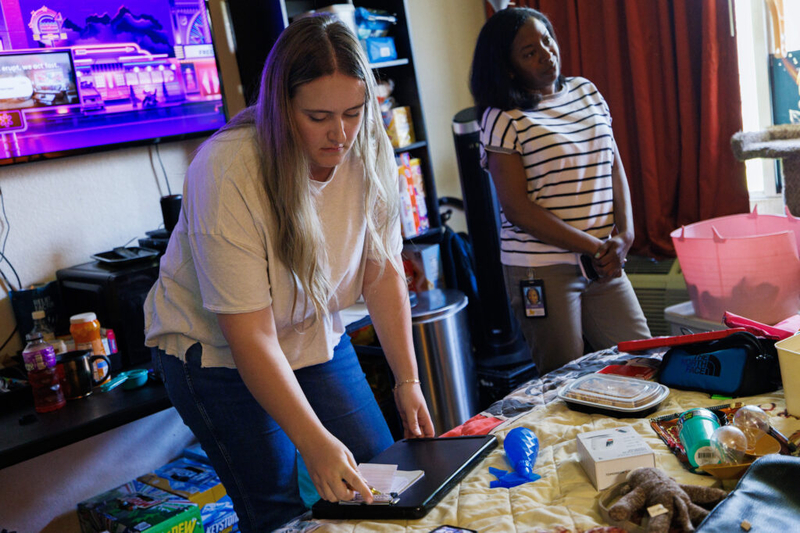
COPES case manager Andrea Potter, left, and crisis therapist Anthea Miller visit a client, Wednesday, June 10, 2026, in Tulsa. (Photo by Nate Billings/For Oklahoma Voice)
Editor’s note: This story discusses suicide and mental health crises. If you or someone you know needs help, call or text 988, the U.S. suicide and crisis lifeline, or access online chat at 988lifeline.org.
TULSA, Okla. — Living in a cluttered Tulsa hotel room, an Oklahoma woman struggling with feelings of hopelessness called an emergency health crisis line seeking help.
The woman, who mental health professionals knew had a history of suicide attempts, substance use and hallucinations, had lost access to her healthcare provider and needed help being reconnected to her doctor and support system.
But rather than sending a police officer, social worker and crisis therapist Anthea Miller and her colleague, case manager Andrea Potter, were dispatched to her hotel room.
The two Community Outreach Psychiatric Emergency Services employees spent an hour assessing the woman’s mental health while listening to her speak at length about past traumas, health- and career-related issues, a pervasive feeling of hopelessness and an unwillingness to live.
At the end of the visit, Miller told the woman that someone with her team would return to check on her.
Being present is huge in a crisis and can put someone at ease, even in moments of trauma, she said.
“We try to keep things conversational,” Miller said. “She was willing to work on a safety plan but if the intent to harm herself was there, we would have worked on an inpatient assessment.”
Community Outreach Psychiatric Emergency Services, better known as COPES, serves the Tulsa area and is one in a statewide network of mental health crisis mobile response units operated by Oklahoma’s certified community behavioral health clinics.

The crisis units, which respond for free, are designed to allow trained professionals to tackle mental health needs. This frees up law enforcement to focus on their communities’ more pressing public safety needs, allows others with more specialized mental health training to respond and alleviates strains on emergency rooms, hospitals and jails.
Last year, employees of these mobile crisis units operated by certified community behavioral health centerswere also dispatched to the vast majority of the tens of thousands of calls made to Oklahoma’s 988 mental health crisis helpline, including in rural areas of the state.
‘Invaluable’
Tulsa Police Capt. Malcolm Williams, who oversees the department’s mental health unit, said he can’t imagine what his job would look like without the “invaluable” COPES partnership.
COPES clinicians help people connect to services and make follow-up appointments, freeing up officers from responding to noncriminal calls, Williams said.
The program also keeps more people out of the criminal justice system and results in fewer unnecessary hospital visits, he said.
“The big thing for us is that it has allowed officers to get back in service quicker, which means that we’re not tying up resources on a call for maybe an hour or two,” he said.
Between October 2025 and the end of September 2026, COPES’ partnership with 911 diverted more than 5,100 mental health-related calls away from first responders, saving Tulsa-area emergency personnel over 10,100 hours during that year, according to a report from the Tulsa Police Department.
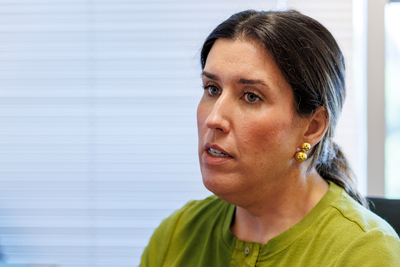
Emily Farmer, senior program director for COPES, said she’s been with the program since 2017 when she started out helping with calls focused on children.
COPES, which has a team of about 80 employees that specifically serve the Tulsa area, is also a field response team for the 988 suicide and crisis hotline and works with local first responders such as the Tulsa Police and Fire departments to embed clinicians to handle some mental health-related 911 calls. It also operates its own direct hotline for Tulsa-area calls.
On average, COPES alone receives about 7,000 calls a month on its direct hotline. Employees make about 3,000 follow-up phone calls a month, Farmer said. During the last budget year, COPES worked 17,500 cases with adults and 2,700 with children.
Crisis calls do not always mean someone is actively suicidal.
“I could answer the phone, and it could be someone who’s saying, ‘Everything’s fine, I just need to know how to get connected with mental health help.’ Or ‘I’m not suicidal, but I really am struggling, so can you just talk to me for a moment?’ All the way up to someone on the phone who’s imminently suicidal,” Farmer said.
Tulsa and the surrounding communities are safer because of the crisis intervention program and its partnerships with first responders, Farmer said.
“We’re able to make sure that the right person is there to provide the right response at the right time, that our law enforcement resources aren’t tied up dealing with mental health,” she said. “And that also means that our community is safer because the experts are dealing with mental health crises.”
‘Somebody stepped in and helped’: Advocates press to keep Oklahoma’s mental healthcare ‘safety net’
A federal model
For nearly a decade, the programs operated by certified community behavioral health clinics have served as a lifeline for hundreds of thousands of Oklahomans who need access to mental health or substance use treatment.
The federally designed model, which among other things requires community behavioral health providers to offer 24-hour crisis intervention services, now plays an integral role in addressing Oklahoma’s mental health crisis. The state has some of the nation’s highest rates of mental illness, substance misuse and suicide.
From Oklahoma’s selection for the pilot program in 2017 through most of 2025, the federal government paid for around 90% of the operating costs to help get the healthcare model off the ground. But when the pilot period ended, states saw that reimbursement rate shrink to 67%, leaving providers and local and state officials with an increased bill to the tune of tens of millions of dollars.
Certified community behavioral health clinics must provide care regardless of an individual’s ability to pay, and until about a year ago, the state helped cover the cost of some uncompensated care. That support abruptly dried up, creating uncertainty about the long-term viability of these statewide services.
Crisis intervention
Across the state, each certified community behavioral health clinics’ mobile response team partners with the state’s 988 crisis help line, said Maria Chaverri, a spokesperson with the Mental Health Department.
During the 2026 budget year, there were 50,755 calls to 988 in Oklahoma, she said. Oklahoma’s 988 line launched in July 2022.
More than 80% of the 4,800 calls requiring a mobile response are answered by the teams associated with Oklahoma’s certified community behavioral health clinics.
Oklahoma City Police Lt. Tim Land leads his department’s crisis intervention team, which he said has been around since the early 2000s.
Before the certified community behavioral health clinics, the Oklahoma City police were the ones responding to mental health calls, he said.
“It’s night and day, almost, from when I started to what we have now with all the resources and all the people that can come out and help,” Land said. “I think that helps keep people from being involved in the justice system.”
He said the partnerships with local certified community behavioral health clinics make the process more “seamless” and help people get services much faster.
“Now we’re just a resource and now we are assisting the (clinics),” Land said. “And the people that are going out are mainly for public safety, and sometimes if it’s an involuntary treatment-type thing, we may need to be used to intervene in that.”
Oklahoma Voice is part of the Mental Health Parity Collaborative, a group of newsrooms that are covering stories on mental health care access and inequities in the U.S. The partners on this project include The Carter Center and newsrooms in select states across the country.
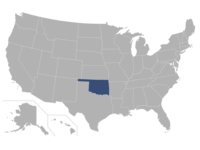
Oklahoma City, OK