Specter of cuts to education draw ire, questions, calls for tax increases
Nov 24, 2026 | 5:50 am ET
Description
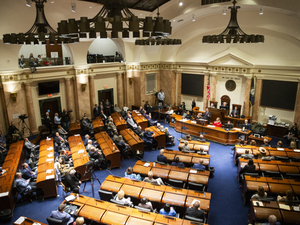
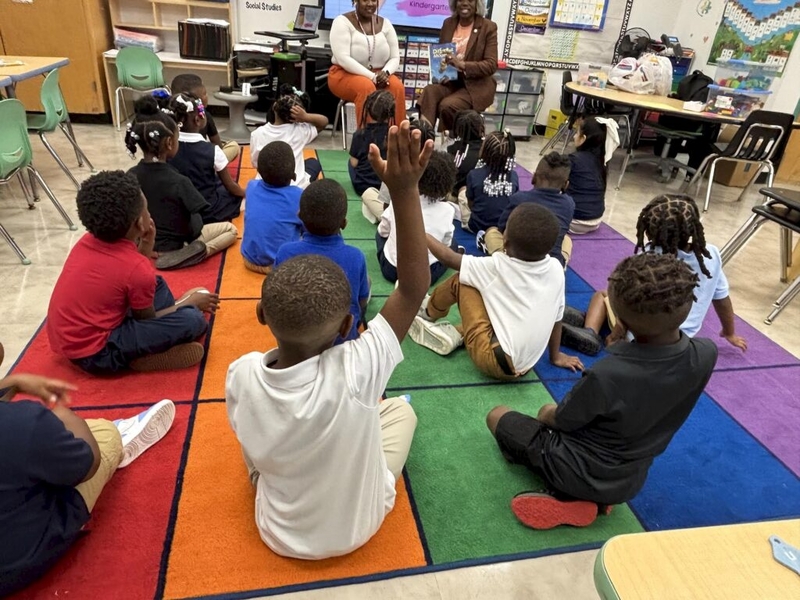
Maryland schools systems were warned by state officials over the weekend to prepare budgets for next year that are essentially flat from this year, drawing the ire of some education advocates and questions from county leaders. (Photo by Nuria Martinez-Keel/Oklahoma Voice)
A budget warning delivered to school systems across the state over the weekend is drawing the ire of some education advocates and questions from county leaders.
In a letter from Budget Secretary Yaakov “Jake” Weissmann this weekend, state school systems were asked to prepare budgets that are essentially flat compared to the current year. It comes as the state faces multibillion-dollar budget challenges, driven in part by historic education spending.
“We really do not know much about what this is going to mean for counties,” said Sarah Sample, associate policy director at the Maryland Association of Counties. “There’s still a lot of questions.”
State analysts project a nearly $3 billion budget shortfall in the coming year, the first of was is expected to be a shortfall up to $16 billion over five years.
Education spending is one of the drivers of that shortfall.
The letter sent to local school leaders contains no specifics about cuts or how counties will be affected. Instead, it appears to be more of a warning to locals to prepare for potential cuts by hewing the fiscal 2028 budget request as close to the current year as possible.
Budget secretary calls on school systems to prepare flat budgets for next year
In the current budget year, the state spent more than $10 billion on education.
Next year, the fund dedicated to paying for the Blueprint for Maryland’s Future, the state’s sweeping decade-long education reform plan, will be exhausted. Covering the costs will require Gov. Wes Moore (D) and state lawmakers to draw an estimated $1.8 billion from the general fund. Of that, only $500 million relates to new costs.
Senate Minority Leader Stephen S. Hershey (R-Upper Shore) said the letter “certainly appears to acknowledge that the looming shortfall is not simply a general revenue problem, but rather the state’s inability to sustain its existing Blueprint funding commitments.”
Cutting the Blueprint funding will not be easy. It passed after several years of hard-fought political battles and has vocal supporters.
Maryland State Education Association President Paul Lemle, in a statement, said cuts would “undermine progress” in student achievement, expanded technical career training, increased teacher pay, easing teacher shortages and adding support for high poverty schools.
“Its devastating consequences for our students are completely unacceptable,” Lemle said in his statement.
The teacher’s union estimates the cuts could result in a loss of $430 million in state aid. Another $270 million could come from county cuts, according to the union.
“This approach should be rejected,” said Lemle, who called for tax increases instead. “Our students deserve better. Make sure the ultra-wealthy and corporations are paying their fair share, rather than avoiding the contributions that the rest of us are making to fund the public schools and services we all depend on. Fund our schools—don’t set back their continued progress with these sweeping, across-the-board cuts.”
The letter was also criticized by the Public School Superintendent’s Association of Maryland.
“Maryland’s school systems have held up our end of the Blueprint bargain,” the association said in a statement. “The State must sustain its side of that partnership.”
The association called for increases for students with disabilities, and asked that one-year budget changes not result in ongoing reductions in per-pupil spending. And it asked for increased flexibility.
“Give local school systems meaningful flexibility to protect classroom instruction and direct staff and resources where students need them most,” the association said. “Districts will remain accountable for student outcomes and equitable access. State expectations for implementation should reflect what districts can realistically deliver with the funding provided.”
When the General Assembly returns in January, it will face some “very hard conversations” on the budget, Senate President Bill Ferguson (D-Baltimore City) told business leaders last week.
Constitutionally, the only task the legislature must complete is passage of a balanced budget. Within that, the state is required to fund one priority — education.
Ferguson said it will taker all-options approach to solve the problem.
“The idea that we just solve it all with cuts, solve it all with just looking at keeping everything the same, is not realistic,” Ferguson said. “It is going to be a balanced approach. It is going to be a four-year plan. That means for the next 10 months, it is going to be very, very challenging.”
Pressure is mounting on state lawmakers from bond rating agencies, who want to see more fiscal discipline from the state. Instead of an annual effort to paper over long-term problems with fund balances and one-time fixes, the agencies expressed an interest in seeing an alignment of revenues and spending.
Analysts urge action on four years of projected gaps to get ahead of recession scenario
Moore, Ferguson and House Speaker Joseline Peña-Melnyk (D-Prince George’s and Anne Arundel) have agreed, at least in principle, to craft a four-year budget solution, starting in January.
Other legislative leaders, meanwhile, warn that tax increases may be part of the solution.
“I’m expecting cuts and I’m expecting revenues,” said House Majority Leader Del. David Moon (D-Montgomery) during a Maryland Chamber of Commerce event last week.
The options range from increasing the sales tax or expanding it to include services — or both — as well as corporate tax changes and other proposals rejected in recent past sessions.
“They’re all the goodies and the oldies that have been floated in various things I’ve been reading,” Moon said. “I have no magic ball other than to say it seems like something has finally happened.”
Sample said many counties would likely see little to no relief if the state made changes to how it funds the Blueprint. She estimated maybe as many as six could potentially benefit.
A number of different scenarios each mean different outcomes for the counties. Some could result in additional costs shifted onto the counties, she cautioned.
In all, the state’s political subdivisions are paying $2.2 billion over anticipated costs for the education plan, according to the association.
“At most, this letter could signal an FY28 Blueprint cost reduction for, maybe, six or so of the poorest jurisdictions some of which have already raised taxes and fees to keep up with rising costs since implementation began, while absorbing millions in unrelated state cost shifts,” Sample said.
Annapolis, MD