WV House Dems ask Morrisey to take advantage of Medicaid work requirements grace period
Nov 24, 2026 | 6:00 am ET
Description
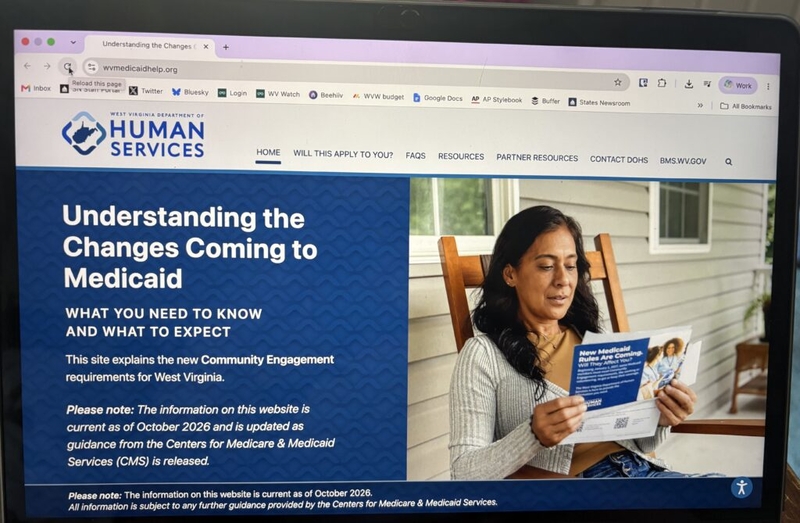
The West Virginia Department of Human Services' website, wvmedicaidhelp.org, explains the changes coming to the program in January on Nov. 11, 2026. (Photo by Leann Ray/West Virginia Watch)
Democrats in the West Virginia House of Delegates have called on the governor to take advantage of an optional 6-month grace period for new Medicaid work requirements that go into effect next year.
House Democrats asked Morrisey to help “prevent thousands of West Virginians from losing their health insurance” in a news release Monday afternoon.
Del. Hollis Lewis, D-Kanawha, told West Virginia Watch Monday that it’s important that the state’s systems — including its online Medicaid management system PATH and the state’s volunteer network — have time to prepare for the changes.
“The system itself needs time to get caught up,” Lewis said.
Under the One Big Beautiful Bill Act, with some exceptions, low-income people aged 19 to 64 who are part of the expanded Medicaid program will have to work, volunteer or train for at least 80 hours per month in order to keep their health care. The new requirements are set to begin Jan. 1.
The federal Centers for Medicare and Medicaid announced on Nov. 13 an optional “hold harmless” period through June 2027, during which states will assess whether individuals meet the work requirement, but not deny applications or disenroll people who are otherwise eligible for the program based on the work requirements.
The grace period will give states time to “improve and refine their systems,” and give them the “opportunity to learn from the early months of implementation to identify and address workforce training needs and improve the beneficiary experience,” CMS said in a news release.
The state Department of Human Services told West Virginia Watch last week it was still evaluating whether to take advantage of the grace period.
Lewis said he’s concerned that people who are subject to the new requirements aren’t aware they’re happening, and some people are trying to figure out how to meet the requirements.
The state has said an estimated 40,000 people are not currently meeting the work requirements and are not exempt from them.
“This affects 40,000 West Virginians specifically …but also even those who have the exemption, those individuals still have to show proof and have to do things within the system to prove that they are exempt,” he said. “So even if you’re not susceptible to these changes, you still could be impacted.”
Lewis said the state has made strides treating substance use disorder and preventing drug overdoses, but that work could be affected by the changes to Medicaid. People in drug treatment for less than five years are exempt from the work requirements, but Lewis noted they’d still have to prove that.
“My fear is that we don’t want to create a situation in which you have those individuals who are dead focused on their recovery and sobriety and different things of that nature be undercut from programs simply due to clerical and paperwork barriers,” Lewis said.
States are required to tell the federal government by Dec. 11 if they plan to use the hold harmless period.
In an email to West Virginia Watch, Lars Dalseide, a spokesman for Morrisey, said “We will continue to evaluate all options to ensure the best interests of taxpayers and Medicaid beneficiaries are protected.”
Charleston, WV