Department of Reassuring Language: Bringing children home is not same as providing quality care
Nov 23, 2026 | 5:55 am ET
Description
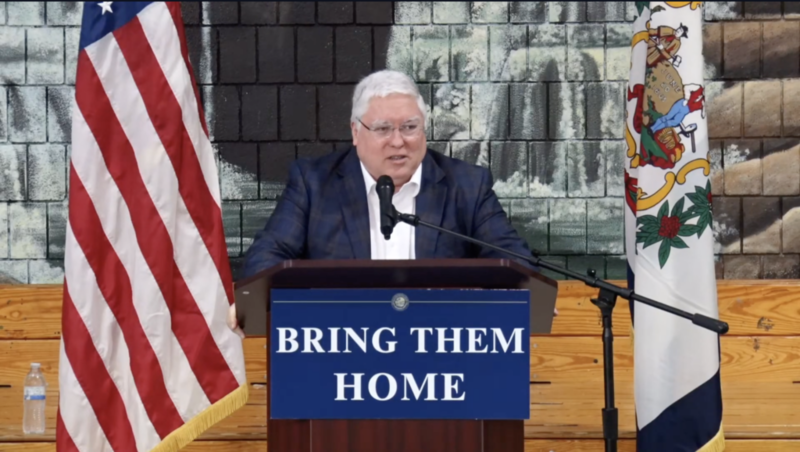
Gov. Patrick Morrisey on Thursday, Nov. 12, 2026, announces that the Barboursville School, a residential treatment facility for children, will reopen next year. The school closed earlier this year. (West Virginia Office of Gov. Patrick Morrisey video screenshot)
I’m beginning to wonder whether Gov. Patrick Morrisey has established a new office somewhere in Charleston: the Department of Reassuring Language.
Its mission? Give government initiatives comforting names emphasizing hope, compassion and opportunity. Make certain the public hears the promises.
Consider the Hope Scholarship. Who could object to giving children hope?
Now comes “Bring Them Home,” an initiative to return West Virginia children receiving residential treatment outside the state to facilities closer to their families. Who could object? Certainly not me.
But bringing children home and providing comprehensive, evidence-based treatment are two very different accomplishments.
Bruce Springsteen’s rendition of Bob Dylan’s “Chimes of Freedom” speaks to those whose suffering too often goes unheard. I think of these children when I hear it.
Many children requiring residential treatment have experienced profound adversity, disrupted attachments and complex psychological and neurodevelopmental difficulties. Some ask a fundamental question: “Where do I belong?”
For nearly 30 years, hundreds of miles from my West Virginia home, I have provided psychological care to children with complex psychological, neurodevelopmental, medical and behavioral conditions across a variety of clinical settings. My concern is whether the children I have spent much of my professional life caring for will receive the treatment, protection and understanding they deserve.
The children at the center of West Virginia’s initiative face many of the same challenges. The difference is that they are West Virginia’s children.
These children need more than a residential bed. Keeping a child near home is a matter of proximity. Helping that child experience belonging, safety and connection requires high-quality psychological care.
The savings are remarkably precise
According to the West Virginia Department of Human Services, average annual out-of-state residential placement costs approximately $250,025, compared with $120,333 in-state. The projected difference is $129,692 per child. For 50 children, the projected annual savings approach $6.48 million, before certain additional expenses.
Impressive calculations. But where is an equally detailed account of the treatment children will receive?
Lower cost is not proof of effective treatment; higher cost is not proof of better care. These statewide averages also do not establish that children in these settings have comparable clinical needs. What explains the difference: staffing, specialized services, treatment intensity, or genuine efficiencies?
We should never establish a financial target and then construct a treatment program around it. First determine what these children need. Then determine what providing that care will cost.
36 beds. But what treatment?
On Nov. 12, Morrisey announced a five-year lease with Utah-based Youth Health Associates to reopen the former Barboursville School, with up to 36 beds and a projected 50 to 60 jobs.
We know the capacity, jobs, and projected savings. Where is the treatment program?
Youth Health Associates publicly describes residential services for a distinct population: adolescent males with histories of sexual misconduct. Reporting identifies eight existing facilities, seven in Utah and one in Texas. That experience warrants consideration, but serving a particular population does not, by itself, demonstrate the clinical competencies needed for every population.
The governor has described a broader range of complex treatment needs at Barboursville. What qualifications, treatment protocols, and documented outcomes support that expanded role? Which children can this facility appropriately treat, and what safeguards will guide their care? The governor’s announcement suggests that the facility may serve children and adolescents with a broader range of complex, high-acuity needs than those described in the contracted provider’s publicly available services.
Residential supervision, nursing services, social work and daily care are essential. But they cannot, by themselves, substitute for the psychological expertise and medical care required by children with complex conditions.
For children with severe, complex conditions, doctoral-level psychological expertise must be available and integrated into diagnostic assessment, clinical formulation, evidence-based intervention and multidisciplinary care, according to their individual needs.
Who will independently evaluate outcomes? A residential bed is not an intensive treatment protocol.
When children’s voices go unheard
The U.S. Senate Finance Committee’s 2024 report, Warehouses of Neglect, documented serious concerns about staffing, treatment, oversight and child safety across residential facilities. Its findings do not predict what will happen at Barboursville. They do demonstrate why independent oversight matters.
Children with emotional and behavioral difficulties are sometimes labeled manipulative, dishonest or unreliable. When they report mistreatment, those very difficulties can become reasons adults discount their words. For children with histories of maltreatment, the search for attachment and belonging can increase their vulnerability to further exploitation. These children need adults prepared to listen, investigate, and protect them.
The expertise is already here
Marshall University is practically next door. Its American Psychological Association-accredited doctoral psychology program was established in part to prepare doctoral psychologists to serve rural and underserved West Virginia communities. Marshall’s Joan C. Edwards School of Medicine adds medical expertise; West Virginia University also offers substantial psychological and medical expertise.
Were these nationally recognized programs consulted? Could they help develop treatment, provide professional supervision and independently evaluate outcomes? If high quality care is central to this initiative, why isn’t that expertise more visible in the state’s public explanation?
Bringing children home to what?
Family proximity can support attachment and continuity of care. But proximity is not treatment. Clinical needs must determine staffing, resources, and interventions, not projected savings.
The children whose suffering echoes through Chimes of Freedom deserve more than reassuring promises. These children are West Virginia’s children.
Hope is not an educational service. Home is not a treatment protocol.
We should measure success not by how much money we save on our children, but by how much better we care for them.
Charleston, WV