How will Tommy Tuberville’s administration address public health?
Nov 23, 2026 | 6:01 am ET
Description
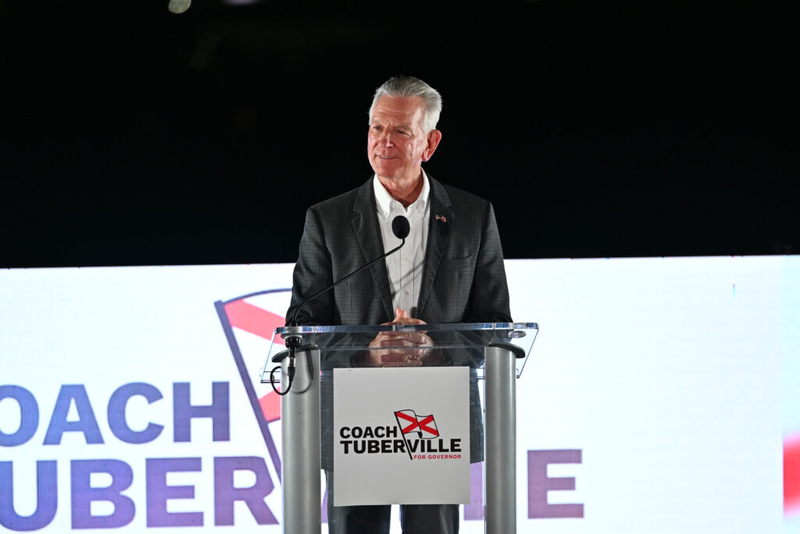
U.S. Sen. Tommy Tuberville gives an acceptance speech after he wins the Republican nomination for Alabama's governor at his primary election victory tailgate at the Vulcan Park in Birmingham, Alabama, on May 19, 2026. Tuberville largely supported the MAHA agenda during his term in the U.S. Senate, but it is unclear how that will translate to his governance of Alabama. (Anna Barrett/Alabama Reflector)
During his time in the U.S. Senate, Tommy Tuberville supported the nomination of now-Secretary of Health and Human Services Robert F. Kennedy, Jr., who has falsely challenged the efficacy of vaccines, and the Make America Healthy Again (MAHA) agenda.
During Kennedy’s confirmation hearing, Tuberville said that his granddaughter would “not be a pincushion.”
How his support of the agenda will translate to his governance of Alabama is unclear.
Tuberville’s policy plan, known as the playbook, does not address public health policies like vaccines, maternal and infant health outcomes or artificial food additives in the healthcare section. It does address Alabama’s lack of rural healthcare access and a goal to reform the state’s certificate of need law – a system that 35 states use that require proof of need to fund major capital improvements at health care facilities.
Stan McDonald, a former Alabama Ethics Commissioner, was appointed as the leader of Tuberville’s health policy transition team. Hannah Eddins, Tuberville’s communications director, said the transition team would participate in interviews later, but the playbook addresses the incoming governor’s initial plans.
Currently, the State Committee on Public Health and the State Health Officer are not political appointees by nature, but have shifted in that direction in recent years.
Prior to 2024, the committee members chose the State Health Officer with no input from the legislative or executive branches of Alabama’s government. But SB 128, sponsored by Sen. Tim Melson, R-Florence, changed the appointment to require final approval from the governor.
State Health Officer Dr. Scott Harris, who has held the position since 2017, is generally supportive of vaccines. In meetings of the committee since the resurgence of measles in the United States, Harris has emphasized that vaccination is the best way to prevent contraction of the highly contagious disease.
“This is the best job I’ve ever had. I love being here. I hope I can stay here as long as I’m useful,” Harris said in a recent interview.
The State Committee on Public Health sets environmental standards, rules for healthcare facilities and vaccine schedules for children. Martha Wingate, a public health researcher on maternal and infant health outcomes and public health policies, said in an interview Monday that the limited politics in Alabama’s public health allows for more consistency in public health policy.
“I feel like we’ve got such a strong presence of physicians, nurses, (on the committee),” Wingate said. “How does this make sense from a clinical and from a public health perspective, and that taking care of our neighbors is really the biggest piece of that.”
Vaccine mandates
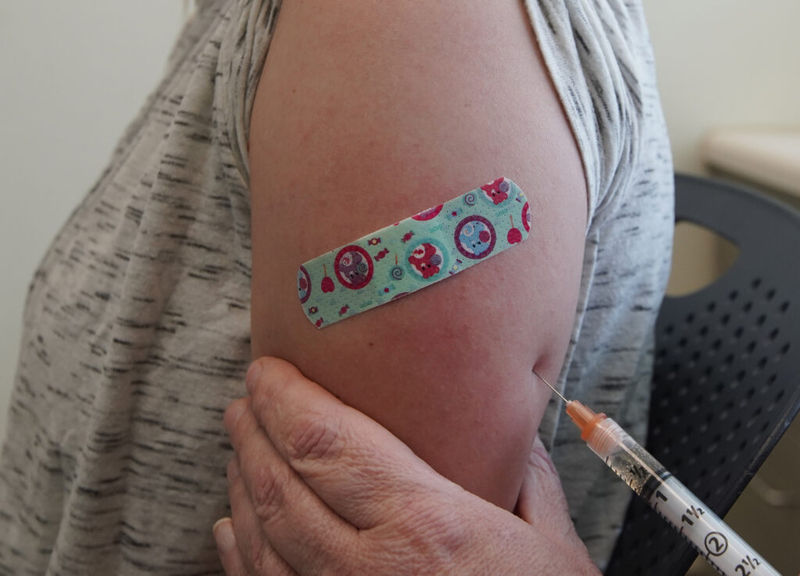
Tuberville has opposed vaccine mandates and introduced federal legislation this summer to withhold federal funding from public schools that do not recognize religious exemptions for vaccines.
“This is a free country, and parents have every right to make personal decisions about what vaccines they choose to give their children,” he said in a July press release. “Taxpayer-funded K-12 schools have no right to turn students away at the door because of their vaccination status – especially if they have a religious exemption.”
Religious vaccine exemptions, and no-excuse exemptions, have growing support in the Alabama Legislature. Sen. Arthur Orr, R-Decatur, and Rep. Mack Butler, R-Rainbow City, to allow religious vaccine exemptions over the last three legislative sessions. Rep. Danielle Duggar, R-Spanish Fort, a new lawmaker, hopes to pass legislation prohibiting discrimination based on vaccine choices.
ADPH encourages vaccination after measles case; no new cases immediately reported
As of Nov. 13, the CDC has confirmed more than 5,400 cases of measles in 2026 across the country. About 96% of the confirmed cases were not vaccinated against the disease. There were almost 2,300 confirmed cases in 2025, where about 93% were unvaccinated. The outbreak, which cost the country its measles elimination status, has been blamed in part on Kennedy’s hostility to vaccination.
According to the CDC, 94.3% of Alabama kindergarteners are vaccinated against the disease for the 2025-26 school year. In the 2024-25 school year, 95.2% of kindergarteners were vaccinated. Herd immunity can be reached with a 95% vaccination rate.
In February, Harris said the measles, mumps and rubella vaccine is not “one of the controversial ones, or shouldn’t be.”
In a recent interview, Harris said the committee likely would not change its vaccine recommendations for school-age children.
“We don’t have requirements for any other group of people. So ultimately, the state committee is going to make those decisions,” he said. “They’ve not seen fit to change any of those so far.”
Wingate said that even though there is a growing conversation on “medical freedom,” Alabama has a culture of “loving our neighbor.”
“Yes, there are individual rights, but there’s also this idea of how do we make sure that our neighbors’ children stay healthy, our neighbors’ grandparents stay healthy,” she said.
Wingate said it is important to remember amid the measles outbreak that most physicians are being forced to treat a disease they have never seen before. Members of the committee have pointed that out as well.
Three Alabamians have tested positive for the disease since the onset of the outbreak last year.
“The things that we can prevent from this ouchie, from this thing that hurts for just a minute, the stuff that we can prevent is a lot more scary than that little stick,” Wingate said.
Rural hospitals and infant health outcomes
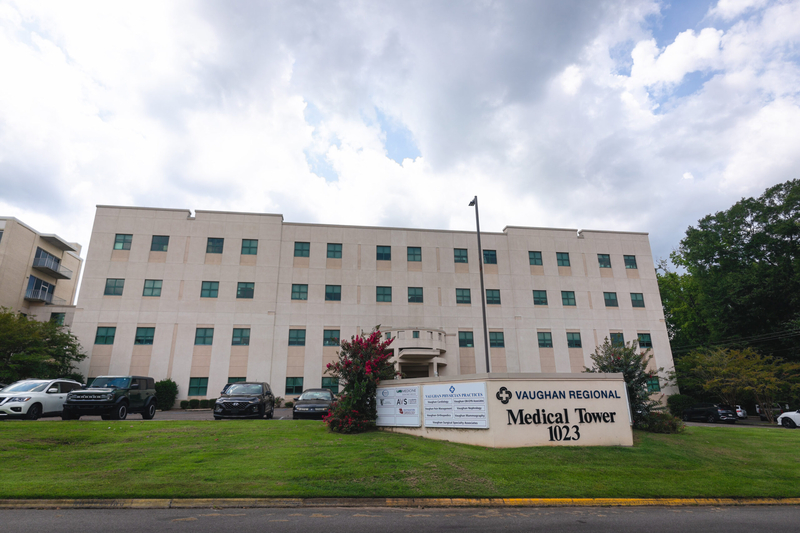
In his playbook, Tuberville promises to not let any rural hospitals close and to use his connections in Washington to strategically allocate funds from the Rural Health Transformation Program.
“Alabama has more than $203 million coming this year from the rural health program, and every dollar goes to care, not consultants, with results published for every community,” the playbook says.
The program, funded through President Donald Trump’s One Big Beautiful Bill Act (OBBBA), is aimed to partially offset cuts to Medicaid. Experts say it might not be enough.
Wingate said that the funds should, and are, be used to train providers and increase resources for rural facilities. Part of the program’s grant application process required sustainability.
“I think that whole idea of instead of bringing people to the larger places, really saying, how can we get things out to people in the best way that we possibly can to at least get them to a point to where we can move them to that higher level care or to a place where they can get care,” Wingate said.
Alabama rural hospitals caught in ‘vicious cycle’ on Medicare wage index
Alabama’s infant mortality rate worsened slightly in 2025 and remains above the national average, according to data released earlier this month by the Alabama Department of Public Health.
Many of the determinants are social, and are harder for the department to address, according to Harris. Wingate agreed that the bigger picture issues like race, socioeconomic status and education level are more difficult to address from the public health perspective.
“I think that the sleep related stuff I think you still can fix, but there but some of these other bigger picture things are a little more tricky,” she said. “All of it’s very tricky.”
However, addressing access to care through something like the Rural Health Transformation Program could help the state make improvements in maternal and infant health outcomes, Wingate said.
She said she wished figuring out how to manage public health and politics was easy, but it never has been.
“When we really take the immunizations, the access to care, all those things, and kind of put it in that space, it gets tricky, and it kind of goes against the grain a little bit,” she said. “That basic tenet that we want to take care of our neighbors, in my mind that’s a lot of what public health is. How do we do that in a way that’s meaningful? The politics aside, that’s really what’s important. Hopefully, any new administration would agree with that.”
Montgomery