Changes for WV childcare subsidy program likely in 2027 as Morrisey, lawmakers eye pricetag
Nov 06, 2026 | 6:00 am ET

Description
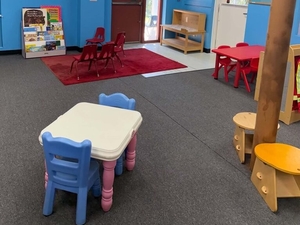
Eleven thousand children are enrolled in West Virginia’s childcare assistance program, available to parents who are working or enrolled in school. (Photo by Rebecca Rivas/Missouri Independent)
A program used by thousands of working parents in West Virginia to pay for childcare could see changes next year.
The state pays for the childcare subsidy program through federal Temporary Assistance for Needy Families dollars, an anti-poverty program under scrutiny by Gov. Patrick Morrisey. Other federal dollars are used, too.
The governor has already signaled there could be modifications to the childcare assistance program after his administration announced a $40 million structural deficit in TANF funding.
“The Department of Human Services continues to evaluate a range of options to ensure the TANF program operates within its available resources. No final decisions have been made regarding potential program or funding changes,” Lars Dalseide, the governor’s communications director, said on Thursday.
“The Governor’s Office will work with the Legislature to develop sustainable solutions that do not rely on one-time federal funding,” he said.
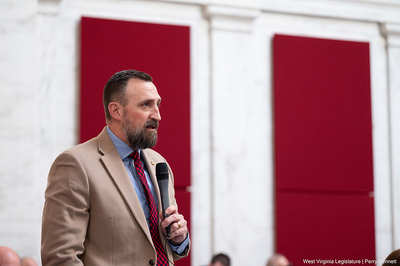
House Health Chair Evan Worrell, who has supported the child care subsidy, said on Thursday he is expecting changes to the child care subsidy in the next legislative session.
“Everything’s on the table for what those changes could be, and I’ll say eligibility is a portion of that,” said Worrell, R-Cabell.
Right now, eligible parents and caregivers must be below 85% of the state’s median household income, which is about $65,000 for a family of four. Parents must also be working on furthering their education to receive the childcare financial assistance.
More than 11,000 West Virginia children are enrolled in the childcare subsidy program.
As lawmakers consider how to pay for the program, Worrell said one consideration may be changing the income requirements for parents that would reduce eligibility. He isn’t advocating for that, but noted it could be considered during budget discussions early next year.
“It comes down to funding, right? We have Medicaid cuts coming through from the (One Big Beautiful Bill Act), but the governor’s budget will kind of show us what that priority is on his side, and we’ll have to adjust to that accordingly,” said Worrell, who also serves on the House Finance Committee.
“It will be a conversation in our caucus of what are our priorities?” he added.
Potential changes to childcare assistance come after lawmakers just passed their first-ever landmark childcare bill, which included mandates for the subsidy program. Morrisey declined to sign the legislation, letting it become law without his approval.
Republican-sponsored House Bill 4191 was meant to help stabilize West Virginia’s struggling childcare industry as many providers serve children using child assistance across the poor state.
In Clay County, 70% of young children at the county’s only childcare center are enrolled in the financial assistance program.
Worrell believes that West Virginia should use state dollars to run the childcare subsidy program instead of relying on federal funds. He estimates it will cost $20 million in the state dollars.
“I strongly believe in (House Bill) 4191 and its passing. But, I also will be advocating to make sure that the funding for 4191 is put into our general revenue budget, so we are not relying on federal TANF funds to pay for that,” he said.
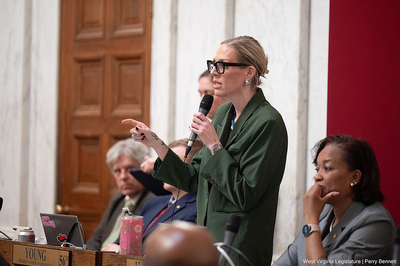
Del. Kayla Young, D-Kanawha, has led childcare reform efforts in the Legislature. She worries about the assistance program’s future under Morrisey.
“The state has underinvested in childcare by over 50% over the last 12 years. So it’s about time that we start putting our money where our priorities are, which needs to be with children in West Virginia,” Young said.
Lawmakers want answers delayed child care changes
The state Department of Human Services hasn’t implemented all of lawmakers’ childcare requirements despite a July 1 deadline. The Morrisey administration has said the delays were because lawmakers didn’t include state funding with their mandates.
On Monday, lawmakers are scheduled to hear from Human Services Deputy Secretary Christina Mullins about progress on the bill during legislative interim meetings at the state Capitol in Charleston.
“House Bill 4191 has been a little bit of a consternation with the agency as far as trying to pay for it and make it work how it’s supposed to,” Worrell said. “We want to try to understand before we go into session, what are the pain points? What are the issues with getting it done?”
Among the bill’s requirements, lawmakers mandated that the Department of Human Services reimburse childcare providers who serve kids using the state’s childcare subsidy by the total enrollment rather than daily attendance. This was supposed to stabilize centers’ finances.
“If the Legislature believes in enrollment versus attendance, which is what they codified, then they should put the money where their mouth is and fund the $20 million for that general revenue,” Worrell said.
Morrisey will ask lawmakers for a $10 million to $15 million supplemental appropriation to maintain current TANF program operations through this fiscal year. Along with the childcare subsidy program, the federal funds pay for the school clothing allowance program, foster care services and more.
- 9:14 amThis story was updated to clarify that families eligible for the childcare subsidy must be below 85% of the state median income
Charleston, WV