Michigan decarbonization road map presents path to reducing manufacturing emissions
Nov 23, 2026 | 5:00 am ET
Description
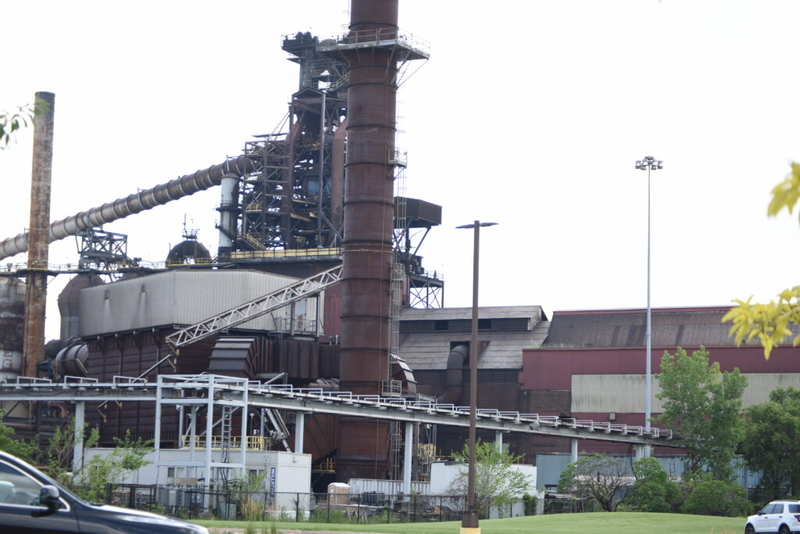
The Ford Rouge Plant in Dearborn on July 7, 2026. (Photo by Katherine Dailey/Michigan Advance)
As state leaders continue work toward mitigating Michigan’s contributions to climate change, the Michigan Department of Environment, Great Lakes and Energy has released a policy road map detailing how to cut greenhouse gas emissions in the state’s industrial sector while strengthening manufacturing.
Building on the MI Healthy Climate Plan and the state’s Comprehensive Climate Action Plan, the road map, prepared by clean energy consultants at 5 Lakes Energy, examines the factors involved in reducing emissions across Michigan’s industrial sector.
Manufacturing provides more than 600,000 jobs and contributes $100 billion to the state’s gross domestic product annually, making it a central part of Michigan’s economy.
However, industry accounts for 17.5% of the state’s greenhouse gas emissions, with the road map noting that Michigan will need to significantly reduce the amount of industrial emissions if it is to hit its 2050 goal of carbon neutrality.
Because Michigan’s industrial sector includes facilities of varying sizes, the road map emphasizes that there is no one-size-fits-all approach to decarbonization.
At Michigan climate conference, Inslee says states still hold power on clean energy
While targeting decarbonization investments at major industries will allow the state to take a major step toward its goal, the road map notes that small and mid-sized manufacturers will need technical assistance, financing and help implementing these improvements.
Although technologies to reduce emissions are available, the road map identifies high upfront costs, energy prices and production risks as major barriers to their adoption.
In developing their recommendations, consultants prioritized practical, actionable policies, distinguishing between near-term actions, long-term strategies and efforts that may require additional authority, funding, engagement with utility companies or federal government support.
During a Thursday webinar hosted by EGLE, Andrew Hoffmeister, a senior consultant on 5 Lakes Energy’s industry team, noted that the report also focused on four technological pathways facilities can pursue to reduce emissions: energy efficiency, electrification, fuel switching, and carbon capture, utilization and storage.
As for its recommendations, the road map suggests eight core policy measures.
The first suggestion was to establish recurring grants for industries to modernize and decarbonize their technology. Hoffmeister also recommended the state develop additional financing options to support the grant program.
To address the ongoing costs of producing clean industrial heat, 5 Lakes Energy also encouraged the state to create a clean heat production tax credit that would help facilities offset the cost difference between electricity and natural gas while incentivizing the use of clean heat technologies.
The consulting firm also advised state energy regulators to look into developing an electricity rate structure for industrial facilities using technology that displaces fossil fuels.
“Of course, we don’t want those rates to work by shifting costs onto existing customers,” Hoffmeister said. “The objective would be to develop rates that reflect the actual costs of serving those loads and recognize the benefits that manufacturers using those technologies can provide to the system.”
While the first few recommendations focused on lowering the cost of lower carbon-producing products, Hoffmeister noted that 5 Lakes’ fourth recommendation was centered on creating a stronger market for those products.
By establishing a “Buy Clean, Buy Michigan” program that utilizes the government’s ability to purchase materials, the state can create demand for lower-carbon construction and manufactured materials, the road map explains.
Expanding and targeting existing workforce programs to support modernization and industrial decarbonization programs was also a priority.
The road map also advocated for an expedited permitting pathway for projects that reduce emissions and improve air quality.
Using recycled materials in manufacturing is another way to reduce industrial emissions, Hoffmeister explained, with the road map advising the state to expand its investment into recycling, support the development of a market for these materials and coordinate with the previously suggested “Buy Clean, Buy Michigan” program to create a demand for these materials.
In its final recommendation, the road map encourages the state to look into the feasibility of a cap-and-invest program. This would set a limit on the amount of greenhouse gases major industrial facilities can emit in a region while allowing the state to auction emissions allowances.
The state can then use that auction revenue to provide funding for industrial decarbonization projects, workforce development, technical assistance or community investments, Hoffmeister explained.
Lansing, MI