Tennessee opens state’s newly expanded post-disaster response fund to Polk County flood survivors
Nov 24, 2026 | 5:58 am ET
Description
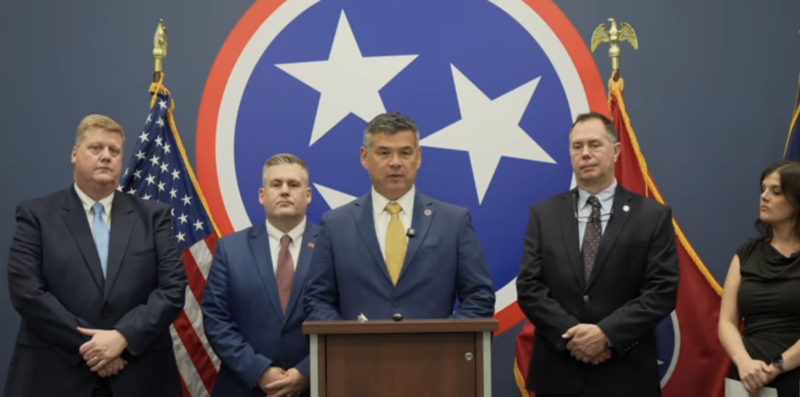
Tennessee Emergency Management Authority Commissioner Patrick Sheehan announces on Nov. 20, 2026 the opening of applications for Governor's Response and Recovery Fund programs for individuals, businesses and local governments affected by severe flooding in Polk County on Nov. 5, 2026. (Photo: Courtesy of TEMA)
Applications are now open for state-level flood recovery assistance for Polk County residents and businesses, marking the first use of Tennessee’s expanded disaster recovery fund.
Individuals and households affected by severe flash flooding on Nov. 5 can apply for funding for disaster-related expenses like debris cleanup and disposal, mold remediation and fans or dehumidifiers. Small businesses can apply for a $10,000 stabilization grant and further help covering additional expenses. Polk County and the City of Copperhill can apply for state assistance with debris removal, repairs to public facilities and more.
The Governor’s Response and Recovery Fund is Tennessee’s answer to Federal Emergency Management Agency limitations and federal calls for states to take on more responsibility around disasters.
The fund mirrors FEMA’s disaster assistance model, but aims to make financial aid more accessible to communities that face steep recovery costs but do not qualify for a federal disaster declaration, or that need funding on a faster or more reliable timeline than FEMA can provide. While FEMA assistance is triggered by a presidential major disaster declaration, the Tennessee governor can authorize use of the Governor’s Response and Recovery Fund. Gov. Bill Lee declared a major disaster in Polk County following the Nov. 5 flood.
“No program, even this one, can replace what people have lost or make the recovery process easy,” TEMA Commissioner Patrick Sheehan said Friday. “But we want survivors to know that they are not alone, and that state and local partners are continuing to work together to help address the needs created by this disaster.”
The fund was first created in 2025 to provide a faster cash infusion than FEMA could offer for East Tennessee communities devastated by Hurricane Helene. State lawmakers approved $44.2 million for the fund in April after expanding its purpose to include pathways for local governments and individuals to seek state assistance when federal aid is unavailable, insufficient or untimely.
“The fund will not cover every loss,” Sheehan said. “It cannot be used for lost revenue, lost wages, or insurance deductibles. Awards depend on program requirements, documented needs, and available funding, and submitting an application does not guarantee an award. Even within those limits, the assistance can help people and communities address important recovery needs and get back on their feet.”
Eligible applicants must show their need is connected to the flooding, and each type of application has its own eligibility and documentation requirements. Applicants must register as a supplier on Edison, the state’s payment system, before TEMA can process payments.
Details and instructions are available on TEMA’s website.
The fund generally doesn’t cover expenses already covered by an insurance provider, expenses eligible for assistance from another government program or expenses paid or needs met through another source, according to TEMA’s website.
Governor’s Response and Recovery Fund applications include:
- Disaster Survivor Assistance for individuals and households, with applications accepted from Nov. 20 through Dec. 31 at 11:59 p.m. (One application per household, renters may qualify)
- Small Business $10,000 Stabilization Grants for small businesses, with applications accepted Nov. 20 through Dec. 4 at 11:59 p.m.
- Additional Disaster-Related Expenses for Small Businesses, with applications accepted from Dec. 7 through Dec. 31 at 11:59 p.m.
- Local Government Disaster Assistance, with applications open from Nov. 20 through Dec. 31.
Sheehan said the small business stabilization grants are aimed at helping business owners who have already incurred disaster-related expenses in Polk County’s business district.
“These businesses are vital to the community. We want to do everything we can to help them remain open and continue contributing to Copperhill’s economic success,” he said.
The U.S. Small Business Administration is also offering options for relief for Bradley, McMinn, Monroe and Polk counties, including physical disaster loans, economic injury disaster loans and home disaster loans.
Nashville, TN