NJ Supreme Court reinstates $562K verdict against Newark for bridge crash
Nov 20, 2026 | 1:59 pm ET
Description
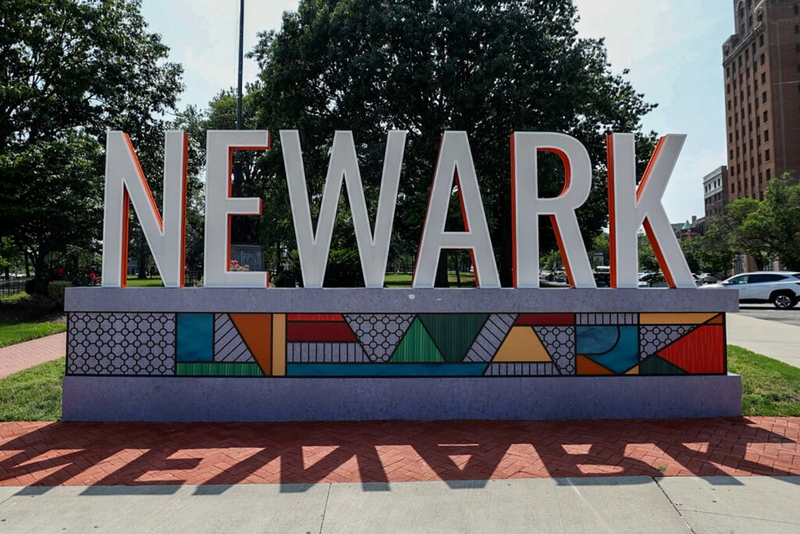
Newark claimed it wasn't liable for a trucker's 2015 crash into a low railroad overpass, but the New Jersey Supreme Court ruled it is because officials failed to post the low-clearance signage state law requires. (Photo by Anne-Marie Caruso / New Jersey Monitor)
New Jersey municipalities that fail to post signs warning motorists of low-clearance bridges can be held liable for damages and injuries when drivers collide with such overpasses, despite a state law that grants local governments immunity for more discretionary traffic signage, the New Jersey State Supreme Court said.
In a unanimous ruling Thursday, the justices reinstated a $562,500 jury verdict against Newark in the case of a trucker who followed a “truck route” sign in February 2015, only to crash into an unmarked low overpass while he had his eyes on the road below to dodge potholes. David B. Wilson’s 13-foot-6-inch tractor trailer got wedged under the 12-foot-2-inch railroad overpass on Avenue P near Foundry Street, leaving him with neck injuries, according to the ruling.
An appellate panel had overturned the verdict, agreeing with city and state lawyers who had argued that a provision in the state Tort Claims Act shields governments from liability for any failure to post ordinary traffic signals.
But state legislators in 1986 passed a law specifically to guard against the kinds of crashes Wilson had by requiring municipalities to warn motorists of bridges with less than 14 feet and 6 inches of clearance on or before the bridge, as well as at the last safe exit or detour before the bridge, wrote Justice Rachel Wainer Apter, who penned the decision.
Signs mandated by that 1986 law are not the “ordinary” signs exempted from liability under the Tort Claims Act, because public entities have no discretion over whether or not to post them, she added.
“As Wilson correctly points out: ‘The statute dictates what needs to be done. There is no discretion,’” she wrote.
The city not only failed to put the required maximum-clearance signs on the overpass and at the last safe exit before it, but also misled drivers by placing a “truck route” sign directing drivers toward the bridge, essentially assuring Wilson the route had no hazards, she added.
“The jury was thus entitled to conclude that the City created a dangerous condition by posting an ‘actively deceptive’ sign that ‘lulled [Wilson] into a false sense of security’ that he could safely make a right turn onto Avenue P without immediately crashing into an unmarked, low-clearance bridge,” Wainer Apter wrote, citing another 1994 state Supreme Court ruling.
Newark officials did not respond to a request for comment.
The case showed how the need for accurate signage to protect the driving public from known harms can conflict with the realities of local governments that struggle to keep up with changing road conditions.
A city worker had testified at trial that Newark’s road system spans about 350 miles, with just a three-person maintenance crew responsible for the tens of thousands of traffic signs on them. The worker said the city relied on reports from drivers and city employees’ own observations to learn of missing signs. In this case, a required sign had been replaced four times between 2011 and 2015, with workers reinstalling it again five weeks before Wilson’s crash, but just a bare pole stood by the time he hit the bridge, according to the ruling.
The city’s attorneys had argued “it is entirely possible that the sign went missing hours, minutes, or even seconds before Wilson’s accident, which is insufficient to show the City had notice.”
But Wainer Apter rejected that argument too, saying Wilson proved a provision of the Tort Claims Act that holds public entities liable if they create a dangerous condition through the negligence or omission of an employee.
Trenton, NJ