$1M settlement proposed in state’s case against Woonsocket sewage plant
Nov 20, 2026 | 1:18 pm ET
Description
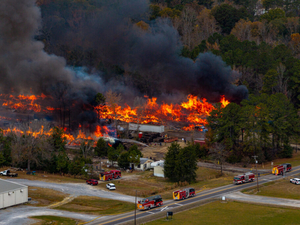
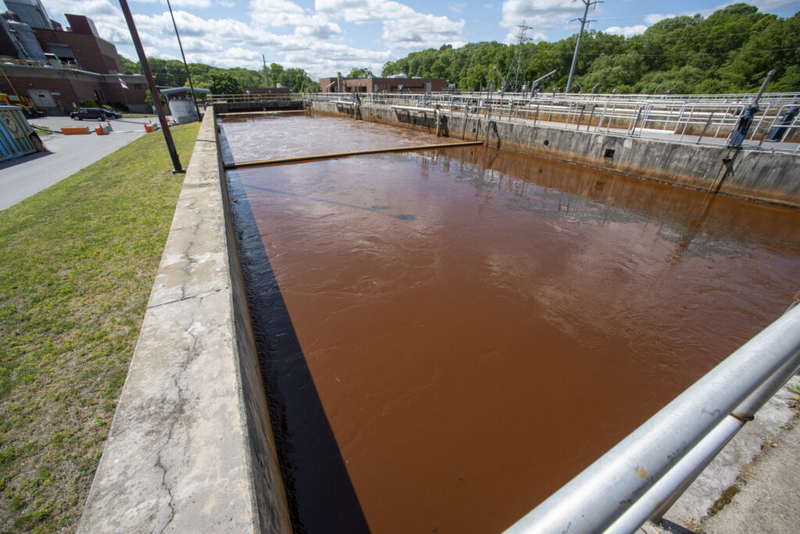
A tentative settlement would resolve a 2023 state lawsuit against the Woonsocket Wastewater Treatment Facility. (Photo by Michael Salerno/Rhode Island Current)
The cost to clean up a yearslong legal battle with state regulators over repeated environmental violations at Woonsocket’s regional wastewater treatment plant: $1 million.
That’s according to a tentative consent agreement on the agenda for the Woonsocket City Council Monday night. The 28-page agreement, which has not been signed by any of the parties, aims to resolve a March 2023 lawsuit by the Rhode Island Attorney General’s office and Department of Environmental Management (DEM) alleging the city-owned, privately-managed wastewater plant violated state and federal environmental laws by dumping partially untreated sewage into the Blackstone River.
The Superior Court complaint led to a citywide reckoning in which officials ultimately concluded that they no longer wanted the responsibility — and cost and legal risk — of processing the region’s sludge at the aging sewage treatment facility. The 16-acre Cumberland Hill Road plant hosts one of two incinerators in the state — the other is in Cranston — burning dried sewage products for 30 cities and towns and commercial customers across southern New England.
The state’s lawsuit claims aging equipment was not properly maintained, and poor communication between the two companies that manage the separate sides of the plant caused at least three sewage spills in the previous 12 months.
None of the defendants — the city and its contractors, Jacobs Engineering Group and Synagro Woonsocket LLC — admit liability under the proposed settlement. But the two national companies would pay $500,000 combined in fees to state regulators and funding for environmental programs under the proposed agreement. The remaining $500,000 would be suspended, providing the other financial penalties are paid on time, and that the defendants meet new reporting and monitoring requirements.
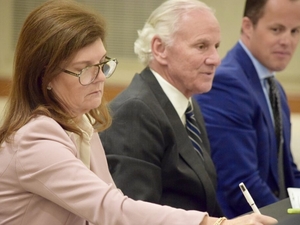
“It works out well for the city,” said Council President Dan Gendron, who is sponsoring the resolution calling for the council to approve the tentative agreement. “Not actually being the operator of the facility, and the lawsuit being based on operators, it seems appropriate that the operators who controlled the operation would be the ones to accept the biggest part of the penalty.”
Attorneys for Jacobs and Synagro did not immediately respond to requests for comment Friday.
Attorney General Peter Neronha remained noncommittal.
“We engaged in settlement discussions with the city and its operators, and those discussions have advanced to a point where an agreement that would achieve accountability for past harm and prevent future harm from the plant may be possible,” Neronha said in an email Friday. “In the event a resolution between parties is finalized, we will have more to say.”
A DEM spokesperson acknowledged but did not immediately respond to requests for comment.
Moving on
Jacobs, a Texas-based company, has already cut ties with the city, severing a 20-year contract signed in 2012 amid service payment disputes. Veolia North America, which provides water and wastewater treatment services for several other cities and towns in the state, was brought on in September to temporarily manage the wastewater treatment side. Synagro Woonsocket, a subsidiary of a Baltimore-based company, is still running the incinerator under its own long-term contract, which doesn’t end until 2032.
The proposed settlement specifies that both Jacobs and Synagro still have to pay the penalties even if they no longer run the plant, or if it closes.
As laid out in the proposed agreement, each company would pay nearly $76,000 apiece to the Attorney General’s office and DEM, respectively, within the first month. Within three months, they would split the $50,000 cost to set up a third-party grant program to compensate businesses along the Blackstone River that have been negatively impacted by the environmental and health consequences of sewage spills from the plant. And within 10 months, the companies would pay $150,000 apiece toward two state-run environmental programs: one transplanting quahogs into waters designated for shellfishing use, and a second to clean up local waterbodies “impaired by excess aquatic vegetation,” including the Blackstone River.
Both companies, in addition to the city, would also commit to additional staffing and reporting requirements, including monthly “lookbacks” on operations in 30-day increments, and, after 18 months, a comprehensive evaluation of how the incinerator is working.
Gendron thinks the incinerator may no longer be operating by then.
As mayor-elect, having defeated Mayor Christopher Beauchamp in the Nov. 3 nonpartisan election, Gendron wants to close the sludge side of the operation by June 30, 2027. The city has been trying to shut down the incinerator for more than a year without success. Gendron acknowledged his timeline might be too ambitious, but he also said the ongoing problems caused by aging equipment and lack of maintenance might force the closure without city intervention.
“It’s got so many problems,” Gendron said. “The plant could actually just shut itself down.”
That’s despite more than $2.2 million the city authorized in 2023 to repair the gravity belt thickener used to separate out solid waste. The city estimates another $40 to $50 million would be needed to fully upgrade the 50-year-old incinerator.
The price of closing
Woonsocket does not have to pay any of the penalties in the proposed settlement. But if all or a portion of sewage plant closes, it could be costly.
The city brings in $3 million in annual host fees from the two contractors plus a share of royalties from incineration up to $600,000 a year under its contracts with Synagro and Jacobs. And, Woonsocket has its waste treated for free.
The city’s approved fiscal 2027 budget featured higher sewer fees to cover its expected payments to Veolia, with a $556 annual flat fee per property compared with roughly $440 the year before, Gendron said. The city’s independent wastewater treatment fund is expected to generate $13.5 million in revenue in fiscal 2027, nearly $4 million more than the $9.6 million balance as of June 30, according to city budget documents.
It’s got so many problems. The plant could actually just shut itself down.
An unsuccessful plan to sell the plant to the Narragansett Bay Commission, a quasi-public agency that already runs the largest wastewater operations in the state, also could have offset projected revenue losses. But negotiations broke down over the summer, Gendron said, when controversy erupted over a separate project for a high-heat sludge processing plant in North Kingstown’s Quonset Business Park.
Narragansett Bay Commission was planning to use the proposed Quonset pyrolysis plant to treat its wastewater byproducts, including from Woonsocket, but the Quonset project is now on hold amid community backlash, a pair of lawsuits, and a soon-to-begin legislative study panel.
Gendron did not know when the proposed consent agreement could take effect, deferring to City Solicitor Michael Lepizzera, who did not respond to multiple requests for comment.
There are no upcoming hearings in the case, according to the public court docket.
Outgoing Mayor Christopher Beauchamp also did not immediately respond to requests for comment.
A separate, federal class-action lawsuit filed by city property owners in July 2023 regarding smells and traffic from the wastewater plant was dismissed in July 2024, court records show.
Providence, RI