A Thanksgiving treat in the offing: Lower gas prices
Nov 20, 2026 | 2:14 pm ET
Description
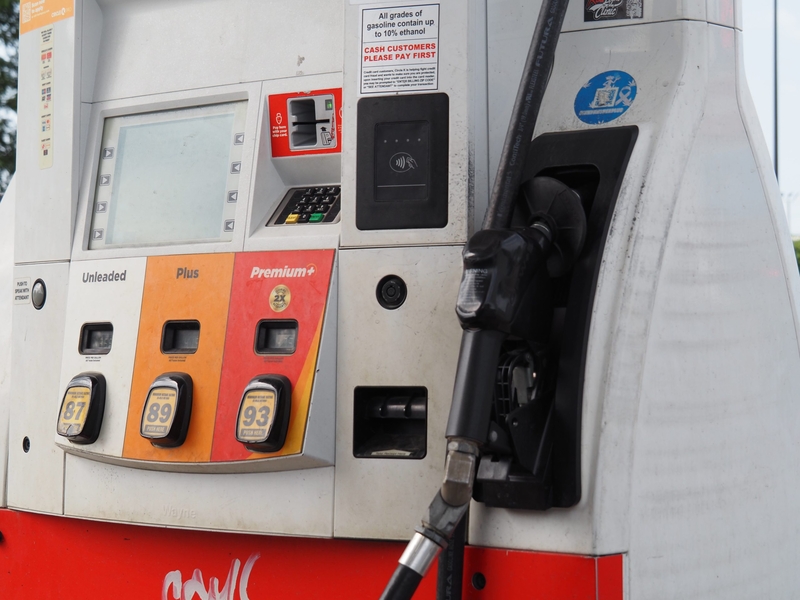
A gas pump in Indianapolis on Wednesday, July 22, 2026. (Photo by Leslie Bonilla Muñiz/Indiana Capital Chronicle)
WASHINGTON — $3.62 a gallon.
That’s the predicted national average price of regular gasoline on Thanksgiving Day, according to GasBuddy, which tracks prices at the pump.
That would continue the steady glide path down that gasoline prices have followed for roughly the past month. Oversupply, worried consumers and seasonal driving trends have all contributed to the drop.
The price still would be high — in fact, a Thanksgiving record — by most standards. The highest Thanksgiving Day price average was reported in 2022, $3.56 a gallon.
But by any measure, what’s happening now is good news for consumers. AAA reported Friday a gallon of regular gasoline cost an average $3.69, down 18 cents from a week ago and 58 cents from a month earlier.
“For most holiday travelers, driving remains the cheapest and easiest way to get around” this Thanksgiving, said an AAA analysis. About 90% of travelers during the holiday are expected to drive.
Anywhere they go, they should find prices lower than a few weeks ago. Prices tumbled in all 50 states over the past week.
A dozen states’ averages fell more than 25 cents a gallon, according to GasBuddy. It found the biggest week-to-week drops in Montana, by 38.8 cents a gallon; Ohio, by 33.3 cents; Michigan, by 32.1 cents; Colorado, by 29.2 cents; and New Mexico, by 28.4 cents.
The $4-a-gallon gasoline is also becoming less frequent. Patrick De Haan, head of petroleum analysis at GasBuddy, found 43 states’ prices for regular gasoline have fallen under that level.
There are outliers, notably in states where the infrastructure makes it more difficult to get products. Hawaii had the highest gasoline prices Friday, at $5.60 a gallon for regular, followed by California at $5.50. The lowest price was in North Carolina at $3.03 per gallon
The averages, though, don’t reflect highs and lows within states, which can vary.
Why are prices down?
Oil prices are down roughly $25 a barrel over the past month.
Part of the explanation is hope that the U.S.-Iran war will soon end, or at least cool.
“Markets bet on a de-escalation between the U.S. and Iran following the midterm elections,” said Grace Zwemmer, an economist at Oxford Economics.
Each change of a dollar for a barrel of oil is estimated to mean about 2.5 cents per gallon at the retail level.
Prior to the war, about 20% of the world’s oil passed through the Strait of Hormuz, a narrow passageway between Oman and Iran. Despite occasional skirmishes, that oil is mostly proceeding through the strait.
The change in outlook is partly due to reduced demand and partly an expectation that the war’s impact will wane.
“Expectations of a coming supply surplus outweighed fresh security incidents around the Strait of Hormuz,” De Haan said.
The November report from the International Energy Agency saw the oil market engaged in “tentative signs of rebalancing, with global oil supplies surpassing demand for the first time since the outbreak of the war in Iran.”
The IEA predicted that the global oil market could return to a surplus in this quarter, “with a more substantial build in 2027.”
The U.S. Energy Information Administration had similar forecasts. It predicted per-barrel oil prices averaging $84 next year, about the same as the current level, with retail gasoline prices averaging $3.56 a gallon.
The prediction assumes that 2027 will proceed “as oil flows recover and inventories rebuild.”
Goldman Sachs echoed that forecast, saying this week in an analysis that “oil is forecast to ease gradually in 2027 as suppliers in the Middle East adapt to disruption from the war in Iran.”
Worried consumers
Some causes of the price drop are seasonal. Americans tend to drive less in colder months, which means a drop in demand.
And, said De Haan in an X post, “After Sept 15, stations can sell winter blend, which is cheaper to make. Summer gas has to meet tighter evaporation rules, and that costs refiners more.”
At the same time, consumers have become more cautious about spending. The cost of living “continues to be at the forefront of consumers’ minds across the population,” said Joanne Hsu, director of the University of Michigan Survey of Consumers.
The survey’s November report found that about 57% of consumers “spontaneously mentioned that their living standards have been eroded by high prices.” That’s the highest level since May, and higher than the 46% who felt that way in February before the war began.
In the United States, the cooling demand is reflected in AAA’s projection that 72.9 million people are projected to drive somewhere during the holiday, down 200,000 from last year’s Thanksgiving season.
An asterisk to all this cautious optimism: Oil prices are always hard to predict. A year ago no one saw the price spike that gripped the country this year.
That’s why the international agency added this note in its analysis this month: “As always, downside risks to the forecast persist, as attacks on shipping undermine maritime security, which is pivotal to a sustained recovery.”
And though the prices are down, they’re still historically high.
“Americans aren't letting the pump keep them from the table,” De Haan said, but “that doesn't mean drivers aren't feeling it.”
All States Newsroom content is free to republish. Read our republishing policy for more information.