Even in replacing two Cape Cod bridges, a fight over natural gas emerges
Nov 19, 2026 | 5:00 am ET
Description
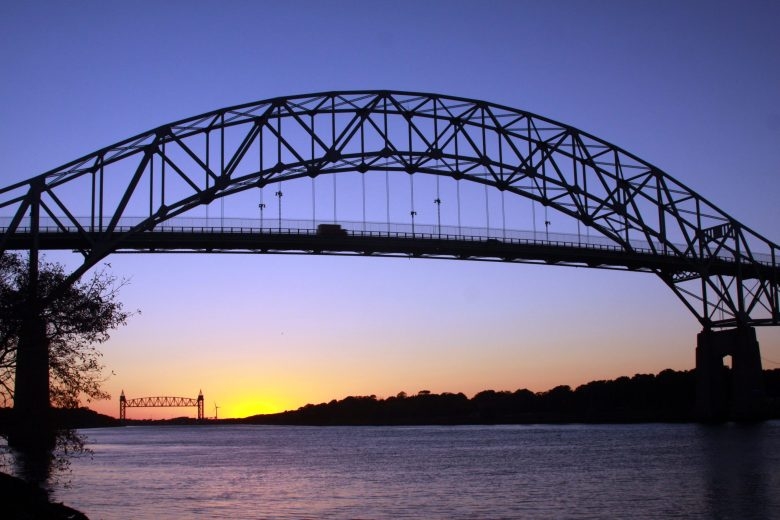
The Bourne and Sagamore bridges, spanning the Cape Cod Canal, are slated for replacement.
IN CASE A long-running effort to replace two aging Cape Cod bridges wasn’t already complicated enough with billions in financing, regulatory hurdles, and dicey eminent domain deals, now they’re also the site of a fight over the future of natural gas.
State and regional officials are pushing a plan to replace the nearly century-old Sagamore and Bourne bridges, which connect Cape Cod with mainland Massachusetts. The current bridges would stay open during construction, which could kick off next year, to avoid a crippling traffic bottleneck.
But aside from the tens of thousands of vehicles that cross the Cape Cod Canal every day, the two bridges also carry pipelines that transport natural gas to warm homes and businesses on the Cape.
That means that before any bridge demolition work can occur, the two pipelines running under both bridges will be decommissioned and replaced with one new pipeline set to be installed beneath the canal.
Algonquin Gas Transmission, which owns the pipes delivering gas to Cape Cod and is a subsidiary of the larger Canadian company Enbridge, insists the new lines will be merely a required replacement.
But environmental advocates are warning that the relocated pipeline could lock in the infrastructure now for a gas expansion later.
The dispute over one of the state’s highest-profile transportation projects underscores how the controversy over a yearslong effort to move off natural gas, part of a sweeping clean energy transition, is widening and growing more contentious, especially as Gov. Maura Healey signals her openness to new gas supply.
“Enbridge says it’s not an expansion because we’re not allowed to deliver any more gas. And our point is, well, you build a bigger pipeline, you could,” said Chris Powicki, chair of the executive committee of the Sierra Club’s Cape Cod and Islands Group. “We want to avoid that, and that’s what we’re really worried about.”
At issue is whether the new pipeline under the Cape Cod Canal could in theory be capable of carrying more natural gas than the two current pipes that deliver to National Grid, which then distributes the fuel locally to its more than 100,000 customers on the Cape.
The plan is for a single new pipeline to stretch for six miles with an 18-inch diameter as it crosses the canal; the current set up has two 10-inch diameter lines each. And the new pipeline, which will be buried in order to comply with recent state and federal safety regulations that disfavor gas lines exposed on bridges, would have a maximum pressure limit at roughly three times the operating pressure of the current lines in order to carry the gas a greater distance through one pipe.
The state Transportation Department is set to reimburse Algonquin $302 million for the relocation costs.
Melissa Sherburne, a spokesperson for the parent company Enbridge, said in a statement that the “project is not designed to, and will not, increase capacity.” And the company wrote in state filings that “this is not a system expansion and there will be no increase in transportation capacity as a result of the project.”
The company is close to getting the necessary greenlights to proceed and start construction in spring 2027, Sherburne said. The Federal Energy Regulatory Commission issued its approval late last month, and state environmental regulators endorsed the plan earlier this year, too.
FERC agreed with Algonquin’s assessment that the project “would not result in a capacity increase” and that it’s “properly sized to deliver to National Grid the same level of service as currently contracted,” the agency wrote in its 33-page order. Pipe diameter and pressure alone don’t determine how much gas will flow through, FERC added.
That federal approval is proving key in reassuring members of the Cape Cod Commission, which still must give one of the final remaining regulatory signoffs.
“For me, that eased a lot of the questions that had come up at the prior subcommittee hearing, and made me much more comfortable with the project,” Tom Wilson, chair of the commission, said at a hearing on the project last week.
But advocates are taking issue with how the company is characterizing its plans.
Approval for the pipe replacement project alone does not grant the company the ability to increase gas supply to Cape Cod, which would require separate federal approvals.
Algonquin wrote to state regulators that for it even to be able to deliver more gas to Cape Cod customers, significant expansion “further upstream” of the larger pipeline network in the Northeast would be needed.
The issue, Powicki says, is that Algonquin is actively working to do just that.
The company is looking to install a small gas expansion in southeastern Massachusetts known as Project RARE, which would serve about 600,000 customers and already has a DPU-approved contract with Eversource. Healey has supported the project and urged the Trump administration in a recent letter to speed up approval.
And Enbridge is contemplating a much larger expansion of the pipeline system through Project Beacon, which could increase capacity by about 10 percent. The company plans to place Project Beacon in service by 2030.
If those other projects pan out, the conditions could be ripe for Algonquin to then seek to send more gas under the Cape Cod Canal with a new pipeline that the Sierra Club estimates would offer more than double the storage and delivery capacity compared with the two current pipes.
Powicki doesn’t dispute the need to maintain reliable gas service for customers on the Cape or that alternatives aren’t yet widely and cheaply available.
But he and other advocates are making a last-gasp effort to push the Cape Cod Commission to condition approval of the project on a commitment from Algonquin not to increase gas supply on the Cape.
Agency officials, however, are cautious about how their regulatory powers are constrained, since FERC has already issued its approval. The Cape Cod Commission can’t “reconsider or override FERC’s determinations” or impose conditions that “conflict with” FERC or “otherwise prohibit or unreasonably delay” the project, the commission said in a staff report last week.
Massachusetts climate targets require the state to reach net-zero greenhouse gas emissions by 2050. Buildings account for 35 percent of emissions statewide, and 6 in 10 Cape Cod homes are heated by natural gas, according to the Cape Cod Commission. The agency’s climate action plan calls for half of all year-round homes to switch to electric heat pumps by 2050.
“Concern about potential for future increases in greenhouse gas emissions will persist until the project proponent provides a clear and concise statement about the capacity of the proposed pipeline as compared to the current pipelines,” Andrew Gottlieb, executive director of the Association to Preserve Cape Cod, said in written comments to the commission.
With local commissioners set to vote on the pipe replacement approval as soon as Thursday, state and local officials focused on the pace, timeline, and success of a larger bridge project considered key to the Cape’s economy will at least temporarily be drawn into a gas pipeline scuffle.
Paul Niedzwiecki, president and CEO of the Cape Cod Chamber of Commerce, said his support for the overall bridge replacement plan doesn’t amount to an endorsement of future gas expansion. He said the commission should ensure that any potential later attempt to increase gas service would face separate review and scrutiny.
But because the pipeline relocation is a necessary component of the bridge project, the stakes are too high to let the current Algonquin plan get in the way, he said.
“Let’s focus on the specifics of what’s been filed here, and let’s make sure that we get a project that is conditioned to do what it says it wants to do,” Niedzwiecki, former decadelong head of the Cape Cod Commission, said in an interview. “Let’s not cause a delay in the bridge project, increase costs there, endanger that project, which then brings real public safety and economic concerns to year-round residents of the Cape.”
Boston