With weeks until federal law changes, here’s what you need to know about hemp-based THC
Nov 19, 2026 | 10:05 am ET
Description
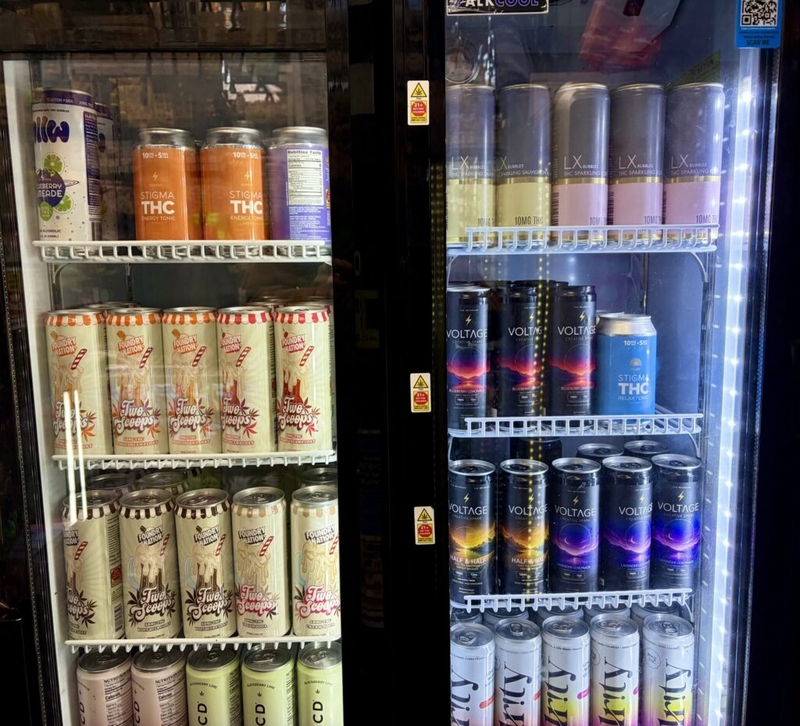
A change in federal law coming next month could change the market for hemp-based THC drinks, seen here at a St. Paul market. (Photo by J. Patrick Coolican/Minnesota Reformer)
With just three weeks until a strict new federal definition of hemp takes effect, business owners and consumers are scrambling to understand what the changes will mean for the availability of the intoxicating hemp-derived products like gummies and drinks that have been widely available for years.
Minnesota’s top cannabis regulator said his office is preparing for either possibility: that the law takes effect, or Congress delays or overturns it.
DFL U.S. Sen. (and Gov.-elect) Amy Klobuchar introduced a bill Tuesday with GOP Sen. Tim Sheehy of Montana that would loosen the definition of hemp and create a regulatory framework for intoxicating hemp products.
If things feel like they are in flux, it’s because they are. Here’s what you need to know about the new hemp law, what could yet happen and what it means for you.
How did we get here?
It all started back in 2018 when the federal Agriculture Improvement Act – better known as the Farm Bill – legalized hemp products containing up to 0.3% by weight of delta-9 tetrahydrocannabinol (THC), the primary compound in marijuana that produces a high.
That meant all sorts of hemp-derived THC products, such as gummies, beverages and topical ointments, were legal nationwide, as long as they met that 0.3% THC threshold. These products quickly became available in stores nationwide, but Congress did not create any mechanism to regulate them, leaving that to the states.
Some states, like Minnesota, created their own regulations for hemp. But many others did not, and these products were essentially unregulated in many places.
In November 2025, Congress attempted to put the toothpaste back in the tube by passing a new definition of hemp that will outlaw most intoxicating hemp products in much of the country. Under the new rules set to take effect Dec. 11, any product containing more than 0.4 milligrams of THC per container will be considered marijuana under federal law. That standard is so strict that many nonintoxicating products, such as a topical balm containing the cannabinoid CBD, along with trace amounts of THC, will also become federally illegal.
What happens next in Washington?
Without further congressional action, the new law goes into effect next month, though a handful of bills have been introduced to either postpone or rewire the new rules. The legislation introduced this week is Klobuchar’s third hemp-focused bill of the session. So far, none have moved forward.
But some industry insiders are cautiously optimistic about the Klobuchar-Sheehy bill, also known as the Hemp Guardrails Act. The bill would raise the potency threshold for hemp products to a maximum of 1% by weight total THC (which includes all forms of tetrahydrocannabinol, not just delta-9); empower the Food and Drug Administration to regulate hemp products and producers; prohibit sales of hemp-derived products to those under the age of 21; create packaging and marketing standards; ban synthetic cannabinoids; and allow states to enact stricter regulations.
“Minnesota is a national leader in hemp, and our state has shown that we can protect kids and support responsible hemp businesses,” Klobuchar said in a statement, adding that the measure “would keep safe hemp products on store shelves, protect consumers from dangerous products, and ensure that farmers and small businesses can continue to operate, grow and create jobs.”
Outgoing Sen. Tina Smith of Minnesota also supports reversing the new law, citing a conversation with a Minnesota brewer. The industry has embraced hemp-based drinks but faces a challenging future in that market segment if the law goes into effect.
“I was just at an event with Utepils where the owner and I agreed that this federal ban is misguided and will hurt our brewers if it isn’t delayed, or better yet, reversed altogether,” Smith said in a statement.
A major potential roadblock remains: A pair of Republican senators — who are still in the majority during the lame-duck session — are vowing to block any bill that “extends, delays or builds a regulatory framework” around hemp products.
It’s possible that no deal is reached before the new Congress is sworn in next year. With large Democratic majorities in both houses and a White House that has signaled support for regulating hemp, the law could get an update in 2027, but passing laws is typically more difficult than blocking them.
What does this mean for Minnesota?
Because Minnesota has its own statutory definition and regulations for intoxicating hemp products, they will remain available in Minnesota regardless of whether the new federal definition takes effect, according to Eric Taubel, director of the state Office of Cannabis Management.
But these products will likely be stocked by fewer retailers who will face new challenges to carry them.
Because recreational cannabis remains a Schedule I controlled substance under federal law – the most-restricted category, reserved for drugs like heroin, LSD and MDMA – companies that make or sell marijuana (and, if the new law takes effect, intoxicating hemp products) are prohibited from writing off many business expenses. They also have limited access to banking services from federally regulated financial institutions.
Minnesota hemp companies will lose access to markets in other states, and out-of-state products will disappear from local store shelves.
That means many businesses will likely have to get creative to continue selling hemp products, said Taubel, the state’s cannabis regulator. Alcohol retailers could build a “store-within-a-store” — similar to the small Minnesota liquor stores within Trader Joe’s or Target locations that are physically separated from the rest of the operation. They may add ATMs or “cashless ATMs” like those found in many cannabis dispensaries so customers can pay without using credit or debit cards. Breweries might continue selling THC beverages, but stop producing them at their own facilities.
Some may simply forge ahead with business as usual and hope for the best, Taubel said.
“Every business is going to make a series of calculations about what risk they’re willing to tolerate,” he said.
Taubel said that his office has not received any guidance from the federal government on how it intends to interpret or enforce the new law and is forging ahead regardless of the outcome.
“What we’ve tried to do is less predict what the federal government is going to do … and more just construct a smart, well-regulated system for our businesses, with the hope that a licensed, regulated market puts our operators in the best place to succeed,” he said.
How are Minnesota businesses preparing for change?
Ryan Kopperud, vice president of growth for Minneapolis’ Wild State Cider, maker of the Birdie and Odder brands of hemp-derived THC beverages, said he has a “substantial amount of hope” that lawmakers could take action before Dec. 11. He pointed to a recent letter from a coalition of veterans groups to Congress in support of reversing the looming ban as a reason for optimism.
“Those big voices that are not hemp trade groups speaking to how valuable hemp has been … are really crucial for getting Congress to understand the depth and breadth of the [industry] and how many people are going to be negatively impacted,” Kopperud said.
Wild State plans to continue producing, distributing and retailing its hemp-derived products statewide, he said. ATMs are being installed in taprooms across the state so people can pay cash for THC beverages — necessary given the federal banking restrictions — while manufacturers are looking for new distributors so they can continue shipping product.
“Every tier of the three-tier system is putting in contingency plans and modifying their business models to be able to sustain a Minnesota-only market,” Kopperud said, referring to the producer-distributor-retailer model for the sale of alcohol in the U.S., upon which Minnesota’s hemp regulations are modeled.
While some alcohol distributors are likely to exit the hemp business entirely, others are looking for ways to remain in the market. Keith Donovan, general manager of liquor and wine wholesaler Bellboy Corporation, said the company is planning to spin off its hemp operations into a new company.
Donovan said he believes any ban on intoxicating hemp products won’t be permanent, but he’s “not feeling very good about something happening prior to January.”
As demand from retailers cratered with the ban approaching, Bellboy has reduced its inventory of hemp products to a manageable level, Donovan said. Sales of hemp products fell by about 75% in just one month between September and October, he said.
In Washington, D.C., Beecher Vaillancourt was in a taxi on Tuesday during a “hill climb” trip to lobby legislators on behalf of the U.S. Hemp Roundtable. Vaillancourt, who owns the Minneapolis-based Foundry Nation and BLNCD Naturals brands of hemp-derived products with his wife, Allison, said his sales to distributors have also dropped off precipitously in recent months. But it’s been counteracted a bit by a spike in online sales, he said.
Vaillancourt’s companies held two “warehouse sales” to move unsold product in recent months. They’re working to build up wholesale and dispensary sales in Minnesota to compensate for the potential loss of out-of-state sales. They’re also in the process of getting an adult-use cannabis license to expand their product lines into the recreational marijuana market, he said.
In the event a deal is reached, Vaillancourt has stocked up on ingredients so they can immediately ramp up production again.
“We’re hedging our bets, optimistically,” he said.

Saint Paul, MN