Incoming Democratic leader promises more a more respectful Arizona Legislature
Nov 19, 2026 | 12:50 am ET
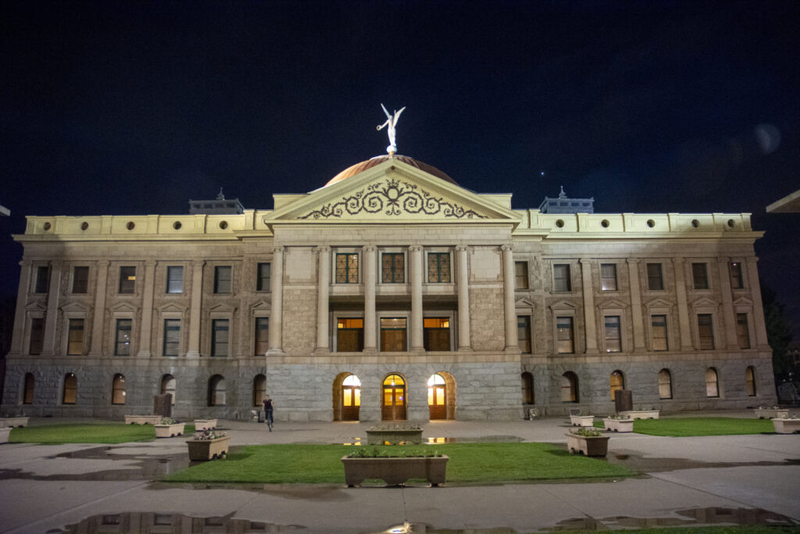
Description
(Photo by Jerod MacDonald-Evoy/Arizona Mirror)
It will be a whole new world in the coming year with Democrats at the helm of the Arizona Legislature, and one of the favorite punching bags for Republicans at Capitol is hopeful that will mean a shift toward collegiality.
“By God, I hope it changes the tone,” Jen Marson, executive director of the Arizona Association of Counties, said during a Wednesday Zoom discussion hosted by Arizona State University’s Mechanics of Democracy Lab.
Marson has spent the last 20 years advocating for Arizona’s 15 counties at the state legislature. And over the past decade or so, that has meant a continual battle over election administration with the Republicans who controlled both the Arizona House of Representatives and Senate.
As Republican election deniers were put in positions of legislative power, Marson attempted to educate them about how their proposed legislation, often based on conspiracy theories, would be difficult or impossible for the counties to implement.
“I have a very mama bear attitude towards my elections directors and my (county) recorders, and that’s our job as staff to stand up there and take the arrows from the legislature, because my people are back home on their phones doing their jobs,” Marson said. “And I am hoping that anyone who is down with the legislature just doing their job and carrying the water on behalf of their clients is treated with respect.”
Democrats will have the majority in both chambers of the state legislature for the first time in 60 years come January, and their leaders have said they plan to eschew the pettiness and divisiveness that marked Republican reign in recent years.
During the Mechanics of Democracy discussion, Sen.-elect Alma Hernandez, who was recently named co-Senate president pro tempore and chairwoman of the Senate Committee on Health said she was dedicated to treating everyone with respect.
“We’re basically not going to treat people like sh**,” she said.
The atmosphere at the Capitol has become increasingly toxic over the last decade, with committee chairmen banning lobbyists, like Ben Scheel of the left-leaning Opportunity Arizona, from speaking at meetings for using the phrase “conspiracy theory” when speaking to the House Elections and Municipal Oversight Committee in 2023.
“I don’t care if you’re a lobbyist or not,” Hernandez said. “Everyone should be treated the same. Lobbyists are human too.”
House Speaker-elect Oscar De Los Santos and Senate President-elect Priya Sundareshan shared similar sentiments after they were named the leaders of the incoming majority by their caucuses on Nov. 6.
De Los Santos promised that Democrats would “govern like adults” and Sundareshan noted that midterm voters had clearly rejected partisan extremism.
Time will tell if Democrats stick to their word, but former chairwoman of the Arizona Republican Party Gina Swoboda warned that if they don’t, their time in power could be short-lived.
“If the new majority … does what the old majority did, I think the public will get frustrated and turn it over again,” she said during Wednesday’s discussion.
Republican committee chairmen and leaders also kicked protesters out of meetings, at one point even banning them from the Senate building, refused to even consider the vast majority of legislation sponsored by Democrats, and shut down commentary from Democratic lawmakers and members of the public who advocated against their proposed policies.
During her numerous appearances before the state House and Senate election committees over the past few years, Marson continually advocated for the state’s rural counties, which are often forgotten in conversations about election administration that focus on the most populous Maricopa and Pima counties, which have more money, staff and resources.
Marson had some success in convincing Republicans to amend their proposals so that they would work for county recorders and elections directors. But at times Republican lawmakers said they didn’t buy her arguments that the counties opposed their election reform proposals due to a dearth of staff and resources.
“When you’re in the Legislature, that’s usually the government’s objection to most things, so it kind of comes across more as a trope than a serious point,” Rep. Alexander Kolodin, R-Scottsdale, told the Arizona Mirror in 2025, adding that lawmakers often rolled their eyes at Marson’s claims that some proposals were not feasible in some counties.
Swoboda said that extreme partisanship at the Capitol made working with lawmakers and their staff nearly impossible, even for someone from the same party. A target of vitriol from far-right members of her party, Swoboda stepped down as the AZGOP chair at the start of 2026.
“We have been in a place where the senior policy staff are so political and that it seeps in and poisons the work,” she said.
Swoboda previously worked as a senior elections policy advisor to Republicans in the Arizona Senate and House of Representatives.
“I tried desperately to get more voting locations in Apache County,” she said. “I couldn’t get anyone to even talk about that bill, because Apache County’s blue. I don’t care if Apache County is blue. I care if there are enough locations for people to vote in Apache County.”
Apache County has long been plagued by voting problems. In 2024, due to equipment failures, voters stood in line for hours, spurring a judge to rule several locations to stay open two hours past the normal close of polls.
Swoboda said she’s hopeful that things at the Capitol will change with a new regime.
Marson said on Wednesday that as an advocate for a nonpartisan organization, she’s ready to work with Democratic legislative leaders, with whom she already built relationships when they were in the minority, on top concerns for the counties this year.
“We need to have respectful disagreement and hopefully come to common ground,” she said. “That’s the whole goal of this entire business.”
The main election-related priority for the counties in the coming year is better funding for the presidential preference election, Arizona’s version of a presidential primary election, which is still funded at a level set in the 1990s that is not adequate for counties to recoup their costs. Marson said that the counties haven’t taken this stance, but she personally thinks the legislature should consider making the political parties pay for their own presidential preference elections, like some other states do.
Phoenix, AZ