Virginia lawmaker, advocates push to expand local authority under home rule proposal
Nov 18, 2026 | 5:27 am ET

Description
The Virginia state Capitol in Richmond on Nov. 3, 2026. (Photo by Markus Schmidt/Virginia Mercury)
A proposal to grant Virginia localities more authority is gaining momentum, as advocates, labor unions, and community and immigrant rights organizations seek to expand local government powers beyond what the commonwealth currently allows.
Virginia is a Dillon’s Rule state, meaning local governments can exercise only powers specifically granted by the state, or those that are reasonably implied or necessary to carry out their responsibilities.
Home Rule, on the other hand, would give local governments more freedom and flexibility to make decisions based on the needs of their communities, as long as those decisions do not violate state or federal laws.
Dillon’s Rule originated in the 19th century, when Iowa Supreme Court Judge John F. Dillon developed the legal doctrine during a period of rapid urban growth, railroad expansion, and growing concerns about municipal spending, public borrowing, and rising local government debt.
Del. Marty Martinez, D-Loudoun, is introducing the Virginia Home Rule Act proposal, which would let localities act on local issues unless the state expressly limits or prohibits them, rather than requiring them to seek permission first.
“We now have an opportunity to build a more responsive system of government,” Martinez said during a call with reporters on Monday.
Nearly 80% of local officials say Dillon’s rule limits their policy options, according to survey data collected by the Municipal Research Lab at Old Dominion University, which included 301 responses from every Virginia locality.
More than half have abandoned potential policies because they expect the state to stop them.
Bruce McDonald, the lab’s director, presented the data on Monday, reporting that 73% of respondents said Dillon’s Rule restricts their ability to meet community needs and that over 60% of respondents support the concept of Home Rule.
Additionally, a study from the University of Virginia School of Law analyzed 33 local government legislative agendas containing 979 requests for the 2026 General Assembly session, finding that 45% concerned expanding local authority and 76 agendas sought more power over taxing and land use.
“Our bill makes one fundamental change: Instead of asking whether Richmond gives a community permission to act, we would ask: Has the commonwealth prohibited or limited that community from acting?” Martinez said.
Advocates for the Home Rule Act argued that current restrictions impact immigrant families and working-class residents facing housing instability and rising costs. Enacting the proposal law would allow cities like Alexandria or Fairfax to address specific regional emergencies without waiting for Richmond’s approval.
Carmen Daugherty, executive director for the Advancement Project, said Home Rule would preserve statewide civil-rights protections while giving communities more say in local decisions.
“Statewide protections should serve as a floor for people’s rights, not an unnecessary ceiling on local progress,” Daugherty said.
Boaz Young-El, statewide campaigns director for New Virginia Majority, added: “The people closest to these problems should have a meaningful voice in developing the solutions, and that means local governments need meaningful authority.”
Opponents have pushed back against proposals to modify the state framework, concerned about how that would affect statewide consistency, the business environment, and public safety and environmental standards.
But Home Rule would not mean every locality can do whatever it wants, Martinez and others said. Rather, it would mean the legislature can set boundaries, retain authority over statewide matters and identify areas where uniform policies are necessary.
The delegate from Loudoun also said he expects challenges in the legislature, given state leaders’ reluctance to alter state control.
A copy of the proposal was not available during a call with reporters on Monday, and is still under review by the Division of Legislative Services.
According to recent data collected by the National Association of Counties, if successful, Virginia would join most states across the country with less restrictive state powers.
Virginia is one of seven states with the most restrictive powers: Delaware, Nebraska, Texas, Vermont, West Virginia and Wyoming.
Martinez said he expects to introduce the proposal for the upcoming General Assembly session, which begins in Richmond on Jan. 13.
Del. Dan Helmer, D-Fairfax, recently introduced a resolution to study Dillion’s Rule, but it was continued. No action has been taken on the measure.
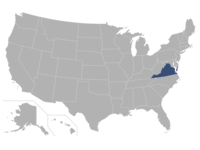
Richmond, VA