Maryland’s 1.15 million family caretakers need more support, advocates say
Nov 18, 2026 | 5:22 am ET

Description
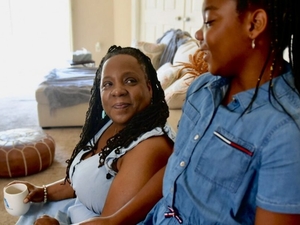
Advocates say that Maryland’s family caregivers need more support as they take on economic and emotional tolls while providing billions in unpaid labor helping family members through chronic conditions, injuries and other challenges. (Photo by Halfpoint Images/Getty Stock photo)
Advocates say that Maryland’s family caretakers need more support as they take on economic and emotional tolls while providing billions in unpaid labor helping family members through chronic conditions, injuries and other challenges.
From providing for a spouse with dementia to helping aging parents with their medications and mobility needs, the labor that Maryland’s estimated 1.15 million family caretakers provide would equate to, collectively, 1 billion hours of unpaid caretaking services valued at $24 billion.
But instead, family caretakers report taking financial hits when they move into caregiving duties such as paying for groceries, providing or arranging transportation or even making home modifications to support their loved ones, according to a report Tuesday by the AARP Maryland.
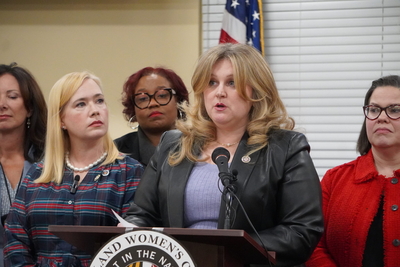
It’s for that reason and more that a coalition of healthcare advocates and family caregivers gathered in Annapolis Tuesday to push legislation that provides greater protections for Maryland’s caretakers and bolsters the state’s long-term care system.
“Family caregivers are the backbone of Maryland’s long-term care system, but right now we’re asking them to shoulder an enormous responsibility largely on their own,” Sara Westrick, AARP Maryland Advocacy Director, said at the press conference. “The Our Care agenda that we’re launching today is about making sure that caring for someone you love does not mean sacrificing your own financial security, health or future.”
The AARP Maryland report shows that 43% of Marylanders aged 30 and older provided unpaid care for a family member or a friend in the last year. The report is based on a survey of 1,018 Maryland residents aged 30 or older, from Aug. 5 to Aug. 26.
It found that about 45% of all caregivers in Maryland were between the ages of 45 and 64, while 35% were 30 to 44 years old. The other 20% of Maryland caregivers are 65 or older.
About 61% of caregivers live with a partner or spouse, and approximately 60% of caregivers in Maryland are women, the survey found.
“Behind every one of these statistics is a daughter helping a mother with her medications, a husband caring for a spouse with dementia, or an employee trying to get through the workday after staying up all night providing care,” Westrick said. Also joining the AARP Maryland were members of Service Employees International Union 1199.
Overall, two-thirds of Maryland caregivers reported working a job while taking on caregiving duties. They are concerned about unfair treatment in the workplace, with four in 10 reporting that they had not told \their boss about their caregiving responsibilities, and 8% of respondents saying they felt penalized or discriminated against because of caregiving.
It’s why Del. Lesley J. Lopez (D- Montgomery) plans to reintroduce legislation that would protect caregivers against workplace discrimination.
“Being a caregiver does not mean you are not doing a great job at your regular job. It does not mean that your are going to be any more late, any less present at your workplace,” Lopez said at Tuesday’s event. “We have to understand that there are accommodations that need to be made, but most importantly, people should not be discriminated against because of their status.”
That said, the data shows that portions of the caretakers had to cut back on hours or stop working entirely to take care of their family members.
A quarter of caregivers surveyed took a leave of absence from work, while 19% moved from full-time to part-time work. About 10% of caregivers reported turning down a promotion, while about 7% retired earlier than planned. Additional costs needed to support family members can also take a toll. New out-of-pocket spending can whittle down savings accounts and lead some caretakers to take on debt.
That’s not factoring the emotional challenges that can arise from caretaking. The legislative priorities include bolstering access to resources for people with dementia and similar conditions.
It’s a sadness that Del. Ashanti Martinez (D-Prince George’s) knows personally, recalling his experience of watching his great-grandmother forget him and other family members as her dementia progressed.
“There are few things more heartbreaking than watching someone you love slowly forget the people and memories that made up their life,” Martinez said. “That experience has stayed with me and has shaped how I understand our healthcare system, how I approach my work in Annapolis.”
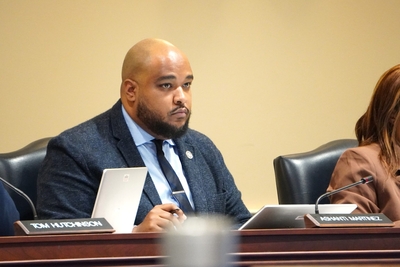
It’s why he plans to sponsor legislation to ensure that Marylanders have better access to Alzheimer’s treatments.
“With early detection, access to those treatments, and family knowing that options exist – it can make a world of difference,” Martinez said.
He also plans to sponsor legislation that would provide greater transparency and accountability on how nursing homes spend their money, to ensure that the funds are being used to provide the best care for patients in those facilities.
Members of 1199 SEIU are also pushing legislation to protect staffing levels for long-term care facilities. They also want legislation that penalizes large employers for each employee who receives healthcare coverage through Medicaid, thereby freeing up taxpayer dollars to support other state healthcare programs.
“When taxpayers are forced to pay for healthcare coverage for large companies’ employees, those companies should shoulder the cost.” said Ricarra Jones, political director for the union.
“When a large employer does not provide affordable health coverage, the bill doesn’t just go away. It doesn’t disappear. It gets sent to us as Maryland taxpayers,” she said. “We cannot continue to allow large corporations to continue to shift that healthcare cost onto us.”
With lawmakers and advocates alike gearing up for the 2027 session, they’ll need to grapple with a looming $3 billion budget shortfall that threatens both existing programs and the success of any new initiative with a large price tag.
In an interview last week, Westrick said that she hopes the new data can help sway lawmakers to support the legislative package amid the challenging fiscal year.
“We wanted to find the data to make our case to legislators,” Westrick said in a recent interview. “And because of the magnitude of this infusion of care means for the state’s economy – it’s not just a family issue, it’s a workforce issue. This is an economic issue.”
Annapolis, MD