New taxes, changes to property tax exemptions among recommendations to Maine Legislature
Nov 18, 2026 | 4:00 am ET
Description
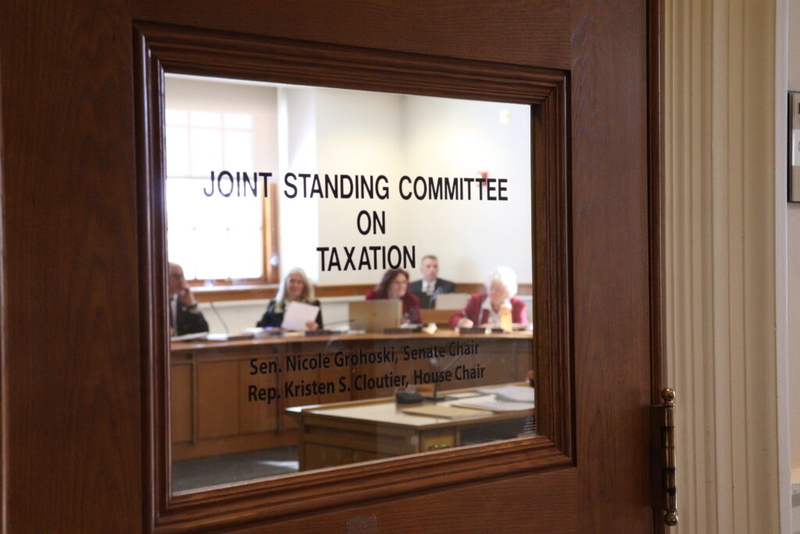
The Legislature's Taxation Committee hears public feedback on bill proposals in Augusta. (Photo by Emma Davis/ Maine Morning Star)
A state task force is recommending that Maine double its homestead exemption to $50,000 and allow municipalities to set local sales tax to alleviate property tax burdens around the state.
The Real Estate Property Tax Relief Task Force held its final meeting Tuesday, and despite meeting for over a year, the group had no shortage of discussion as the meeting carried on for more than seven hours.
The task force, which is composed of legislators, municipal and county leaders and business representatives, began its work in September 2025. It issued interim recommendations in February, and its final report is due to the Legislature by Dec. 15.
Property taxes have long been a concern in Northeast states, which tend to rely more significantly on them for revenue to fund public institutions such as schools, but the issue has gotten even more challenging since the pandemic when property values were upended.
Throughout the meeting, task force members debated if they could meaningfully relieve the pressure on property taxes without increasing revenue elsewhere.
Portland Attorney Phil Saucier said he was unsatisfied with shifting things around and leaving the burden on municipalities.
“While it’s more targeted relief for the same money, it’s still raising the mill rates for municipalities,” he said. “The municipalities and the other property taxpayers, will be funding these changes, not the state. That’s the problem I have with the funding mechanism part of it.”
Without new revenue, the task force is left to reallocate money from one program to another, ultimately not reducing the total amount that Mainers pay in property taxes.
“It’s not straight out property tax relief,” said Dick Woodbury, an economist and former state senator for Cumberland County. “We’re going to raise just as much from property taxes as we did before. We’re just going to reapportion it a bit in a way that feels a little bit fairer — not a little bit, a lot fairer — and you know that to me is a good is a pretty amazing accomplishment if we could pull it off.”
Woodbury said he didn’t think new funding was guaranteed, in which case he’d still like to see state programs help the people that need assistance the most.
“I am not optimistic,” Woodbury said. “And therefore I put in there what I still think is a significant improvement to the system.”
But not all members of the task force were sold on creating new taxes to pay for property tax relief.
“The danger of adding new taxes is that they will just become extra money, and it will do nothing to help with the property tax,” said Rep. Robert Nutting (R-Oakland).
To that end, the group ultimately agreed on a few recommendations that would generate new funding, such as expanding revenue-generating options for municipalities, such as a local sales or lodging tax.
Another suggestion is legislation to allow municipalities to issue a service charge to properties that are exempt from taxes. For example, a town could charge a state building for the cost of providing trash removal, or another municipal service.
The group also recommends that the Legislature look to find better ways to support larger communities such as Bangor and Portland that have facilities such as hospitals and state offices that are used by people who don’t live and pay taxes in those cities.
Other recommendations
- Document how many municipalities have impact fee ordinances — a fee charged to a new development, for local governments to pay for infrastructure improvements needed because of that development project
- Establish ongoing and regular reviews of exemption programs
- Update minimum assessing standards, and create financial supports for municipalities to reach compliance with new standards
- Reduce revenue sharing for municipalities that do not move toward assessing compliance within three years
- Study underfunded mandates, the requirements for municipalities in state law that get some funding support but not enough
- Fund a program to share information about the Property Tax Fairness Credit
- Coordinate with the taxpayer advocate on educational efforts and how programs are being utilized
- Review audit and financial disclosure requirements for municipalities and school districts
- Direct the Maine Office of Community Affairs to provide an annual report on regionalization efforts for local services.
Changes to existing programs
One of the major recommendations focuses on the homestead property tax exemption and the Property Tax Fairness Credit — which provides refunds for property taxes or rent paid.
The group recommends that the state increase the homestead exemption to $50,000. It suggests the Property Tax Fairness Credit be amended to create a two-tiered system for taxpayers who pay more than a certain percentage of their income for property taxes or rent. The modified program should also remove any distinctions based on age or family size, so the only factor is property tax bills as a percentage of income. The details will be left up to legislators to determine.
The program was already expanded in 2024, alongside the creation of the Property Tax Deferral Program, to soften the blow from the short-lived Property Tax Stabilization Program that allowed older Mainers to freeze their property taxes.
The Legislature repealed that program after just one year, following skyrocketing cost projections, concern about wealthy property owners taking advantage due to a lack of income restrictions and the administrative burden on municipalities.
Also included in the task force recommendations is the Property Tax Deferral Program, which allows Mainers who are 65 and older or permanently disabled to defer paying property taxes until they die or their property is sold.
The group recommended that lawmakers remove the limit on the number of acres eligible for the deferral program and the requirement that a landowner must have less than $150,000 in liquid assets.
The members also agreed that the program should be amended to allow a landowner to apply any time of year for the program, and direct the Maine Revenue Service to develop educational information about the program for municipalities, who in turn would be required to share that information with delinquent taxpayers.
The group would also direct the Maine Revenue Service to issue a report to the Legislature in 2032 on participation in the deferral program and any trends.
Task force members discussed how to protect the state’s investment in these properties, and how that investment is made whole at the end of the program.
But Sen. Nicole Grohoski (D-Hancock) pointed out that losing some money to keep someone in their home is still less expensive than the state paying for them to be in a nursing home or homeless shelter.
“I think the money lost would probably still ultimately be money saved elsewhere,” she said.
Augusta, ME