Aging water, transportation systems pull Pennsylvania’s infrastructure grade down to a ‘C-’
Nov 17, 2026 | 4:26 pm ET
Description
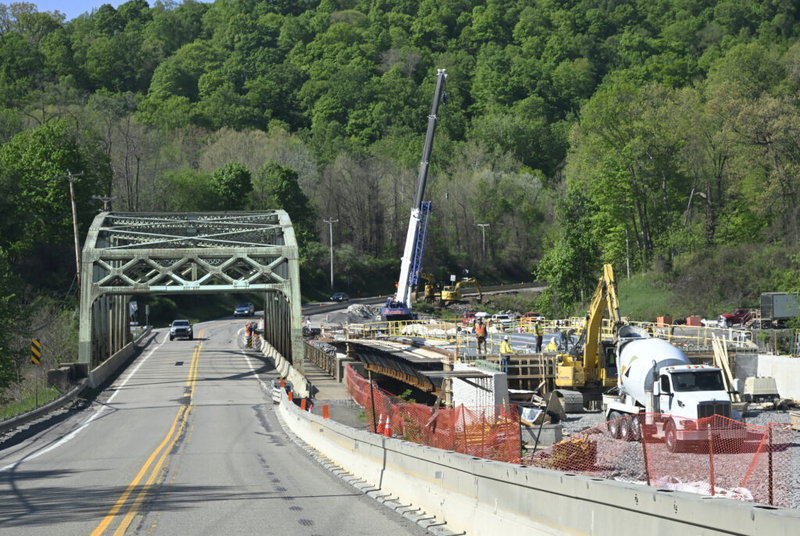
Raccoon Creek Bridge construction on Frankfort Road, Route 18, in Beaver County. (Photo by John Beale/Pennsylvania Capital-Star)
The commonwealth got a passing grade for its infrastructure in a 2026 report card, but experts warn the state needs to invest millions more to get ahead of the curve.
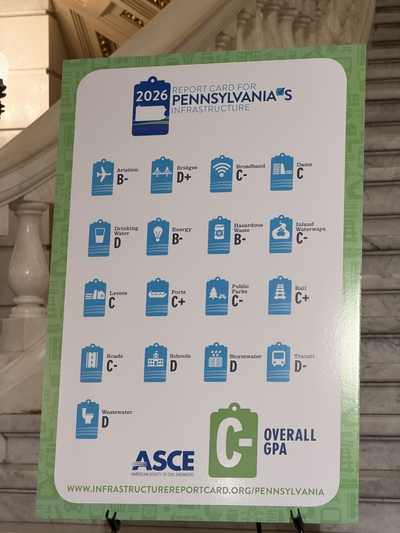
At the Capitol on Tuesday, the state chapter of the American Society of Civil Engineers unveiled Pennsylvania’s C- grade, emphasizing the importance of maintaining and upgrading bridges, parks, roads and transit to keep Pennsylvanians safe and productive.
“These systems also serve as the backbone of Pennsylvania’s economy. Infrastructure affects the lives of everyone on a daily basis,” said Brent Basom, the president of ASCE’s Central Pennsylvania section. “When an engine is functioning as planned, it is often out of sight and out of mind. But when infrastructure encounters a critical, serious problem or a system fails, the consequences can affect people’s quality of life and have serious, widespread economic impacts.”

Justin Komp, who chaired the Pennsylvania 2026 report card, highlighted some of the positives and negatives across 17 categories, each of which were assessed by a team of civil engineers.
“This report is a snapshot of our infrastructure conditions and serves as a tool to start a conversation about where we are and what can be done to improve infrastructure in Pennsylvania,” said Komp. “I want to emphasize this report is a reflection of the condition and capacity of the systems we have in place … (And is) not a reflection on the people and agencies who work hard to operate and maintain those systems with the resources made available to them.”
Carol Haddock, the incoming national president of ASCE, pointed to last weekend’s events as evidence of infrastructure’s importance. Upgrading communication technology at a remote Arkansas airport over the weekend accidentally triggered a nationwide failure, grounding flights for hours nationwide.
“The ASCE infrastructure report card translates complicated, discipline-focused data and analysis into something digestible, so that our decision makers and the general public … have information to help them make decisions and to help guide the investments that we make,” Haddock said.
She noted that it would take an estimated $3.7 trillion over the next ten years to close the nation’s infrastructure investment gap to meet a “good repair” standard. The state report doesn’t include an overall number, but has estimates for individual categories.
Report specifics
Pennsylvania has some of the nation’s oldest infrastructure. Shirley Clark, a professor at Penn State Harrisburg and a technical director with ASCE, noted that excavators still routinely uncovered 100-year-old wooden pipes made from hollowed out trees.
“My area of interest has been everything in water that’s buried underground: drinking water, wastewater and stormwater,” Clark said.
All three categories she mentioned received a D, the second-lowest grade, which Clark said is an improvement from previous years but impressive considering the state’s patchworked and aged system.
“(There’s) this idea that when it’s out of sight, it’s out of mind. And that has been one of the challenges,” Clark continued. “Water is interconnected. Drinking water is not separate … from wastewater. From stormwater. Because they all come together in what we call the Susquehanna (River) or the Juniata (River) or the Delaware (River) or any of the other rivers in the state.”
Clark said the Susquehanna River, one of the world’s oldest, is “one of the most flood-prone rivers in the United States,” traveling 300 miles within Pennsylvania’s borders. Along its length are low head dams, where water runs over the construction, creating a circulating current that can be dangerous for swimmers.
“At certain flood times, they’re drowning machines,” Clark warned. “We know there are ways to fix it. We know there are ways to prevent this from happening. But it takes investment.”
Dams were an area of improvement from the state’s last report card, moving up to a C due to federal investments, though more than 30% are over 100 years old.
“We must recognize that water is vital. Water is critical to public health and well-being,” Komp said. “While increased federal funding … was helpful, it was not sufficient to address the massive backlog of work to be done. New legislation must close the infrastructure gap through sustained capitalization and grants for small systems and disadvantaged communities.”
The state’s worst score was transit, where it earned a D-.
Komp encouraged stakeholders to think about transit, roads and bridges as one, interconnected system — rather than separate areas. He noted that the average bridge in the state is 59 years old, while the national average bridge is 47. Most bridges are designed to last for 50 years.
“You can’t just only fund roads and bridges, and you can’t just fund only transit,” Komp said. “Not everybody can take public transit, but also not everybody can drive.”
On the plus side, Komp pointed to energy, one of three categories to get a B-, which is the state’s highest individual grade and far above the national D+ average.
“The reason for this discrepancy is Pennsylvania’s role as one of the leading energy producers in the nation, exporting 87 million megawatt hours of electricity in 2024 and supplying nearly 20% of U.S. natural gas production,” Komp said.
The state also leads when it comes to producing nuclear and coal, he continued, but increased demand for power — driven, in part, by data centers — warrants continued improvement, he added.
“Outages are also on the rise, meaning more investment in the grid and resilience measures are necessary,” Komp concluded.
Other areas with B- grades include aviation and hazardous waste.
Funding and workforce challenges
Presenters credited the nation’s “C” grade last year — the highest awarded since ASCE report cards started in 1998 — to the $1.2 trillion in federal investments under the Infrastructure, Investment and Jobs Act, which former President Joe Biden signed into law in late 2021.
“(The act) provided Pennsylvania more than $22 billion,” Komp said, and “helped address decades of underinvestment across our infrastructure networks.”
Additionally, Act 89 of 2013 generated nearly $2.4 billion over 10 years for transportation revenue by increasing the fuel tax. But gaps remain, especially in transit systems like the Southeastern Pennsylvania Transportation Authority (SEPTA).
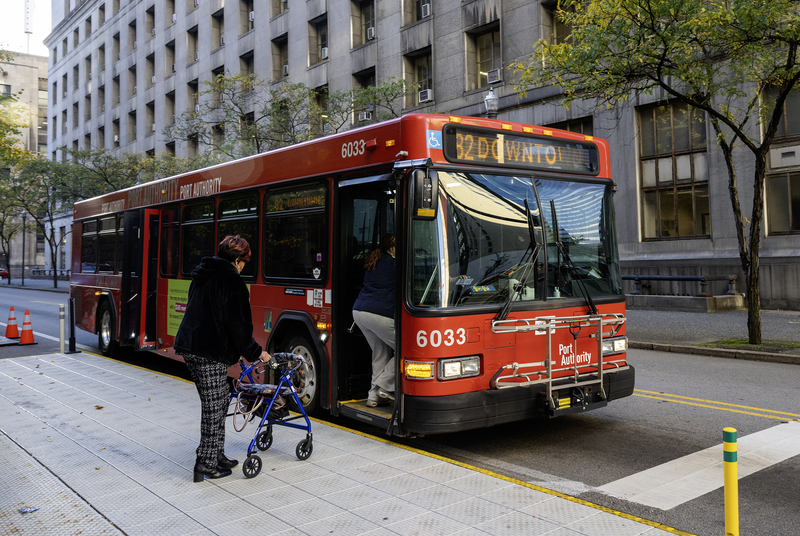
“SEPTA faces a more than $10 billion funding gap, while Pittsburgh Regional Transit is facing more than $2 billion in deferred capital needs,” Komp continued. “Pennsylvania transit agencies provided more than 528 million passenger trips in 2024, demonstrating the system’s critical role in supporting mobility, access to jobs, healthcare and education.”
Transit funding gaps stalled budget negotiations last year until Gov. Josh Shapiro announced that $394 million from the Public Transportation Trust Fund could be used for operating expenses. The transfer bought legislators two years to identify a new, ongoing funding source for transit, which is a priority for the incoming Democratic trifecta.
“Stopgap measures and temporary funding, though valuable, are not sustainable solutions,” Komp said. “The development of long-term funding streams for transportation would enable agencies to reliably plan for the future.”
Komp also noted the looming workforce crisis for civil engineers, with more people retiring each year as the number of incoming students dwindles.
Drinking water systems alone saw a 16% drop in the number of state operators compared to twenty years ago, he said.
“Most of the infrastructure we rely on was built in a time where we did not have an understanding of how prominent and severe flooding, wildfire and wind events would be,” Komp added. “Not only is the infrastructure old and must be modernized, but the designs must adapt to current and future weather conditions.”
Harrisburg, PA