Legislators to tackle property taxes — again — in 2027
Nov 17, 2026 | 4:41 pm ET

Description
Photo illustration by Getty Images.
LouAnn Hansen said her property tax bill on a small second home with access to Flathead Lake jumped 93.24% in one year — and she can’t even stay there half of the year.
The parcel is 0.06 acres — 2,490 square feet — and it has a manufactured home and a small shed, Hansen said.
She said her land isn’t lakefront property despite access to it, and the state Department of Environmental Quality mandates a winter closure due to its sewage system.
At a legislative committee meeting Monday, Hansen said her taxes jumped to $2,167.80 after the property’s assessed value went from $131,602 to $270,339, and its taxable value increased 105% in one year.
Hansen said other residents of the 121-lot Paradise Cove Resort in Polson are in a similar situation, and many are Montana seniors.
“Property owners I know have discussed how they perhaps will not be able to afford their property taxes and may have to sell, which will most likely be to more wealthy out-of-state owners,” Hansen said.
At the final meeting of the Revenue Interim Committee before the 2027 Montana Legislature, Hansen asked lawmakers to make a property tax fix a top priority for the upcoming session, and to be sure they had adequate time to consider any bills.
In the 2025 session, lawmakers worked on reducing property taxes, but they disagreed on the best approach and didn’t pass a pair of bills that did so until the final day.
One bill, Senate Bill 542, faces a couple of legal challenges, including one alleging it was cobbled together out of the public eye, a violation of the Montana Constitution.
One result of 2025 legislation was 80% of Montana homeowners saw property tax decreases, according to earlier estimates.
But some people such as Hansen, who own second homes, saw increases, and others, such as owners of long-term rentals, didn’t get access to a rebate.
“I would really like to see this kind of legislation that affects every single Montanan to not be dealt with right at the end of the session,” Hansen said.
At their meeting Monday, legislators heard some of the work that still needs to be done to help Montanans pay rising property taxes, and they also heard a plea to ensure any new legislation doesn’t undo solutions from 2025.
Heather O’Loughlin, head of the Montana Budget and Policy Center, said if legislators make policy changes “around the edges,” they should consider impacts on Montanans paying property taxes at the median rate.
“You all provided a pretty substantial property tax decrease for primary residences at the median, so we hope that we can continue to hold that,” O’Loughlin said.
Rep. Mark Thane, D-Missoula, pointed out one outcome that meant disparate treatment of similar property owners.
Thane showed how a young couple coming from outside Montana who purchased property in the state in August 2026 would be treated differently than another couple in a similar situation when it came to a property tax rebate — based on the status of the home under its previous owner.
If the previous owner had applied for a reduced property tax rate under the new legislation, the new couple would receive the benefit, but if the previous owner hadn’t qualified, the new owner would miss out, Thane confirmed through the Department of Revenue.
“Is there any latitude or capacity within the rules to afford that young couple safe harbor and qualify for the rebate?” Thane asked.
Bryce Kaatz, with the Department of Revenue, said the plain reading of the law requires a property owner to have lived in their principal residence for at least seven months, so the couple coming from outside Montana would not be eligible.
Rep. James Reavis, D-Billings, said he’s been receiving complaints from people who are not professional landlords but have been renting long-term rentals to others and missed the refund application deadline.
“Does this require a legislative solution?” Reavis said.
Kaatz said the plain language of the refund provision is specific to a principal residence, and the Department of Revenue does not have latitude to extend it to long-term rental properties.
Kaatz said he didn’t see obstacles to legislation that would apply the refund to long-term rentals, but he also said it would take some time to implement.
In public comment, Sen. Mary Ann Dunwell, D-Helena, said many of her constituents benefited from legislation in 2025, but she sees Montanans with property tax problems that need attention.
“Many, however, keep me up at night,” Dunwell said. “Their faces and their despair haunt me, and I’m sure you’re in a similar position. The bills we passed hurt them, really, really a lot.”
Sen. Greg Hertz, R-Polson, is one of the plaintiffs in two lawsuits against SB 542, one of the key property tax bills from 2025.
Also a committee member, Hertz said remarks in the meeting demonstrate the difficulties with such a bill.
“This discussion obviously illustrates what happens when you try to pass a very complex bill, no matter what it is, in a matter of a couple days, and you don’t see all the unintended consequences,” Hertz said.
But Bob Story, with the Montana Taxpayers Association, said any piece of legislation ends up needing work after it takes effect.
“No matter how much time you put into it, you never fix all the holes, and you find out a lot of unintended consequences when it actually gets implemented,” Story said.
Chairman and Rep. Larry Brewster, R-Billings, said Tuesday the committee opted against bringing its own property tax bills to the 2027 session, partly to first see how litigation is resolved.
Brewster said some bills might try to do away with legislation from 2025, and he anticipates others that would “nibble away at the worst parts” to help more property owners.
More than a dozen bill drafts are in the works to address property tax laws, although not all are related to residential taxpayers, and some are on hold.
“There’s a lot of different ideas among members about what they think we should do,” Brewster said.
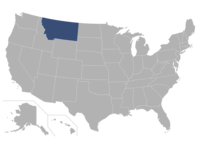
Helena, MT