Free Home Gas Hookups End Next Month, But Delayed Rules Could Complicate Rollout
Nov 17, 2026 | 12:25 pm ET
Description
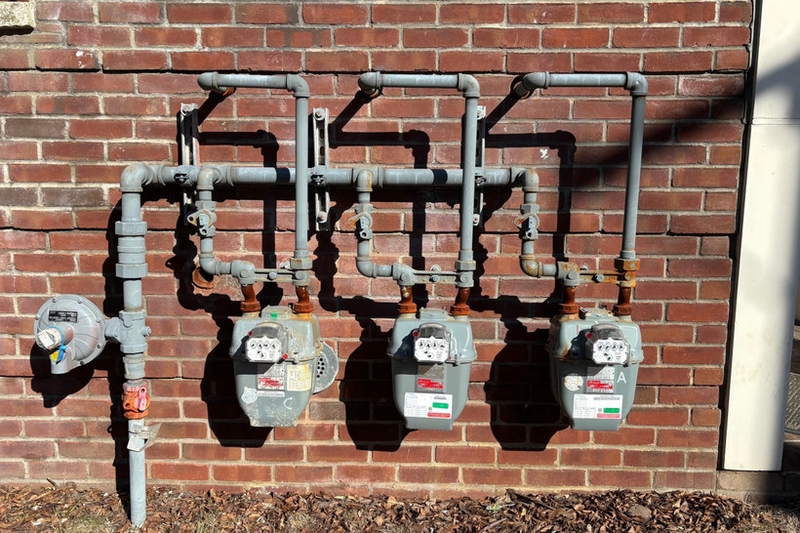
Photo courtesy of New York Focus
After a string of bruising defeats, New York climate advocates ended 2025 with one hard-fought win: Governor Kathy Hochul’s signature of a bill ending free gas system hookups for residential buildings.
Hochul said the repeal of the “100-foot rule,” which allows customers to receive 100 feet of new gas lines at no cost to them, would promote affordability and help level “the playing field for clean energy alternatives.”
There was just one caveat: The law would be put on hold for a year, to give Hochul’s energy agency time to craft what she called “necessary regulations” to implement it. The deadline: Dec. 19, 2026.
That deadline is now just a month away, and the regulations aren’t ready. The Department of Public Service (DPS) released a formal draft on Monday afternoon, following months of silence and repeated inquiries from New York Focus. But a mandatory 60-day public comment period means the final rules are likely to be at least a month late.
During that stretch, utilities will be expected to comply with the new law while rules to enforce the old one remain on the books.
“It’s not only disappointing, but it creates a bunch of regulatory uncertainty for the utilities,” said Christopher Casey, utility regulatory director for New York at the advocacy group Natural Resources Defense Council. “I don’t think there’s any good excuse for it.”
DPS spokesperson Kim Mashke stressed that the law would take effect regardless.
State Senator Liz Krueger, who sponsored the legislation, said she was “glad that DPS is finally moving forward with the regulations.”
“I’m confident the utilities understand they have to follow the law even while the regulations are still moving through the comment period,” she added.
The state’s largest gas utility, National Grid, told New York Focus it “complies with all laws and any regulations set forth by our regulator” and wants the state to preserve a path for households to convert from heating oil to gas as it implements the new law.
Another major gas utility, National Fuel, said it intends to comply with the law as the regulatory process unfolds. The two other largest utilities did not respond to New York Focus’s questions.
Utilities spend hundreds of millions of dollars a year on gas line extensions, which get buried in the “delivery” side of customer bills rather than being charged to the developer or homeowner seeking the hookup. In 2021 — the last year for which data is readily available — the statewide cost came to at least $450 million, according to an analysis by the consumer advocacy group Public Utility Law Project.
That sticker price is just the start. Utilities get decades to pay it off, and the amount compounds as taxes and the companies’ profits are added on top. An analysis of gas line extension costs in Maryland, by the state’s Office of People’s Counsel, found that the final cost over 60 years was roughly four times the initial figure.
The law passed last year should keep future spending out of everyday customers’ bills. And at first, it looked like DPS was on schedule with its implementation. It issued a pre-proposal of sorts in May detailing the rule changes it had in mind. Utilities and advocacy groups gave feedback by late June. Then things went quiet for months.
The proposal released on Monday is almost identical to the one from May, with only minor tweaks. The main policy details that utilities and advocates sparred over in their comments remain untouched. For example, DPS has proposed to allow certain developers — notably those building affordable housing — to gradually pay off the cost of new gas lines through a bill surcharge, rather than all at once. Utilities support this idea; climate advocates oppose it, arguing that it will continue to incentivize gas construction by obscuring the full cost.
In other respects, DPS has proposed to go further than the law required. For example, it wants to ensure that gas line extensions for commercial buildings — which weren’t addressed in last year’s legislation — are capped at 100 feet, whereas the previous rules often allowed more. (Advocates are pleased; National Grid has pushed back.)
But the narrow disagreements didn’t warrant months of delay, advocates say — particularly since the parties will now get at least another couple of months to hash out policy details.
Anshul Gupta, policy and research director at New Yorkers for Clean Power, said the long delay appeared intentional — perhaps reflecting a desire to avoid controversy before the election. But, after Monday’s release of the draft rules, he said he was mostly relieved to see the process advancing, even with a likely “gray area” when the law first takes effect.
Casey, of NRDC, said the delay was part of a “broader pattern” with the state’s energy regulators.
“There are numerous important decisions that have been languishing before the PSC,” he said, referring to the Public Service Commission. Among them: reforms to how the state manages utility spending on gas infrastructure, how it contracts major renewable projects, and how it pays for smaller-scale solar and batteries. In some cases, “the PSC has been sitting on comments for months and months, some, years,” Casey said.
Mashke said many factors affect the commission’s timelines, “such as the complexity and volume of the record to review.”
“The finished product must reflect the Commission’s mission to ensure utility service remains safe and reliable for New Yorkers,” she said.
In some instances, the commission has moved swiftly. Last fall, it took less than two weeks after public comments closed to give its blessing to a major pipeline project the state had previously rejected.
“They’ve also shown that they can turn things around on a dime, if that’s their priority,” Casey said.
Albany