Pair of college-age Kansas voters yearn for moderation, civility in politics after midterm elections
Nov 16, 2026 | 10:06 am ET
Description
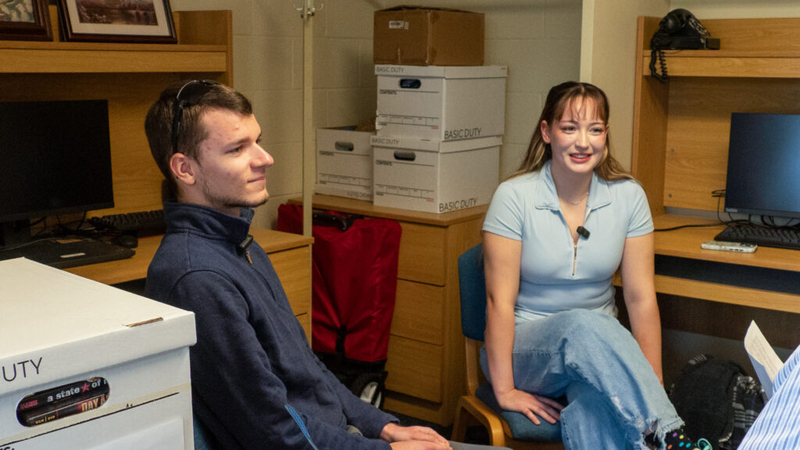
Aaron Bartel and Isabel Kautz, both Washburn University students who followed the recent election closely in a political science class, appear for a recording of the Kansas Reflector podcast on Nov. 13, 2026. (Photo by Anna Kaminski/Kansas Reflector)
TOPEKA — Washburn University students Isabel Kautz and Aaron Bartel are young enough that they’ve not experienced the potential of sustained periods of bipartisan politics in Washington, D.C.
Kautz, 19, of Atchison, and Bartell, 20, of Inman, followed with unusual zeal what turned out to be a course-modification election nationally and a collection of surprises in red-state Kansas. In addition to coursework in political science class, both went to campaign events and consumed social media and news reports on 2026 races. They voted by advance ballot so they could serve as volunteer election workers in Topeka.
Both analyzed campaign ads, with emphasis on the contest between Republican U.S. Sen. Roger Marshall and Democratic challenger Adam Hamilton. They were at the Hamilton-Marshall debate at the Kansas State Fair in Hutchinson. Both tuned into President Donald Trump’s hyper-partisan rallies on Marshall’s behalf. They took note of Hamilton’s pledge to be a centrist senator drawn to bipartisanship.
“I think that would be most ideal for Kansans, absolutely, because that would actually represent Kansas,” said Kautz, a Democrat. “If we’re able to work across the aisle and work together and remain cordial and not personal, both on a national and state level, that would create a lot of progress.”
The second decade of their lives has been marked the chaotic politics of Trump’s presidential win in 2016, the 2020 victory by President Joe Biden and Trump’s resurgence in 2024. The U.S. House and U.S. Senate bounced between Republican and Democratic control during those years.
On Nov. 3, Hamilton’s message of good-government unity and a populist’s focus on the cost of living led to Marshall’s defeat. Texas Democratic U.S. Senate candidate James Talarico likewise prevailed against Republican nominee Ken Paxton. In both cases, victory by Democrats was assured by voters who flipped from backing Trump in 2024.
“That’s part of the reason candidates like Hamilton and Talarico won,” said Bartel, a registered independent. “They’ve promised to work across the aisle, trying to be moderate, kind and moral in office.”
Hope for change
Kautz said she welcomed Democratic control of the House and Senate as the Republican president worked through the final two years of his second term. Trump has experienced what it’s like to have Republicans in charge of both chambers, but what occurs after January will be uncharted for him.
“I can only hope there’s change,” she said. “I think that having a majority will help kind of create that balance between Democrat and Republican.”
Bartel said inflation was important to college-age voters, especially as they prepared for careers in an uncertain economy. He said candidates ought to recognize voters could be pulled in different directions, but their final decisions often boiled down to “the economy, after all.”
“Especially as college students, we feel the cost of everything,” Kautz said. “I want to stay in Kansas. I want to grow roots here. I would love to see the cost of living go down so I can afford to.”
Kautz and Bartel agreed the September enforcement sweep by U.S. Immigration and Customs Enforcement agents in southwest Kansas hurt Republican candidates in Kansas. Both said Trump’s decision to attack Iran, a conflict that exacerbated cost-of-living challenges, was viewed as a betrayal.
“It’s nice when candidates can keep their campaign promises,” Bartel said. “Also, war is bad.”
They agreed reporting by The New York Times before the election about Marshall’s role in filing lawsuits against more than 700 former patients for nonpayment of medical debt and the arrest of at least 81 defendants for not appearing in court damaged the senator’s reelection bid. Marshall defended his approach and said he had relied on “common business practices” in an attempt to secure payments.
“It blew up all over all of my feeds, whether that’s on YouTube or TikTok or Instagram,” Kautz said. “I think that resonated with a lot people in Kansas.”
“Women, especially,” Bartel said.
An election holiday?
Kautz and Bartel trained to serve as poll workers on Election Day. Both worked a half-day shift, and they saw nothing that presented an opportunity for anyone to attempt election fraud.
“Kind of peering behind the curtain,” Bartel said, “I got to see all of the affidavits, signatures. There’s so many different ways to ensure security and accountability.”
They agreed U.S. election reform ought to include shifting elections from the first Tuesday in November to a weekend so people with work conflicts had a better opportunity to participate.
“Making it a holiday or making it a weekend, it’s just more accessible,” Kautz said.
On campus at Washburn, Bartel said it was difficult to start student-to-student conversations about politics.
“It’s a good way to not necessarily spoil, but … harm friendships,” he said. “At least spoil the mood, especially during an election season with all the ads and other negative material.”
Kautz said breaking through peer-to-peer barriers could promote voter turnout among young voters. College-age Kansans need to be heard, she said.
“Everybody needs to vote,” she said. “I literally had people get in my car and I said, ‘I’m driving you to early vote. Let’s go.’ I drove them to the polling place so they could vote. And I sat in my car and waiting for them.”
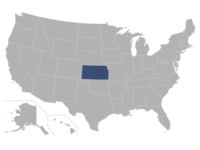
Topeka, KS