Gov. Evers grants first Wisconsin commutations in decades
Nov 13, 2026 | 11:50 pm ET
Description
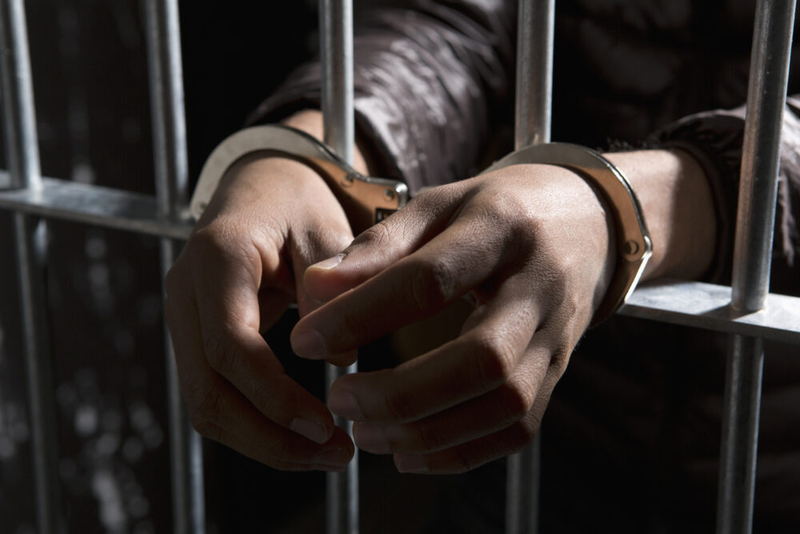
Wisconsin Gov. Tony Evers announced he is commuting the sentences of 14 people, the first commutations in Wisconsin since 1995.(Photo by Caspar Benson/Getty Images)
Gov. Tony Evers has granted commutations to 14 of the 24 people who came before his Commutation Advisory Board in August and September, his office announced Friday. They are the first commutations since the administration of former Gov. Tommy Thompson in 1995.
That doesn’t mean 14 people will be immediately released from prison. A commutation doesn’t necessarily mean a person will be released or have their sentence shortened, the governor’s office said.
For one of the 14, Amanda Weaver, the commutation will allow for immediate release from confinement; she will have two years of extended supervision in the community.
In 2008, Weaver was sentenced to 30 years of incarceration and 20 years of extended supervision in the community, the Examiner reported in August. She had been convicted of five counts of burglary. At Weaver’s sentencing hearing, the prosecution and defense recommended jointly that she receive five years of confinement and 12 years of extended supervision, according to the governor’s office. The others involved in the burglaries were sentenced to no more than three years of confinement, the governor’s office said.
The rest of the 14 will not be immediately released, but they may see release sooner than they would have without a commutation. For example, Touissant Harley’s sentence was reduced “to reflect a mandatory transition to parole” by June 1, 2027.
Not all incarcerated people are eligible for parole. Under Wisconsin’s Truth-in-Sentencing laws, if a person committed a felony offense on or after Dec. 31, 1999 and is sentenced to at least a year in prison, the person will not be eligible for parole.
Some legislators are criticizing the commutations, with Sen. Eric Wimberger (R-Gillett) stating that Evers “is releasing 10 murderers, a burglar, an arsonist and a drug dealer — who all deserve their punishments,” and that this puts “our communities in physical danger.” Sen. Julian Bradley (R-New Berlin), who was recently elected to be the next Senate Minority Leader, also voiced opposition to the news.
“So there’s no confusion, Tony Evers is commuting the sentences of 10 convicted murderers and he’s releasing it on a Friday afternoon, hoping nobody notices,” Bradley said in a Facebook post.
The ACLU of Wisconsin praised the commutations in a statement.
“Voters across the political spectrum support the use of commutations to end or shorten unjust prison sentences so that people can rejoin their communities and get a fair chance at life. Granting clemency is the right thing to do — and it’s also the popular thing to do,” the ACLU said. “We urge the governor to continue commuting sentences before he leaves office, and we hope Governor-elect Crowley builds on this by expanding the commutations process and making it a routine part of his administration, just like it is for many Republican and Democratic governors across the country. Wisconsin’s prison population is at record highs. This is a start, but so much more needs to be done.”
Who are the people receiving commutations?
Mighty Howell, 50, who has served 33 years of a life sentence for first-degree intentional homicide, had his parole eligibility moved up from 2038 to September 2027.
Howell was 17 years old when convicted and sentenced in 1993 for the May 27, 1993 death of Roger Bucholz in Milwaukee during an attempted robbery.
He had applied for a commutation under the Juvenile Life Sentence Commutation because he was at least 19 at the time of his conviction.
In Evers’s announcement, it was noted that Howell had worked on rehabilitating himself and helping others, maintained continuous employment, and received 20 letters of support from family members and a retired correctional officer he had worked with in prison.
Michael Maldonado, 47, having served 31 years of a life sentence, had his sentence shortened to four more years of incarceration followed by parole.
Maldonado was sentenced in 1995 for first-degree intentional homicide (use of a dangerous weapon and party to a crime), for his part in the 1994 killing of Ruben Borchardt of Jefferson County when Maldonado was 15.
His first eligible parole hearing was set in the year 2044, but after an accomplice who had been given a shorter sentence took responsibility for the actual shooting, noting Maldonado had only supplied the weapon, Maldonado had his sentence modified in 2025, making him currently eligible for release from prison and parole by the Wisconsin Parole Commission.
As part of the commutation, Maldonado was recognized for his “rehabilitation efforts while incarcerated,” noting his educational achievements, including an associate’s degree in business and certifications, along with his extensive work history and volunteering efforts.
He also received several letters of support from family members and others who offered housing and support upon his release.
Daniel Cerney, 43, was sentenced with two concurrent life sentences for the 1999 shooting deaths of Wiliam Leis, 51 and his 85-year-old mother, Evelyn Leis, when Cerney was 16, and also sentenced for burglary-armed with a dangerous weapon and theft of movable property He had his parole eligibility moved from the year 2044 to 2030.
After serving 26 years in prison, it was noted that Cerney had participated in several rehabilitation programs, developed job skills, and worked productively for Badger State Industries in several capacities.
He also had several letters of support, including one from the victims’ family who had consistently visited Cerney in prison.
Sabir Wilcher, 46, having served 31 years of a life sentence given in 1995 when he was 15 years of age for the killing of Elvis Anderson, 20, in Milwaukee, had his sentence commuted to three more years of incarceration before he will be placed on parole.
Wilcher has been eligible for parole since 2025, and depending on a decision by the Wisconsin Parole Commission, he could be released earlier than the commutation release date.
Wilcher had obtained a bachelor’s degree and other certifications and also participated in several programs for rehabilitative development, and worked in several capacities, including as a certified peer specialist, helping other incarcerated people.
The victim’s son spoke on Wilcher’s behalf, and the prosecuting district attorney also supported Wilcher’s commutation.
Wazir El-Amin, formerly Wade A. Curtis, 55, having served 36 years of confinement for a life sentence given on November 21, 1990, for first-degree intentional homicide with a dangerous weapon in Racine County, was made immediately eligible for parole, with the parole commission to hold a hearing as soon as possible.
Previously, El-Amin had been eligible for parole in 2028.
Besides significant educational achievements and programs he had completed, he had also participated in a childhood trauma group and had spoken to at-risk youth.
In El-Amin’s application, it was noted that he had secured work with a construction company upon his release, and that he would also volunteer in a non-profit he had started with his wife to work with those who had been recently released from prison.
DeQuelvin Douglas, 47, who was convicted of first-degree intentional homicide and attempted first-degree intentional homicide in Kenosha County at age 15 and sentenced to life imprisonment when he was 16, resulting in 31 years in prison, had his parole eligibility commuted from the year 2056 to 2029.
Rep. Amanda Nedweski (R-Pleasant Prairie) criticized the commutation of Douglas, citing “significant opposition from the Kenosha County District Attorney’s Office.”
Douglas had received a letter of support from a former Department of Corrections sergeant who said, “of all the individuals I supervised, he stands out as someone who truly deserves a second chance.”
Dawn Dobbs, 59, who has been incarcerated for 32 years, convicted of first-degree intentional homicide (party to a crime) in Milwaukee County and sentenced July 1, 1994, to life imprisonment for the killing of her life partner and father of their two sons, had the date of her parole eligibility changed from 2035 to November 2026.
In 2010, she helped the DOC make a suicide prevention video that is still being used, and she also has served as a peer mentor and volunteered to make masks during the COVID pandemic.
The district attorney and her son each supported a commutation.
The other 10 people heard at the August and September hearings of the Commutation Advisory Board have been denied commutation, the governor’s office said.
What’s next for commutations?
Evers may issue more commutations before leaving office. The Commutation Advisory Board heard from other applicants seeking a commutation in October and November. The board also has hearings scheduled for Nov. 20 and Dec. 11.
Madison, WI