Iowa Board of Regents to take harder look at university athletics, continues efficiency work
Nov 11, 2026 | 5:34 pm ET
Description
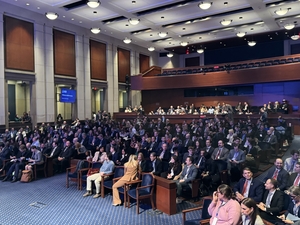
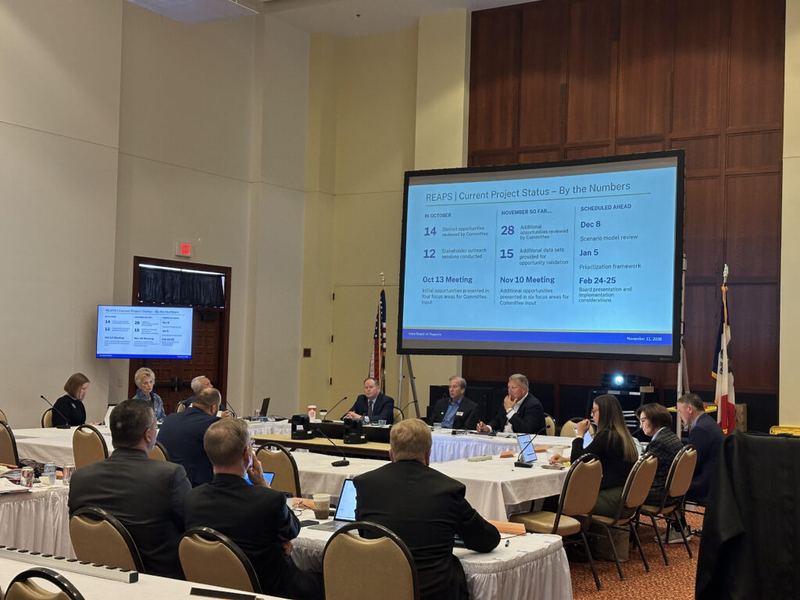
The Iowa Board of Regents discusses its revenue enhancement and productivity study at its Nov. 11, 2026, meeting. (Photo by Brooklyn Draisey/Iowa Capital Dispatch)
Officials at Iowa’s public universities will be following up with the Iowa Board of Regents to provide more details of its fiscal year 2026 budgets and future financial planning as the board’s revenue and efficiencies study moves forward.
Officials from the University of Iowa, Iowa State University and University of Northern Iowa presented their revenues and expenses for fiscal year 2026 to the board’s investment and finance committee during its Nov. 11 meeting, with calls from board members for further conversations and plan-setting for future budgeting needs.
Athletics department budgets were the main source of concern for Regent Christine Hensley and other board members, with Hensley saying UNI is operating with a budget deficit, ISU is borrowing from its reserve fund, and the UI is making minimum loan payments. Hensley said she’s received questions from Iowans about the state of collegiate athletics and it deserves a discussion at the board level.
Board President Robert Cramer agreed, saying he and President Pro Tem Kurt Tjaden are planning to meet with university leaders as soon as the coming days to discuss “looking forward” and the next steps in ensuring university athletics is in a strong budget position.
“We do need to take a look at all of it, and so we’ll come back to the board with a plan of how we’re going to address it … It’s a big deal,” Cramer said.
UI Chief Financial Officer and Treasurer Terry Johnson said the athletics department had a “very good year” altogether, with expenses and revenues exceeding the budget by more than $655,000. According to the fiscal year 2026 fiscal report, $2.5 million was budgeted for loan repayment and the university paid just under $2.43 million.
The athletics department saw increases in ticket sales for football, women’s and men’s basketball and wrestling, Johnson said, as well as from athletic conference distributions, royalty income, premium seats and fundraising.
“Similar to other Division One programs in the country, though, I mean, revenue share is real. It continues to be a stressor for our institution as well as probably all of the academic Division One programs in the country,” Johnson said. “But athletics is doing an excellent job to date of managing its resources, and I definitely anticipate that will continue in the future.”
Fiscal year 2026 was the first year of UNI’s three-year plan to balance its athletics budget after an audit of the department, UNI Senior Vice President for Finance and Operations Machael Hager said. The budget “contemplated a $2.2 million operating deficit” but the program ended up with a $5.3 million deficit, he said.
“The two largest budget-to-actual variances, foundation support under the income section and administrative in general under the expense section, are partially attributable to adjustments made to the balanced budget presented to the board rather than the operating contemplated by the three-year plan,” Hager said.
He said there were differences between “what was submitted for the requirement to have balance and what the operational plan was,” which expected a balanced budget, from an internal audit that allowed for the deficit. Regent Steve Lacy expressed confusion at how the budget turned out, saying he’d never heard of the internal audit, and Tjaden suggested regrouping to set a new baseline for next year and align projections accordingly.
Hensley also asked about potential loans and projecting budgets as much as five years out, saying it would be “extremely helpful,” which Tjaden said they should look at but could be too difficult, suggesting three years may be a better option.
ISU Senior Vice President for Operations and Finance Sean Reeder said the university’s exceeding of its budgeted revenues by $4.4 million was driven by “strong competitive performance gains” in football and both basketball teams, as well as from ticket sales, fundraising, premium seating, multimedia rights, licensing income and auxiliary revenues.
Overall, the athletics budget for fiscal year 2026 was balanced, he said.
“Stronger revenue performance reduced the need for cash reserves by $17 million compared with what our original budget was,” Reeder said.
Board receives REAPS update
The board of regents also received another update on its Revenue Enhancement and Productivity Study (REAPS), which board Chief Efficiency Officer Jake Nicholson said he is confident will be ready with a report for the board to consider at its February meeting.
Nicholson said the REAPS committee is over halfway through its review of potential opportunities for revenue enhancement or cost efficiency and it has held 12 meetings with different shared governance groups across the three university campuses. The study is still on–track with its timeline, he said, with meetings scheduled in December and January.
“I’m very confident that in February, REAPS will deliver vetted, validated, and actionable recommendations for the board,” Nicholson said.
Some of the opportunities the committee has looked over so far, without any final decisions made, include expanding opportunities for community college student transfers like the UNI@IACC program at the Cedar Falls university, reorienting bachelor’s degree completion programming, and aligning and centralizing information technology services.
“None of those are final recommendations,” Nicholson said. “These are all just exploratory opportunities that are building towards a combined and thoughtful portfolio that results in a roadmap for the board of regents to consider.”
Des Moines, IA