Lawmakers OK rules that could weaken West Virginia’s Aboveground Storage Tank Act
Nov 10, 2026 | 4:35 pm ET
Description
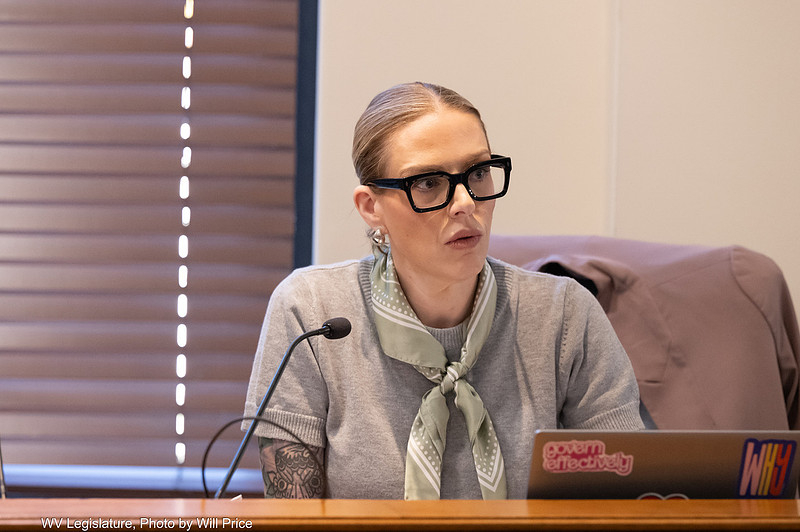
Del. Kayla Young, D-Kanawha, is the only member of the Rulemaking Review Committee who on Tuesday who voted against making regulatory changes that loosens how aboveground storage tanks are governed. (Photo by Will Price/West Virginia Legislative Photography)
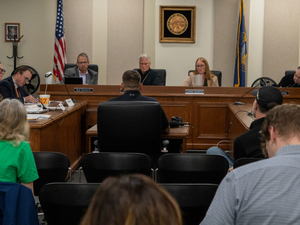
The Rulemaking Review Committee on Tuesday put its stamp of approval on a regulatory change that loosens how aboveground storage tanks are governed.
The committee voted 8 to 1 to move forward with a rewrite of the regulations that accompany the Aboveground Storage Tank Act, which was passed in the wake of the Freedom Industries spill that left 300,000 people without water in the Kanawha Valley in 2014.
“This is without a doubt the most egregious rule we’re going to pass,” Del. Kayla Young, D-Kanawha, warned prior to the vote.
The Department of Environmental Protection commenced a rewrite of the rule after lawmakers passed a bill earlier this year to exempt tanks that hold brine — frequently a byproduct of natural gas drilling — if it holds less than 210 barrels.
Proposed to help “mom and pop” gas companies, lawmakers watered the bill down as it worked its way through the chambers of the Legislature.
The West Virginia Rivers Coalition, during the public comments period on the rule changes, flagged that many provisions nixed in this year’s bill are now written into the regulations.
Young asked legislative staff attorney Robert Akers why this happened.
“Because the executive branch has decided they want them in,” Akers said.
“So even though the Legislature said, ‘We don’t want these things,’ they can say, ‘Well, we’re going to do them anyways,’” Young said.
Akers pointed out that the proposals weren’t explicitly forbidden in the law, so they could move through rules.
The changes include allowing inspections on tanks with the highest risk of contaminating water to be inspected monthly, rather than every 14 days, if those tanks meet certain national standards, and gives the secretary of DEP the ability to extend a nine-month window for a newly designated tank.
The DEP agreed to nix that last rule, but the committee did not amend it. So it was passed as is.
Other changes included adding definitions to what constitutes a “leak,” “discharge” and “release.” Del. Bob Ferenbacher, R-Wood, lauded the definitions, saying in his experience the agency was using them interchangeably.
He also defended the change in frequency of inspection.
“The state of West Virginia, by adoption of this rule, this modification of this rule, are basically adopting national standards, as opposed to something more conservative, perhaps depending on the inspector’s perspective, more onerous than what this national standard requirement is,” Ferenbacher said.
Ferenbacher’s county is home to Chemours, which has settled recently for releasing chemicals into the Ohio River. In that case, the contamination came from a landfill, not an aboveground storage tank. The company is now the target of a class action lawsuit.
Prior to adoption of the rule, Young asked for the votes to be recorded individually. While Young is just one of two Democrats on the committee, there were only nine members present, giving her enough votes to successfully make the motion.
Sen. Patricia Rucker, R-Jefferson, Sen. Brian Helton, R-Fayette, Sen. Darren Thorne, R-Hampshire, Del. Jonathan Kyle, R-Randolph, Del. Sarah Drennan, R-Putnam, Del. Tristan Leavitt, R-Kanwaha, Del. Mike Hornby, R-Berkeley and Fehrenbacher voted in support of the rule.
Young was the sole dissenting vote.
The rule will now go to consideration of the whole Legislature in January.
Charleston, WV