A rare Nevada fish is on the rebound
Nov 10, 2026 | 7:55 am ET
Description
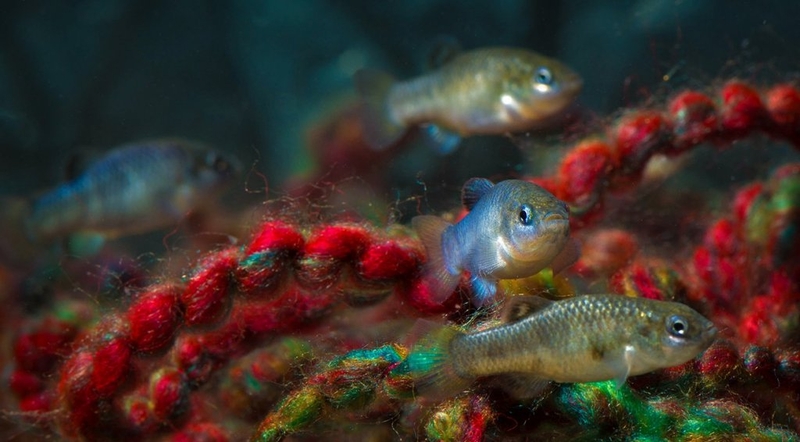
Captive-raised Devils Hole pupfish at the Ash Meadows Fish Conservation Facility. Devils Hole pupfish are less than one-inch long and are the smallest of the desert pupfish species. (USFWS photo)
The population of the endangered Devils Hole pupfish, one of the world’s rarest fish, more than doubled over the past year.
Wildlife biologists counted 137 Devils Hole pupfish during a National Park Service survey on Oct. 10— nearly twice the 77 fish recorded during the spring 2026 survey and more than double the 69 observed in fall 2025.
The tiny blue fish, whose entire wild population lives on a shallow limestone shelf in a sinkhole within Nevada’s Ash Meadows National Wildlife Refuge, has struggled to keep its population over 100.
About a year ago, the population in Devils Hole abruptly plummeted to just 20 fish following two earthquakes – one in December 2024 and the other in February 2025 – that triggered waves in Devils Hole’s normally still waters and dislodged algae and fish eggs from the shallow limestone shelf.
“It’s exciting to see Devils Hole pupfish numbers increase so significantly over the past year,” said Death Valley National Park Superintendent Mike Reynolds in a statement.
Wildlife biologists decided to release 72 captive-raised pupfish into Devils Hole to help rebuild numbers between March 2025 and February 2026, while providing supplemental feeding until the algae recovered.
It was the first time wildlife managers released captive-raised pupfish into Devils Hole from their backup population at Ash Meadows Fish Conservation Facility. The facility also helped biologists understand how to supplement the fish’s diet by studying their captive counterparts.
The tiny fish live in fairly inhospitable conditions, where water temperatures reach between 90 and 93 degrees and oxygen and nutrients levels are low.
Wildlife biologists believe most of the fish counted during the fall survey hatched and grew in Devils Hole, given that the average lifespan of the fish is just 10 to 14 months.
“These results reflect the dedication of our scientists and conservation partners working to protect this extraordinary species. While challenges remain, we’re encouraged by this progress and committed to its long-term survival,” Reynolds in a statement.
The Devils Hole pupfish was listed as endangered in 1967 under the Endangered Species Preservation Act, the predecessor to the current Endangered Species Act, which was enacted in 1973. Though iIts population began to decline in the 1990s, following growing groundwater pumping.
Biologists have been counting Devils Hole pupfish – which measure just 0.9 inches long on average — nearly every spring and fall since 1972.
During the spring surveys, over 200 fish were counted up until the mid 1990s. In the early 2000s, an average of 90 fish were counted each spring. The number suddenly declined to 35 fish in 2013.
Population numbers climbed in recent years and reached a 25-year-high during the spring of 2024.
Devils Hole pupfish populations naturally fluctuate, but biologists say the latest count is encouraging. They emphasized that “monitoring, research and habitat management remain essential to the species’ long-term survival.”
Las Vegas, NV