Families fear state Medicaid billing change means loss of programs for disabled adults
Nov 09, 2026 | 6:48 am ET
Description
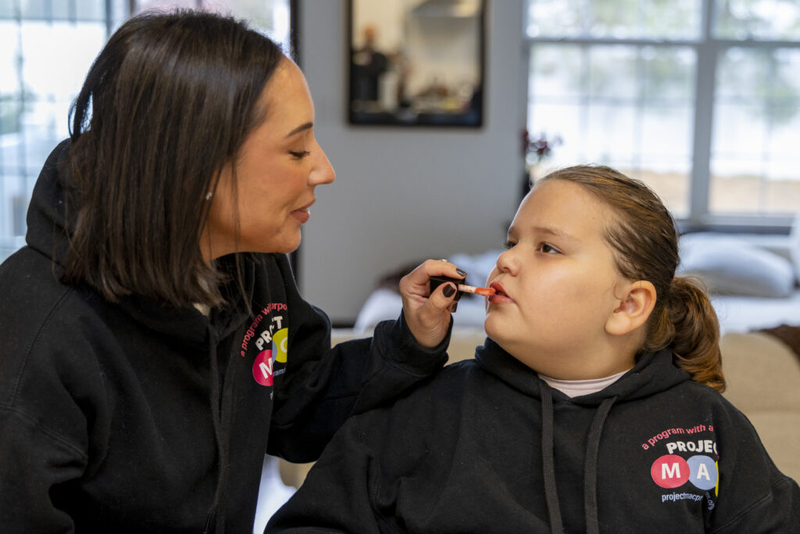
Randi Meltzer puts lip gloss on her daughter, Marni Tanenbaum, 10, in Marlboro on Nov. 7, 2026. Meltzer co-founded Project MAC, which hosts art, music, and social skills classes for disabled adults and other members of the public. (Photo by Anne-Marie Caruso/New Jersey Monitor)
Trish Thomason describes herself as a “soccer mom, all day, every day,” shuttling her 27-year-old autistic son Eric from their home in Mullica Hill to activities like art, music, and cardio karaoke.
For Eric, who needs one-on-one supervision and is prone to outbursts, a mix of short, specialized programs have fed his curiosity, connected him to other young adults with disabilities, and allowed him to live his “best life ever,” Thomason told the New Jersey Monitor.
“He actually went out for pizza with some of them. That was huge,” she said.
Thomason fears all this could change because of a billing dispute between program operators and officials with the state Medicaid program, the state and federally subsidized insurance that funds healthcare and support services for nearly 30,000 disabled adults in New Jersey.
Starting last summer, New Jersey officials began to more sharply scrutinize how Medicaid was paying some operators who work with disabled adults, prompting payment denials for programs that had been reimbursed in the past, sometimes for years.
Multiple program operators, parents, and disability advocates said the shift has left a growing number of disabled people without programs they have come to love. Eric has not yet been impacted, she said, but she worries what’s to come.
“It just snowballs into this effect on the community. All of these people will be at home with nothing to do,” Thomason said.
Camille Milo-Gordy, of Norwood, is in a similar situation. Her daughter Nicole Kleine, 27, has autism and has benefitted from cooking, gym, and financial literacy programs over the past five years. Milo-Gordy worries the change will “pull the carpet out from under” families like hers and that without access to these programs, Nicole will languish at home with little hope for the future.
“My daughter’s going to sit in her chair and play on her laptop until I die. And then I don’t know what is going to happen to her after that,” she said.
Officials at the state’s Department of Human Services, which oversees the system, said they are trying to protect vulnerable residents and comply with the rules under Medicaid, a publicly funded system now facing massive federal funding cuts under the Trump administration. There is no policy change around billing for disability services, just a stricter adherence to rules designed to protect taxpayer funds, they said.
“Accurate billing is essential to maintain Medicaid compliance and protect federal funding, particularly as states face increased federal scrutiny of Medicaid spending,” said department spokesman Tom Hester Jr.
The state is now working with these organizations to help them comply with the rules while protecting high-quality services, he said.
Services for disabled residents in New Jersey are funded through individual Medicaid budgets established by the department based on that person’s needs. Families work with program coordinators to select care and services from a list of approved organizations.
‘Doesn’t make any sense’
Organizations that provide specialized services for disabled individuals, including medical care, behavioral health, speech and physical therapy, and tailored support services specifically for people with disabilities, are licensed as Medicaid providers. Entities that provide add-on services designed to ease life for people with disabilities or run programs that add value, skills, or independence, but are not specifically for people with disabilities, are considered Medicaid vendors. These include the programs Eric and Nicole attend.
Payments to vendors, who bill through a category called goods and services, have grown significantly in recent years, prompting the state to take a closer look at how the money is being spent. Paid claims for goods and services have increased more than fivefold since 2020, state officials said, from $10.4 million to more than $54.2 million in last year’s budget.
Starting last summer, a growing number of vendors have had payment requests denied by state Medicaid officials, even though the same programs have been paid in the past, multiple operators said. Some were told the rates they charge are too high, while others learned their programs were not inclusive enough, meaning they didn’t have enough members of the broader public participating.
“It just doesn’t make any sense. Like we’re being punished for creating a space where they feel like they have somewhere to belong,” said Jennifer DelQuaglio, a gym teacher who founded Limitless Adaptive Fitness three years ago.
DelQuaglio coordinates group fitness programs for about 100 clients, renting gym space around Central Jersey where they can work out in small groups with individualized instruction — services she said would be impossible at a regular gym. At the end of each session they sit together and share positive affirmations, she said. The program is open to all, but most clients are disabled.
“What we do is so much more than just a fitness class. Like they’re able to build friendships. They gain confidence. They socialize and they look forward to it every week,” DelQuaglio told the New Jersey Monitor. “So much is limited to their family members, their day programs, their caregivers. They need friends just like everyone else needs friends.”
Gwen Orlowski, executive director of Disability Rights New Jersey, said the advocacy organization has heard from multiple people who have lost access to programs after payments were denied. Medicaid members should be informed of these changes in writing so they can challenge the decision, she said, something she said has not happened in at least one case.
“Anytime a Medicaid service is denied or terminated, people are supposed to be able to have due process and have a right to appeal,” she said.
In some cases, vendors have been told by the state that they should instead be operating and billing as licensed Medicaid providers, which are subject to rigorous training, criminal background checks, and other safety protocols that are not required for vendors.
“This is an important concern as we work to ensure the health, safety, and well-being of the individuals we serve,” Hester, the state spokesman, said.
DelQuaglio and others said the shift leaves families with fewer options.
“I feel like these individuals deserve to have a choice,” she said, adding, “And now it’s just being taken away.”
Financially unsustainable
Randi Meltzer, who has a 10-year-old daughter with autism, said many Medicaid vendors would be happy to undergo background checks and additional safety training. She and her fiance, Marc Caponi, operate Project MAC, a vendor that hosts art, music, and social skills classes for disabled adults and other members of the public. She said they underwent that scrutiny when they first applied to become a provider, only to be told by the state they should be vendors instead.
“I don’t think they should let every Joe Schmo become a vendor. I don’t want to put anyone in a room with someone who isn’t qualified,” Meltzer told the New Jersey Monitor.
Orlowski said programs that are designed specifically for individuals with disabilities should be offered through providers subject to criminal background and other safety checks, as these protocols are important to protecting vulnerable residents. She said operators should not be able to “back-door” through a different billing category that doesn’t include the same protections and allows them to charge more than licensed providers would get paid under Medicaid.
While vendors set their own rates and bill the state or clients directly, Medicaid providers get paid according to a set fee schedule that lags the national average. Meltzer and others said these rates are financially unsustainable for small businesses like theirs.
Jaclyn Hunt of Woodbridge runs ASD Life Coaches, which provides life skills to about 30 adults with disabilities through virtual classes. It’s one thing for the state to “put these vendors out of business, but what gets me is these clients that have been depending on these services are getting left in the dark,” she told the New Jersey Monitor.
After years of being paid by the state for classes that she said have helped hundreds of people, Hunt said she started getting denial letters earlier this fall, leaving at least 20 clients without services. The state told her ASD’s rates were too high. Hunt said she charges $180 for a bundle of services that Medicaid would reimburse at $30.
“They’re lumping my coaching, my hyper-specialized team, with anyone who can throw a sign on their door,” Hunt said.
Suzanne Buchanan, executive director of advocacy organization Autism New Jersey, said they have heard from multiple families and program leaders about “very disruptive” shifts in reimbursements.
For operators running small, individualized programs with multiple, highly trained staff members, the costs are higher than for larger programs where people need less assistance, Buchanan said.
“I think the bigger picture is that it’s very difficult to provide safe opportunities with the current financial constraints,” she said.
Vendors are also frustrated with what they see as a lack of clear guidance from the state. The division held webinars in August and September seeking to clarify billing practices under the goods and services category, but Meltzer, Hunt, and others said they only learned about these after the fact. The first denials came as a surprise.
“They’re not talking to anybody, and these disabled adults in the state of New Jersey are losing programming all day, every day, which means they’re home, they have nowhere to go, they have nothing to do, and it is devastating,” Meltzer said.
While the official policy may not have changed, many attribute the enforcement shift to the Trump administration’s focus on Medicaid fraud and federal funding cuts to the program that could leave more than 300,000 New Jerseyans without insurance and reduce payments to hospitals, doctors and public health by some $6 billion annually in the years to come.
“I think we have to be mindful that what is driving this behind the scenes is probably what’s going on at the federal level,” Orlowski said.
“We don’t want New Jersey to have a clawback of Medicaid money that the federal government thinks was improperly spent on goods and services. That would be disastrous, so we don’t want that. But they still have to give people due process rights,” she said.
Trenton, NJ