Arkansas Explained: What is the legislative ‘supermajority’?
Nov 09, 2026 | 6:00 am ET
Description
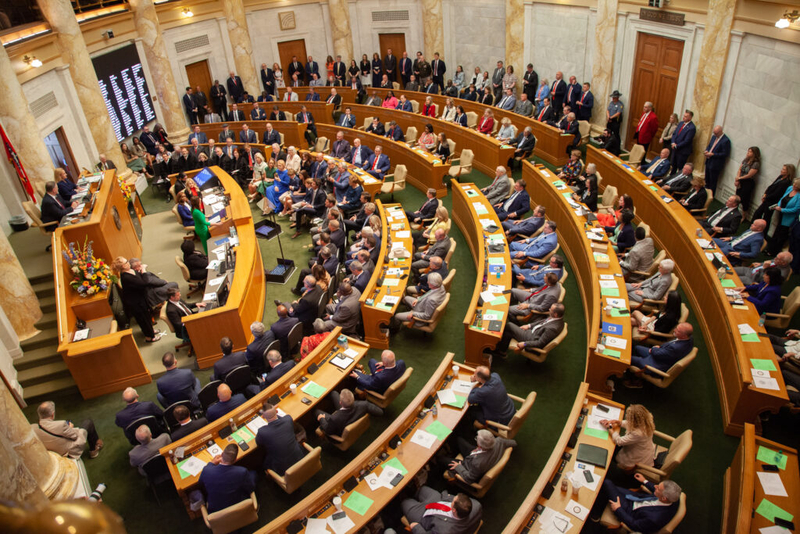
Arkansas Governor Sarah Huckabee Sanders gives her State of the State address in the House of Representatives chamber at the Arkansas State Capitol in Little Rock, Arkansas on Wednesday, April 8, 2026. (Photo by Katie Adkins/Arkansas Advocate)
Arkansas Democrats didn’t claim any statewide or federal victories in last week’s midterm election, but they made gains in the state Legislature that could have major implications.
The party won 10 seats in the state House and flipped another Republican-held seat in the Senate. The GOP still holds a majority of seats in both chambers of the Legislature, but the gains may give Democrats leverage on budget negotiations that they haven’t had in a decade.
Here’s a look at the advances Democrats made at the statehouse level and what it means for next year’s legislative session:
What gains did Democrats make in the Legislature?
Democrats’ victories give them 30 seats in the 100-member House and ends the Republican supermajority in the chamber.
A supermajority is when one party has enough members to clear a required vote threshold without needing votes from an opposing party.
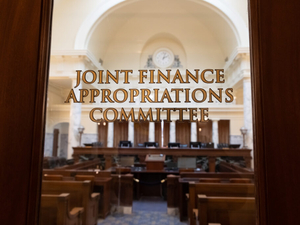
Passing most appropriations bills, which authorize agencies to spend state money, requires at least three-fourths support in the House and Senate. That means 75 votes in the 100 member House and 27 in the 35-member Senate.
With Arkansas Republicans’ House supermajority lost, a changed dynamic
Not every budget bill has to clear this hurdle. The appropriation for public school funding only needs a simple majority. So does the proposed Revenue Stabilization Act, the must-pass state budget bill that spells out spending priorities based on revenue.
In the Senate, Democrats are below the three-fourths threshold. They hold seven of the chamber’s 34 filled seats. One seat in the chamber is vacant following former Republican Sen. Jonathan Dismang’s resignation earlier this year. A special election to fill the vacancy is scheduled for Dec. 15.
Why does breaking the supermajority matter?
For the past 10 years, Republicans have been able to pass most budget bills without needing any Democratic votes.
For most budget bills, that hasn’t been an issue. Most appropriations bills are relatively noncontroversial and haven’t prompted partisan fights.
But it can factor into debates over key policy issues, especially the state’s hybrid Medicaid expansion. The appropriation for Arkansas’ Medicaid program has struggled to clear the three-fourths vote needed in past years, facing multiple failed votes that centered around some GOP lawmakers’ opposition to the expansion.
That vote margin even prompted former Republican Gov. Asa Hutchinson and legislative leaders to concoct an unusual parliamentary trick. It involved Hutchinson using his line-item veto authority to strike language that would have ended the healthcare program.
Lawmakers in the minority party have also used the high bar needed for appropriations to block spending bills to highlight their objections to certain programs. Before they were the majority, House Republicans in 2011 temporarily blocked appropriations for several agencies including the History Commission and the Crime Lab to show their displeasure with state spending levels under then-Democratic Gov. Mike Beebe.
How will this new dynamic affect the Legislature?
The biggest impact of Democrats’ increased numbers could be on the debate over Medicaid expansion.
The Trump administration last week gave the state a six-month extension of the program, which provides health coverage to more than 200,000 low-income residents.
That gives lawmakers a short window to come up with a replacement for the program, which the federal government declined to renew for a longer period of time.
Arkansas healthcare providers alarmed by potential end of state’s Medicaid expansion
Medical providers have said that ending the program would be devastating for the state’s health system, which is already strained.
But the main two alternatives — moving enrollees to traditional fee-for-service Medicaid or a managed care program — could also face significant resistance.
Republicans’ loss of the supermajority could also factor into discussions about prison overcrowding.
GOP Gov. Sarah Huckabee Sanders put her plan for a 3,000-bed prison in Franklin County on hold after facing legislative resistance that included some Republican lawmakers.
It could also complicate budget discussions about the governor’s school voucher program, which has faced opposition from Democrats and some Republicans in the Legislature.
It may not factor as much in non-budget legislation, most of which only needs a simple majority to pass.
The top Democrat in the House, Rep. Andrew Collins, last week said the midterm results give the party more influence but that they still hope to find common ground with Republicans on some issues.
Sanders has said she also would find ways to work with Democrats, and cited bills she’s backed that received bipartisan support such as a measure guaranteeing free school breakfast to students and another banning students’ use of cellphones in schools.
Little Rock