Alabama voters approve 4 constitutional amendments by varying margins
Nov 09, 2026 | 6:01 am ET
Description
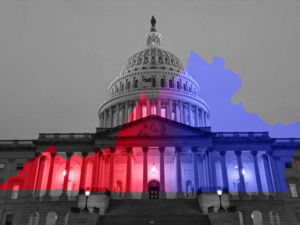
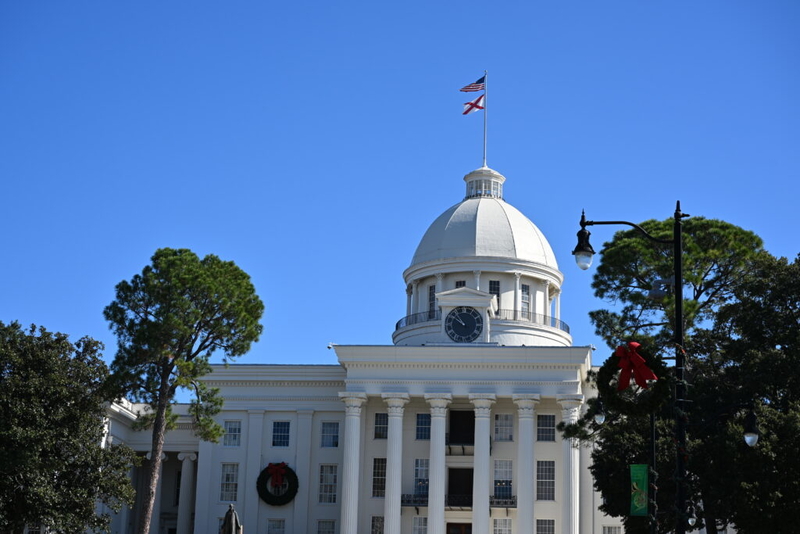
The Alabama State Capitol as seen on Nov. 24, 2025, in Montgomery, Alabama. During the 2026 midterm election, Alabama voters approved four statewide constitutional amendments. (Anna Barrett/Alabama Reflector)
Alabama voters approved four statewide amendments last Tuesday, though some had an easier time of passage than others.
Amendment 1
Amendment 1 sets guidelines for lieutenant governor vacancies. Under the amendment, the state could hold an election for lieutenant governor if the office becomes vacant within the first two years following an election.
Should the lieutenant governor’s seat become vacant more than 60 days before the 2028 election, an election for the office could be set. Prior to passage of the amendment, voters would not choose a new lieutenant governor until 2030.
The measure also allows the Legislature to set the lieutenant governor’s salary by resolution and requires travel funds expended by legislators to be approved by officers elected by the House and Senate.
According to the Alabama Secretary of State’s Office, the amendment passed with 987,299 (65.4%) votes in unofficial returns.
Jerome Dees, Alabama policy director at Southern Poverty Law Center, said in an interview Thursday afternoon his concern with the amendment came from the salary piece of the amendment.
“I think that just kind of goes to sort of a broader concern amongst the sort of electorate about just accountability of the Legislature and potential for pettiness if any sort of grievances arise between that part of the executive branch and the legislature,” Dees said.
Amendment 2
Amendment 2, which allows for public county school boards to consolidate, passed with just 50.2% of the vote in unofficial returns.
Under the measure, two or more county school boards of education can begin a merger process if all the boards agree. Should 25% of qualified voters in the counties object to the merger, it would be placed on the ballot. It could only go forward if a majority of voters in the affected counties approve it.
Alabama amendment would authorize county school board mergers
Allison King, government relations manager for the Alabama Education Association, said in an interview Thursday the organization has not heard of any school boards looking to consolidate.
“We’re not aware right now of any school systems, county systems that are planning to consolidate, and it’s a permissive option only with buy-in from school boards and constituents,” King said.
Dees said one area of concern for the amendment could be a lack of resources, including funding for all of the schools under the consolidated districts, particularly with the state CHOOSE Act, which extends income tax credits to families to pay for nonpublic education, including private school tuition.
“I think some of those fears are grounded in reality, particularly in light of the increased siphoning of funds that we will continue to see over the next couple of years as a result of the CHOOSE Act,” he said.
Transportation and childcare arrangements could also pose a problem if schools consolidate.
Amendment 3
Amendment 3 mandates public school boards in the state to require schools to have policies for daily recitation of the Pledge of Allegiance and for student-led prayer.
The amendment passed with 62.6% of the vote according to unofficial election data.
Alabama law has required schools to conduct the Pledge of Allegiance at the start of the day in K-12 schools since 1976, and federal law prevents schools from forcing students to recite the Pledge. Students are already allowed to conduct prayer on school grounds. Students could not be required to participate in prayer and could opt out.
King said teacher protections being in place were important for AEA when the bill was moving through the Legislature.
“When we were watching that piece of legislation, what’s permissible for the students is fine, but we want to protect our employees in making sure that they’re not at risk,” she said.
Alabama legislator proposes amendment on Pledge of Allegiance, school prayer
Dees said Amendment 3 is “dangerously close” to violating the First Amendment.
“If I am somebody who is not of a Christian faith, and my child is in a school where there is mandatory sort of prayer, what does that look like for my child?” Dees said. “Is my child allowed to pray in whatever faith tradition they may have, or if my family is of no faith tradition, is that prayer that’s now mandatory in school going to be in violation of my right to not have any particular faith? So I think we’re going to potentially see some real issues with that.”
Dees also said the amendment’s opt-out provision was likely “the Legislature’s effort to try and kind of circumvent any sort of First Amendment violations.
“What does it look like if I am a student and I am the only one who is opting out?” he said. “I think there’s going to be real discussion and debate over sort of what that sort of government interference and government sponsorship of one particular religion over another, even if you are allowing others to sort of opt out, you are now having a child removed from the sort of learning space so that you can engage in religious activity.”
Amendment 4
The last statewide amendment, Amendment 4, requires school boards to broadcast or perform “The Star-Spangled Banner” once a week in public schools.
The amendment passed with 58.6% of the vote according to unofficial election results.
Dees, who worked on amendment language when the bill was moving through the Alabama Legislature, said the national anthem should be performed in its entirety. The rarely-sung third stanza of “The Star-Spangled Banner” has been seen as a defense of slavery.
“We are all patriotic, but I think again, kind of hearkening back to 2024 and the passage of anti-CRT (critical race theory), anti-DEI (diversity, equity and inclusion) legislation. I think that we have to be clear about what the history of the country is, so that we can truly work towards making it better,” Dees said
Both Dees and King said during interviews that these amendments don’t address larger problems in schools.
“We’re fine with them passing, but we need to be realistic about these are not things that are going to move the needle for public education in the state of Alabama,” King said. “Protecting instructional time, supporting teachers when these kids have major discipline issues and are beating them up, making sure that we are helping kids with reading and math, making sure that we’re protecting planning time so that teachers can adequately get done all the paperwork they need to get completed.”
Montgomery