Pendulum continues to swing in South Dakota Senate with selection of new Republican leaders
Nov 07, 2026 | 9:06 am ET
Description
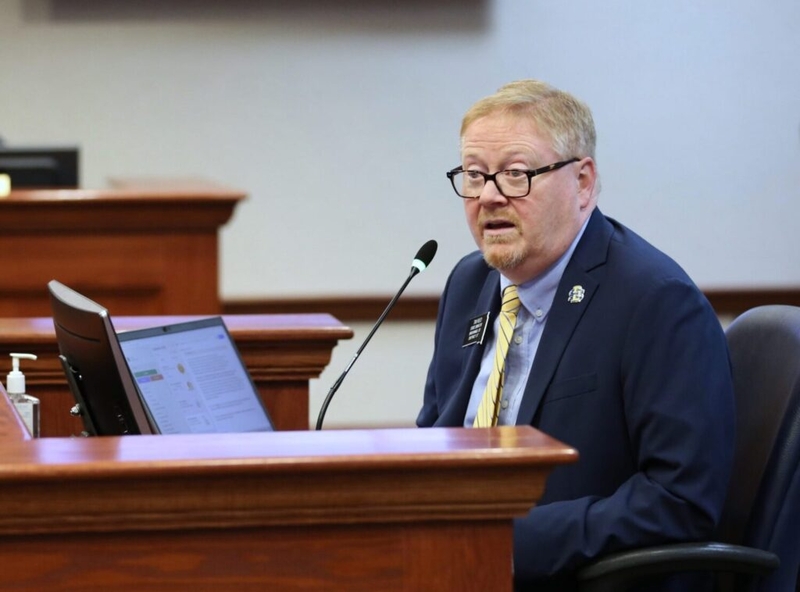
Sen. Tim Reed, R-Brookings, testifies to the South Dakota Senate Local Government Committee on Jan. 22, 2025, at the Capitol in Pierre. Republican senators nominated him Friday to serve as Senate president pro tempore. (Photo by Makenzie Huber/South Dakota Searchlight)
An anticipated shakeup in South Dakota’s Republican legislative leadership began Friday.
Republican senators nominated Tim Reed of Brookings as president pro tempore and selected Casey Crabtree of Madison as majority leader and Amber Hulse of Hot Springs as assistant majority leader. As majority whips, Republican senators selected Randy Deibert of Spearfish, Helene Duhamel of Rapid City, Jim Mehlhaff of Pierre and Stephanie Sauder of Bryant.
Mehlhaff, who was previously majority leader, and Deibert, who was already serving as a majority whip, are the only holdovers from the previous leadership team.
Republican voters once again opt to oust incumbents from South Dakota Legislature
The changes, announced Friday in a news release, continue a back-and-forth struggle between factions of the party. The struggle was particularly pronounced during the past several years as Republicans argued about a carbon-capture pipeline that was proposed to pass through eastern South Dakota.
Crabtree was Senate majority leader in 2024 when the Legislature approved laws regulating carbon-capture pipelines, rather than banning their use of eminent domain. That’s a legal process to gain access from unwilling landowners.
Republicans angry about that outcome helped to petition the regulations to the ballot, where they were repealed. They also mobilized candidates to mount challenges in the 2024 primary, resulting in the ouster of 14 Republican incumbents. In 2025, the newly empowered Republican faction elected a new leadership team, which included replacing Crabtree with Chris Karr of Sioux Falls as Senate president pro tempore.
Karr and the rest of the newly ascendant Republicans approved a bill in 2025 banning the use of eminent domain by carbon pipelines, which Republican Gov. Larry Rhoden signed into law. The carbon pipeline company, Summit Carbon Solutions, has since rerouted its proposal around South Dakota.
The Republican factions went on to wage a broader battle over the state’s role in economic development projects, with results including new laws this year restricting large data centers rather than incentivizing them.
In this year’s elections, well-financed support galvanized around some of the lawmakers who’d been ousted or lost their leadership positions as a result of the 2024 elections. Republican voters ousted 16 incumbent legislators in this year’s June primary election, including some who were instrumental in the fight against the carbon pipeline. After that result, another change in leadership was assured.
Legislative leaders have powers and duties such as appointing committee members and committee chairs, assigning bills to committees, making their chamber’s agenda for each day of the legislative session, and leading discussions — called caucuses — among their members about party positions on legislation.
Meanwhile, Democrats won only two of the 35 Senate seats in Tuesday’s general election. They announced Friday that Liz Larson will continue as minority leader and Erik Muckey will serve as assistant minority leader. Both are from Sioux Falls.
Members of the state House are yet to announce their leaders. The next 38-day annual legislative session will begin Jan. 12 at the Capitol in Pierre.

Pierre, SD