Who voted early in Idaho’s election? Mostly Republicans.
Nov 07, 2026 | 6:30 am ET
Description
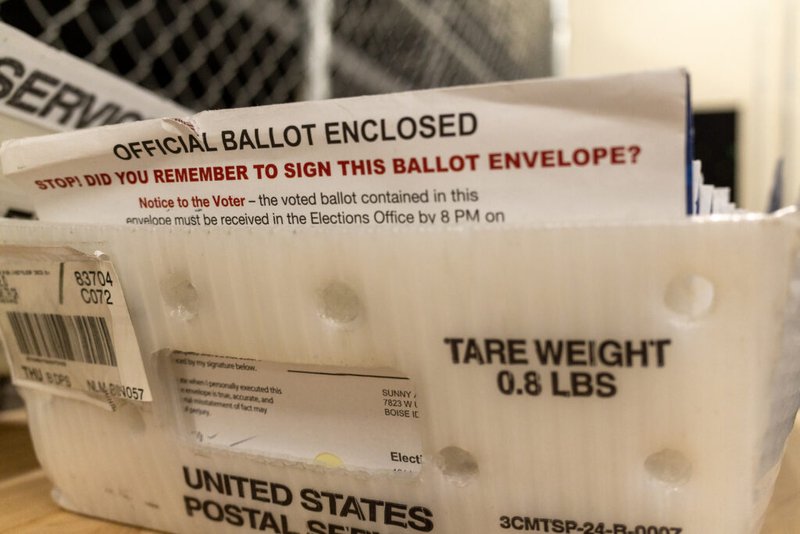
Ada County election workers process hundreds of absentee ballots for the 2026 general election on Oct. 1, 2026. (Photo by Kyle Pfannenstiel/Idaho Capital Sun)
In Idaho, more than a third of votes in Tuesday’s election were cast before Election Day.
Over 290,000 of the more than 731,000 ballots cast in the election were through early and absentee voting, according to data from the Idaho secretary of state’s office. That’s 100,000 more of those types of voting than were submitted during the state’s last election for statewide offices in 2022, according to the state election agency.
Those forms of voting — available without a need to state a reason — allow voters to cast ballots either in person or by mail before Election Day. (Technically, some of these absentee ballots were submitted on Election Day. In Idaho, absentee ballots may be submitted until polls close at 8 p.m. local time on Election Day.)
Republicans make up over half of Idaho’s early and absentee voters, state data shows. Democrats vote early and absentee at higher rates.
Looking at state election data, the political makeup of the voters who cast ballots through early and absentee voting largely mirrors the state’s pool of more than 1 million registered voters, state data shows. With one caveat: Democrats vote early and absentee at higher rates.
Here’s how it breaks down:
- About 59% of early and absentee voters this election were Republicans, which is slightly below the party affiliation of all registered voters, which is nearly 62% Republican.
- Unaffiliated voters make up nearly 22.3% of early and absentee voters, which is slightly lower than their nearly 24.6% share of Idaho’s total registered voters.
- Democrats make up nearly 18% of early and absentee voters. That’s a bigger rate of Idaho’s total registered Democrats, which is nearly 12%.
- Voters affiliated with third parties — the Constitution and Libertarian parties — make up a combined 0.76% of Idaho’s absentee voters. They make up less than 1.5% of all registered voters.
There is also an age skew. Older voters, who make up most of Idaho’s total voters, vote early and absentee at higher rates than younger voters, the data show.
- Voters at least 45 years old make up 61.8% of the state’s registered voters, but cast 79% of the state’s early and absentee ballots this election.
- Voters age 44 and younger voted absentee and early less this year. They make up nearly 38.2% of registered voters, but just 21% of this year’s pre-Election Day votes.
- Voters aged 18 to 29 appeared the least likely to vote absentee and early this year. They cast only 7% of ballots early and absentee. But they make up 15.5% of registered voters, a higher share of the state’s overall voter pool than Idahoans age 75 and older, who make up nearly 13.8% of registered voters.
It’s too early to tell how each of these demographics turned out to the polls this year. The secretary of state’s office hasn’t yet released more detailed information on the voters who showed up on Election Day.
So, why did early election results show some Democrats in the lead?
After polls close on Tuesday, and results start rolling in, absentee and early votes are some of the first to be counted, election officials say. The initial results this year showed Democrats leading in many statewide races — and even Proposition 1 in the lead. A few hours later, the actual outcomes became clear — Republican incumbents had sailed through reelection; voters had rejected Prop 1, an abortion ballot initiative; but voters in the state’s few competitive legislative districts elected six more Democrats to the Statehouse.
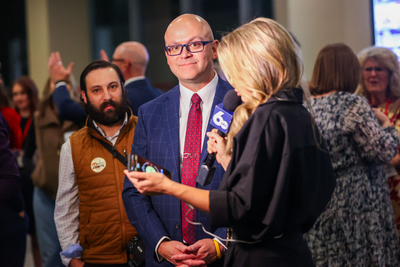
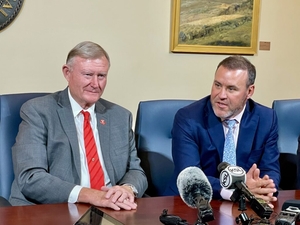
But if the pool of voters who vote early and absentee somewhat reflects the state’s overall voter pool, why was there a disconnect in the initial results? Secretary of State Phil McGrane said it’s complicated.
“When you see those first results, it’s not accounting for all of them,” he said in an interview.
If people look at early results in more rural, Republican areas, they’ll see Republicans in the lead, he said. If they look at the state’s few purple areas, they might see something different.
“We saw high turnout early on in Blaine and in Teton counties, and it makes sense that you would see higher Democratic turnout” there, he said.
Boise, ID