Visualizing Montana’s midterm election
Nov 06, 2026 | 5:31 pm ET
Description
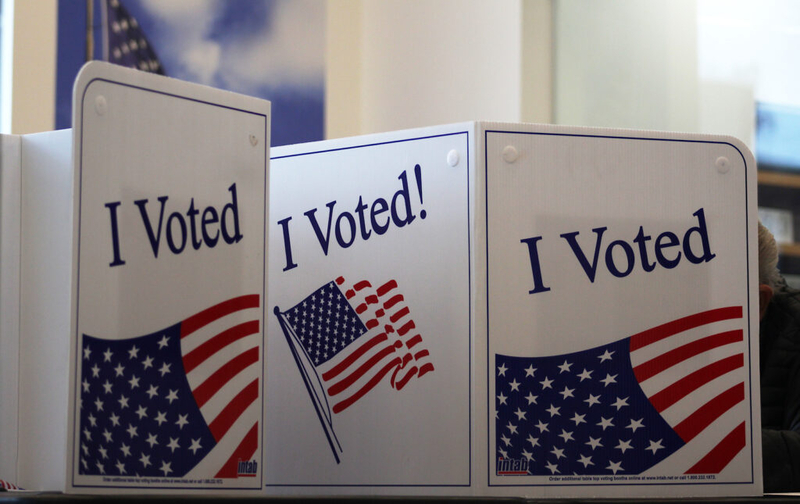
Voting booths set up in Polson at the Lake County Elections Office on Nov. 3, 2026. (Micah Drew/Daily Montanan)
More Montanans than ever registered to vote in Montana for this year’s midterm elections, and it was one of the largest midterm elections ever.
The Secretary of State’s Office reported that 486,746 votes were cast in Tuesday’s election — the second highest number of any midterm election, surpassed by only 2018.
That represents just more than 60% of the more than 808,000 registered voters in the state, the first time the number of registered voters has surpassed 800,000.
Voter turnout in the state lags other midterms, but follows the federal trend that also saw lower numbers compared to 2022 and 2018, according to the University of Florida Election Lab.
The major storyline from Tuesday’s election was the “blue tsunami’ that swept the nation as Democrats flipped dozens of U.S. House districts and seven Senate seats enroute to taking commanding control of both legislative chambers, with two Senate races and about 25 house races yet to be called as of Friday.
The wave brushed against Montana’s shores and Democrats flipped the state’s western U.S. House district with smokejumper and union leader Sam Forstag winning over Republican Aaron Flint.
But voters in every county and district in the state trended away from Republicans.
Comparing both U.S. House races to 2024, nearly every single county swung left by an average of 5.8 points. Six counties, all in the east, saw the Republican-to-Democrat margin shift right.
(The eastern district featured an independent candidate this year that further split the vote and may have shrouded shifts from Republicans. The GOP candidates’ share of the vote dropped in every single county.)
Shifts were more prominent in the west, where Forstag pulled off his victory. Democratic strongholds in Missoula, Gallatin, and Silver Bow counties swung left by more than 12 points, while Republican-leaning Madison County also saw a more than 12-point shift.
The same leftward march played out in state house districts.
Between 2024 and 2026 — all state house districts are elected every two years — all but two districts saw a move toward Democrats, by an average of 12 points. (Races with unopposed candidates in either election year were not considered in the analysis.)
Republican Brad Barker, a moderate who faced a conservative primary challenger in the district surrounding Red Lodge, picked up about 6% more votes than he did in 2024, while Republican Ty Linger picked up 3% more votes than his predecessor did in 2024.
Those margins helped Democrats flip two seats in each chamber of the state house, according to unofficial tallies by the Secretary of State’s Office, and came within 15 votes of picking up a third house seat if current results stand.
The shifts occurred in already heavily Democratic areas and those considered quite conservative — voters in the Bitterroot valley, for example, voted between 10 and 24 points more Democratic in 2026.
Helena, MT