Arkansas governor proposes spending hikes for Medicaid, SNAP, school vouchers in $7B budget
Nov 06, 2026 | 4:41 pm ET
Description
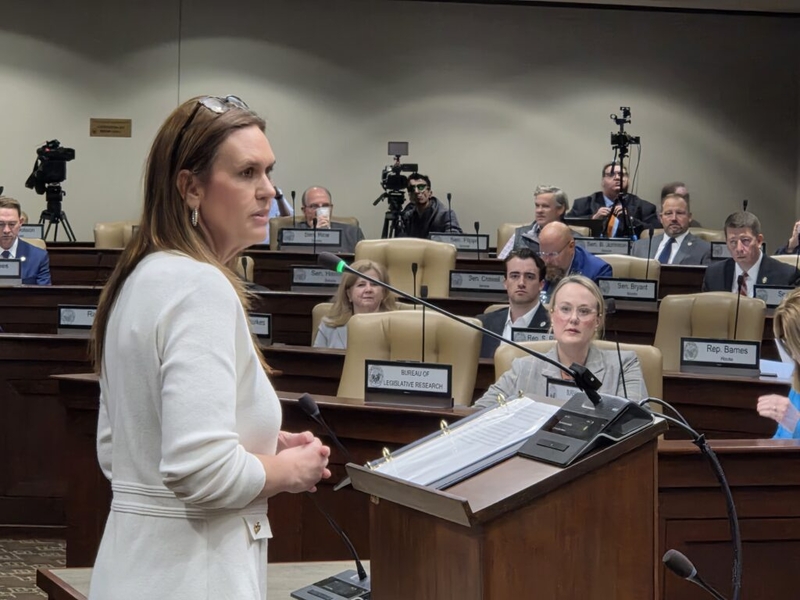
Arkansas Gov. Sarah Huckabee Sanders presents her fiscal year 2028 budget proposal to state lawmakers at the Capitol's Multi-Agency Complex on Friday, Nov. 6, 2026. (Photo by Tess Vrbin/Arkansas Advocate)
Arkansas Gov. Sarah Huckabee Sanders unveiled her nearly $7 billion state budget for the coming fiscal year Friday, promising a fifth round of income tax cuts if the Legislature approves her proposal.
New spending items include $70 million for school vouchers, $20 million for early childhood education, $25 million for the Supplemental Nutrition Assistance Program and $150 million for Medicaid.
The state budget for the current fiscal year, which began July 1, totals $6.7 billion. Sanders’ proposed fiscal year 2028 budget would give the state a $449 million surplus, Finance and Administration Secretary Jim Hudson said, though future tax cuts would lower that number.
The state netted a $655 million surplus from the fiscal year that ended June 30, and the state has about $4 billion in reserves.
Sanders, a Republican, won a second term Tuesday, and her party will maintain its legislative majority. She told lawmakers Friday that she saw the election as an endorsement of Republican fiscal values.
“Budgets show our priorities: education, public safety, public health, care for our most vulnerable and tax cuts,” Sanders said.
Arkansas Advocates for Children and Families praised the proposed investments in early childhood education, Medicaid and SNAP in a news release but said the proposed budget is “light on details.”
“We do not believe it goes far enough to address the needs of Arkansans,” the organization wrote. “And the push for additional income tax cuts does not make life more affordable for most Arkansans and instead threatens important programs and services.”
Arkansas Explained: What’s happening with the state’s school voucher program?
Sanders faces a changed lawmaking landscape next year after Democrats flipped 10 House seats Tuesday, breaking Republicans’ decade-long supermajority and requiring bipartisan support for most budget bills.
Democratic and some Republican lawmakers have questioned the growing cost of the state’s school voucher program created in 2023, the year Sanders took office.
School vouchers remain one of Sanders’ signature policies, and her proposed budget allocates $70 million more to the program for fiscal year 2027. That would bring its total cost to more than $379 million.
Lawmakers from both parties praised the annually recurring $20 million Sanders proposed for early childhood education. Last year, a task force came to the rescue of Arkansas’ financial aid program for low-income families seeking child care after providers said proposed changes to the program could force them out of business.
Sanders said investing in early childhood education would “build on the achievements of the LEARNS Act,” the 2023 law that created the voucher program for K-12 students.
“I’m confident this will be another opportunity to transform Arkansas education and set our students up for success from cradle to career,” Sanders said.
The top Democrat in the House, Rep. Andrew Collins, said the budget doesn’t go far enough in funding early childhood education and that the new Medicaid funding won’t cover badly needed increases in reimbursement rates.
“While I truly appreciate these advancements, the budget still falls far short of where we need to be,” he wrote in a Facebook post.
Medicaid and SNAP
Last year’s federal tax and spending cut legislation, known as the One Big Beautiful Bill Act, will cut Medicaid spending by $900 billion over the next decade. More than 800,000 Arkansans are covered by Medicaid, the federally funded, low-cost insurance program for low-income people and people with disabilities.
Sanders’ proposed budget includes not only a $150 million increase for the Department of Human Services to administer Medicaid, but also $200 million in one-time surplus funds and another $75 million in dedicated interest earnings for the program.
Hudson reiterated past statements to lawmakers that Medicaid claims spiked this year, but he said he’s confident the state has “the ability to meet the ongoing operational needs of Medicaid” until the current fiscal year ends June 30, 2027.
Families of Arkansas children with disabilities say more action needed on waitlist
The Department of Human Services’ increased Medicaid administrative funding includes $34 million for supportive living services that families of Arkansans with complex disabilities have been requesting for years.
Sanders announced in September that the state would fund in-home care for the thousands of families on the waitlist for Medicaid coverage of these services. She estimated this would cost $17 million for the second half of fiscal year 2027.
The future of Arkansas’ Medicaid expansion is expected to be one of the Legislature’s top priorities next year. The Trump administration rejected a five-year renewal of the program in July and said Thursday that the program would stay in effect for the first half of 2027 while Arkansas officials consider a new model.
Additionally, Sanders’ proposed budget’s new $25 million for the Supplemental Nutrition Assistance Program will address higher administrative costs required by the One Big Beautiful Bill Act. The federal legislation requires states with error rates above 6% to pay at least 5% of SNAP benefit costs beginning in fiscal year 2028.
Sanders’ proposed budget sets aside a one-time $50 million allocation for the state’s potential share of SNAP benefit costs because Arkansas’ rate of overpaying or underpaying those benefits has been consistently above 6%.
Arkansas is the nation’s most food-insecure state. Democrats and community advocates said earlier this year that the SNAP funding shortfall was one reason not to cut taxes, especially when the lower and middle classes see little savings.
The state’s top income tax rate dropped from 7% to 4.9% under Sanders’ Republican predecessor Asa Hutchinson, who served from 2015 to 2023. The four tax cuts implemented during Sanders’ first term have lowered the top rate to 3.7%.
Hudson said Friday that the state’s revenues of $214.4 million are nearly 10% above what his office forecast for this point in the fiscal year, even accounting for the tax cut Sanders signed in May that was retroactive to Jan. 1.
LEARNS opponent named Joint Budget co-chair
Republican Sen. Jimmy Hickey was chosen as the next Senate co-chair of the powerful Joint Budget Committee Thursday, succeeding former chairman Sen. Jonathan Dismang, who resigned in September.
The committee oversees all appropriations and budgetary matters that come before the Legislature. Hickey’s selection to the post comes as the state faces questions about the cost of school vouchers and changes to its Medicaid expansion program.
The senator from Texarkana previously chaired the Senate Revenue and Tax Committee, and is a past president pro tempore.
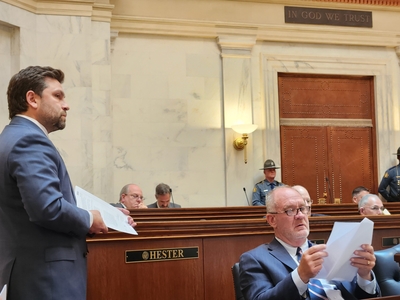
Hickey, a former banker, has split with Sanders on several occasions since she took office. He was one of two Republican senators who voted against the LEARNS Act, and he requested an audit of Sanders’ office’s 2023 purchase of a $19,000 lectern.
Hickey led the opposition to the nomination of Republican Sen. Breanne Davis of Russellville, a Sanders ally and a lead sponsor of the LEARNS Act, as the next Senate president Thursday. He nominated Republican Sen. Ron Caldwell of Wynne to the post three times, resulting in three deadlocked votes, before senators agreed to elevate Republican Sen. Joshua Bryant of Rogers to the top job.
Reporter Ainsley Platt contributed to this article.
Little Rock