The Nature Conservancy opens new community forest in Cle Elum
Nov 06, 2026 | 7:00 am ET
Description
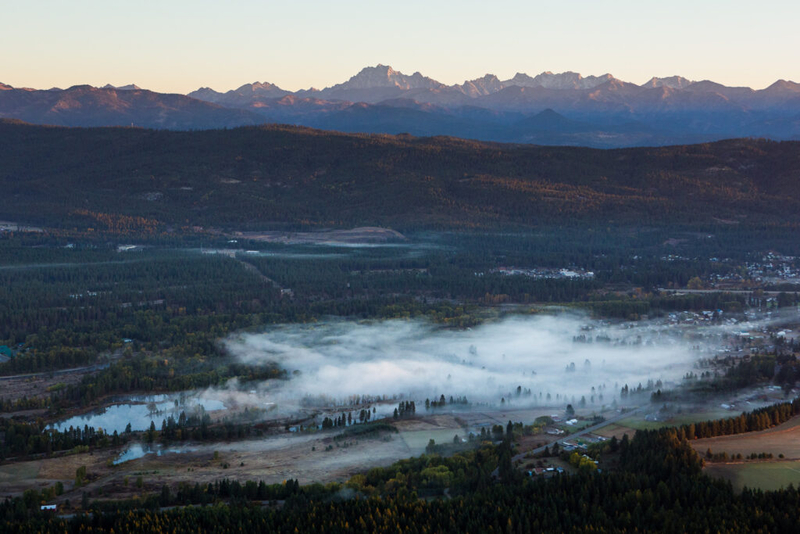
The Cle Elum Ridge is Washington's newest community forest. (Photo by Benjamin Drummond)
The Nature Conservancy, an international environmental nonprofit, just acquired 2,600 acres of timberland in central Washington.
Historically owned by industrial timber companies, the lands within the Cle Elum Ridge Community Forest are now protected from development and accessible to the public.
“This moment reflects what happens when people come together around a shared idea for the forest,” said Darcy Batura, forest partnerships director for the Nature Conservancy in Washington. “It’s a moment to transition toward looking forward and thinking about the generations of children that are going to enjoy these forests and will inherit the responsibility of caring for it.”
While the purpose of the acquisition is to protect the land from development, the organization’s priorities extend well beyond that. The community forest will support recreation, wildlife migration paths, watershed function and wildfire resiliency work.
The nonprofit also plans to transfer the land to the Confederated Tribes and Bands of the Yakama Nation, whose ancestral homelands encompass the forest’s boundaries.
The forest, which lies adjacent to the Teanaway Community Forest near Cle Elum and Roslyn, is home to a variety of woodland animals: elk, mule deer, cougars, black bears, foxes, grouse, turkeys and the occasional wolf.
“Having this as a managed forest means that they don’t need to come down into our communities and hopefully we avoid a lot of those conflicts,” said Nicky Pasi, a senior manager at Mountains to Sound Greenway Trust, a longtime stewardship partner for the Cle Elem Ridge Community Forest.
In 2014, the Nature Conservancy partnered with Central Cascades Forest to acquire nearly 50,000 acres of forestland between Snoqualmie Pass and Ellensburg. Today, much of that land has been protected by the U.S. Forest Service and the Washington Department of Fish and Wildlife, according to the Nature Conservancy.
“We hit the pause button on housing development pressures more than 10 years ago so we could better understand what these lands needed most,” said Batura.
Since the initial acquisition, the Nature Conservancy wasn’t a “passive landowner,” she said. It reintroduced prescribed fire, thinning and other climate and wildfire resiliency work with local crews.
The forest also became a “living laboratory” for Emily Howe, aquatic ecologist at the nonprofit, who conducted a study on how forest management could maximize snowpack retention. Washington’s snowpack has decreased 25% since 1950, and it’s projected to decrease up to 50% more by the end of the century, according to state climatologist Guillaume Mauger.
On Oct. 28, the Nature Conservancy purchased 2,600 acres from Central Cascades Forests, making it the sole owner of the land. The Cle Elum Ridge is now one of 17 community forests in the state.
The Nature Conservancy also partnered with Mountains to Sound Greenway Trust, a local nonprofit that stewards 1.5 million acres of land along I-90. The organization, which largely helped with community outreach and engagement, also built a 13-mile “sustainable” trail system within the forest. It was designed by trail construction experts, a landscape architect and with input from local mountain biking and trails groups, Pasi said.
“We maintain [the trails] with local volunteers,” Pasi said. “They are non-motorized, multi-directional, multi-use trails.”
Though a timeline isn’t yet decided, the nonprofit plans to transfer the forestland to the Yakama Nation.
“I think it’s really important that we take the time to build some norms, to build trust, and to work with the Nation at a pace that’s comfortable for them,” Batura said, noting that the transfer could occur in one year or in several.
“And that’s absolutely fine to us,” she added.
For now, the Nature Conservancy is inviting the public to review and comment on a draft community forest management plan at a meeting in Cle Elum on Nov. 17.
Olympia, WA