Voters back tougher crime penalties, reject marijuana rollbacks
Nov 04, 2026 | 2:15 pm ET
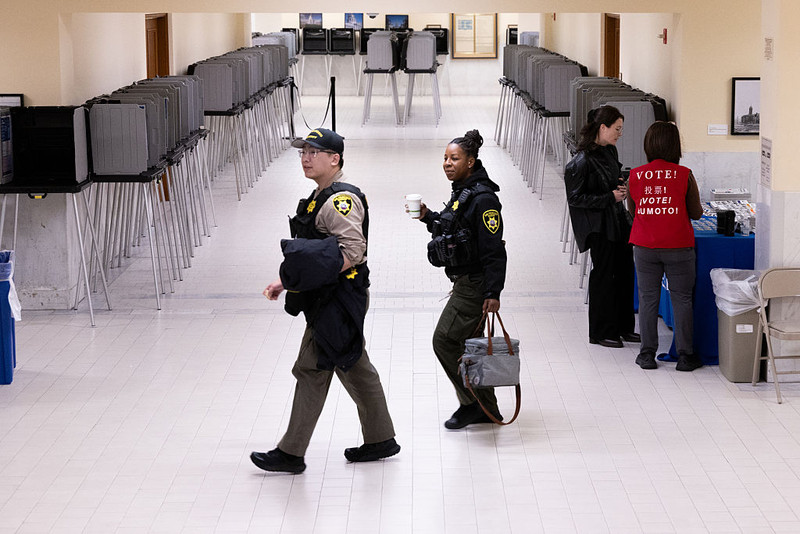
Description
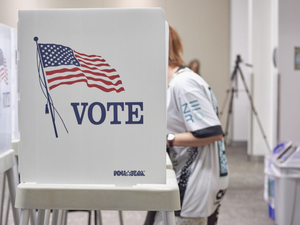
Sheriff’s deputies walk past voting booths at San Francisco City Hall on Nov. 3, 2026. Voters across 11 states weighed in on criminal justice and drug policies Tuesday, approving tougher bail restrictions and criminal penalties while rejecting efforts to roll back marijuana legalization. (Photo by Benjamin Fanjoy/Getty Images)
Millions of voters in 11 states approved tougher criminal penalties and more bail restrictions in Tuesday’s midterm elections, while rejecting efforts to roll back marijuana legalization and expand cooperation with federal immigration authorities.
The results reflected a mixed approach to criminal justice policy, with voters supporting harsher penalties for certain drug and human trafficking offenses and greater authority for judges to deny bail, even as they resisted other changes to state laws.
The measures were among 15 criminal justice and drug policy proposals on ballots in nine states, covering issues ranging from pretrial detention and crime victims’ rights to immigration enforcement and traffic cameras.
Voters expand bail restrictions
Voters in Indiana, Louisiana and Tennessee approved constitutional amendments expanding restrictions on bail.
In Indiana, 59% of voters supported a measure allowing judges to deny bail when evidence of guilt is strong and a defendant poses a substantial risk to another person or the community.
States put criminal justice, marijuana policies before voters in 2026
Louisiana voters approved a measure prohibiting post-conviction bail, which is sometimes referred to as an appeal bond, for people convicted of aggravated offenses against minors.
Post-conviction bail allows a person who has been found guilty of a crime to remain free or be released from custody while they wait to be formally sentenced or while they appeal their conviction.
In Tennessee, voters expanded the list of offenses for which judges can deny bail, including charges of terrorism, second-degree murder and aggravated rape of a child.
Tennessee voters also approved a constitutional amendment expanding crime victims’ rights, including the right to receive notice of criminal proceedings, to attend hearings and to be heard during decisions involving defendants’ release, sentencing and parole.
Those outcomes continue a recent trend of voters supporting greater restrictions on pretrial release. In May, Alabama voters approved a similar constitutional amendment allowing judges to deny bail for defendants charged with certain violent offenses.
Tougher penalties gain support
Colorado voters approved two measures increasing criminal penalties for fentanyl offenses and child sex trafficking.
Proposition 132 increases penalties for certain fentanyl offenses, requires court-ordered treatment for some possession convictions and changes how drug possession is considered under the state’s habitual criminal law.
Proposition 133 requires life imprisonment without parole or release for people convicted of human trafficking of a child for sexual servitude.
But Colorado voters rejected Amendment 81, which would have required state and local law enforcement to notify federal immigration authorities after charging certain people who are unlawfully present in the country or whose immigration status could not be determined.
In Arizona, voters supported measures designating drug cartels as terrorist organizations under state law and restricting the use of photo traffic enforcement systems, such as stop sign and speed cameras.
Missouri voters narrowly approved a constitutional amendment establishing elected county sheriffs as the chief law enforcement officers in most counties and limiting the circumstances under which they can be removed from office.
Voting rights and pardons
In Virginia, 55% of voters approved a constitutional amendment automatically restoring voting rights to people with felony convictions after they complete their sentences, replacing a system that required a gubernatorial pardon or a successful petition for restoration.
Kentuckians overwhelmingly approved a constitutional amendment that will prohibit the governor from issuing pardons or commuting sentences during a period beginning 60 days before a gubernatorial election until five weeks after it.
Marijuana rollback efforts fail
While voters supported tougher criminal penalties, proposals affecting marijuana legalization were defeated.
In Massachusetts, voters overwhelmingly rejected a measure that would have repealed much of the state’s law allowing licensed recreational marijuana sales. The outcome preserves a legal market approved by voters in 2016.
The proposal would have eliminated licensed recreational sales while continuing to allow adults to possess limited amounts of marijuana.
In Idaho, voters rejected a constitutional amendment that would have given state lawmakers exclusive authority to legalize marijuana, narcotics and other psychoactive substances.
The measure would not itself have legalized or prohibited marijuana. Instead, it would have prevented citizens from using the state’s ballot initiative process to legalize those substances.
Stateline reporter Amanda Watford can be reached at [email protected].