Missouri prepares for SNAP purchase restrictions as court battles continue
Nov 26, 2026 | 6:55 am ET
Description
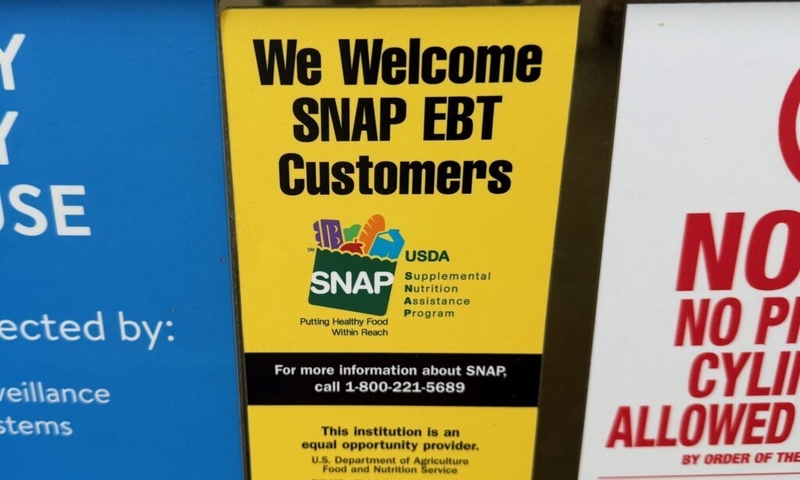
The restrictions planned for Feb. 15 will impact the almost 5,000 retailers who are authorized to accept SNAP benefits in Missouri (Steph Quinn/Missouri Independent).
Missouri plans to give nearly 5,000 retailers a list of candy, sugary drinks and desserts that shoppers will no longer be able to purchase with federal food benefits starting Feb. 15. But grocers worry the list could quickly become outdated as products change.
To create the list, the Missouri Department of Social Services has received permission to forgo competitive bidding and make a one-time purchase of a Missouri-specific product database from global market research firm NielsenIQ.
The restrictions, approved by the federal government at the state’s request last year, will prohibit purchases of candy, prepackaged, shelf-stable desserts, sugary beverages and energy drinks through the Supplemental Nutrition Assistance Program, or SNAP. They will also apply to a program called SUN Bucks that gives families of eligible children a one-time benefit of $120 to buy groceries during the summer.
The list is intended to help almost 5,000 SNAP retailers statewide implement the changes consistently, according to the department’s single feasible source purchase notice.
“Without this centralized procurement, approximately 4,944 SNAP-authorized Missouri retailers would each need to independently acquire the data, risking inconsistent implementation and federal noncompliance penalties,” according to the department posting.
But the Missouri Grocers Association, which advocates for the state’s grocery industry, says that unless the department provides regular updates to the list, retailers will struggle to implement SNAP restrictions uniformly as product formulations change and manufacturers release new products.
Dan Shaul, the association’s executive director, told The Independent he also worries retailers will be punished for inconsistencies that will be difficult to avoid.
“Yes, we’ll go ahead and program that list in,” Shaul said. “But then how do we make changes as our products change? I don’t think people understand the depth of product changes or (Universal Product Code) changes from retailer to retailer. Those things change constantly.”
Missouri’s plans are unfolding against the backdrop of federal court battles over the legality of SNAP restrictions in 23 states where the U.S. Department of Agriculture has approved waivers.
A class action lawsuit filed Nov. 18 and led by the National Center for Law and Economic Justice seeks to strike down proposed and current SNAP restrictions in 18 states, including Missouri, arguing federal officials lacked authority to use waivers to undertake such large-scale change to SNAP.
The lawsuit builds on the center’s ongoing legal challenge of SNAP restrictions in the five other states where USDA approved waivers. A judge blocked those waivers, in Colorado, Iowa, Tennessee and West Virginia in June, though the USDA has appealed the decision.
Missouri’s updated waiver, approved by USDA in June, defines candy as products that combine sugar or artificial sweeteners with “chocolate, fruit, nuts, caramels, gummies and hard candies…in the form of bars, drops or pieces.” The definition excludes items that contain flour or require refrigeration.
The waiver prohibits the use of SNAP benefits to purchase energy drinks, as well as “soda, juice, punch and tea,” which are defined as containing more than 10 grams of sugar per serving or 50% or less of vegetable or fruit juice. But SNAP participants can use benefits to buy beverages containing milk and sports drinks marketed to increase hydration.
The waiver’s ban on SNAP purchases of pre-packaged, ready-to-eat desserts does not include items baked fresh in grocery stores that aren’t considered shelf-stable.
To qualify for SNAP, Missourians can earn a gross income of no more than 130% of the federal poverty level, or $41,796 per year for a family of four before taxes and other deductions.
As researchers study the impacts of SNAP restrictions, the effectiveness of the waivers at improving nutrition remains unclear.
Kate Bauer, a professor of nutritional sciences at the University of Michigan School of Public Health, told The Independent that while studies conducted before the first waivers took effect showed little impact on participants’ diets — suggesting people used resources besides their benefits to buy restricted products — more recent research suggests SNAP restrictions can decrease purchases of sugary drinks.
Bauer said she worries SNAP restrictions will heighten existing stigma against people who use food benefits.
“A big concern for me is that with these restrictions and really a lot of confusion over what foods and beverages are eligible, that stigma would increase,” Bauer said.
A “good day one list”
Shaul said several other states are using product lists from NielsenIQ and that “it’ll be a very good day one list.”
But, he said, “my responsibility now is to try to find (retailers) tools beyond the day one list that will allow them to comply” with the coming SNAP changes.
In an email to The Independent, Baylee Watts, the department’s media director, said the department could not disclose the cost of the contract because procurement is still underway.
But Watts said “requiring each store to independently license and maintain this product data would cost Missouri retailers an estimated aggregate of more than $7.4 million — and that figure excludes additional fees for larger retailers.”
The department’s single feasible source posting also indicates that because of the “urgent federal implementation timeline,” a competitive request for proposals would have been “impractical and detrimental to compliance efforts.”
The department applied for federal permission to restrict SNAP purchases at the behest of Gov. Mike Kehoe in a September 2025 executive order. The department postponed the original start date of Oct. 1, 2026, to better support Missouri retailers, Kehoe said in a June press release. Retailers had warned they needed clearer guidance to enforce the new restrictions.
Watts said the list the department plans to provide “is designed to eliminate guesswork.”
“Rather than requiring individual store owners to manually audit tens of thousands of inventory items, this standardized electronic dataset allows retailers and their point-of-sale (POS) software providers to perform direct, batch updates across their systems,” Watts said.
Shaul said the association is searching for a solution that would provide a dynamic list, so that product changes won’t require manual updates to retailers’ systems.
The definitions in Missouri’s SNAP waiver, Shaul said, are “up for interpretation.
“I would hope that the department would interpret it the exact same way as every retailer in the state that has SNAP,” Shaul said. “That is not going to happen.
Fundamental changes
Neither of the two Missourians named in the class action lawsuit filed Nov.18 have funds other than their SNAP benefits to purchase food, according to court documents.
Nicole Noblet, of Kansas City, has celiac disease, gastroparesis and, her doctor suspects, hypoglycemia. Her conditions make it difficult for her body to absorb sugar from solid foods, so she uses soda or energy drinks to raise her blood sugar.
Gerard Rogers, of Springfield, has diabetes and sometimes uses candy bars to manage low blood sugar, according to the lawsuit.
Katharine Deabler-Meadows, a senior attorney working on the lawsuit, told The Independent many SNAP participants don’t have other resources they can reallocate to buy items restricted by state waivers.
“Probably the simplest and most classic example that we’ve run across as we’re talking to people about these waivers is a person who is diabetic who relies on soda or candy to manage blood sugar crashes when they’re working or running errands or caring for their children,” Deabler-Meadows said. “…They’re going to have to choose: Do I manage my chronic health condition, or do I not buy something else that my household needs?”
Deabler-Meadows said throughout the history of SNAP, USDA’s definition of SNAP-eligible food has matched the definition in the federal Food and Nutrition Act and has been consistent across states.
Changing this definition of food through federal regulations — and making different changes in different states — is “a fundamental change to the way this program works” and a “backdoor method to restrict access to SNAP,” Deabler-Meadows said.
“This is not the sort of change that can or should be done by an administrative agency through the waiver process,” she said. “This should be done via open debate in Congress.”
Getting on the same page
Bauer said research shows programs that incentivize purchases of healthy food can improve the quality of people’s diets.
She gave the example of Double Up Food Bucks, which allows SNAP participants to get twice as much fresh produce when they use their benefits to buy fruits and vegetables.
“People want to eat healthy, and they want to feed their kids fruits and vegetables,” Bauer said. “They know what’s healthy. That’s not the limiting factor. The limiting factor is the amount of money they have.”
Bauer also pointed to difficulties retailers could face implementing SNAP restrictions. One recent study shows that since states began implementing the waivers this year, slightly fewer convenience stores are accepting SNAP benefits.
Shaul said he wants to make sure grocers making a good-faith effort to comply with the coming SNAP restrictions don’t get penalized for noncompliance.
“We’re going to continue to work with the department to try to get to a point where everybody is in the same — I won’t even say the same page, but the same book,” Shaul said. “I’d love to be in the same chapter.”
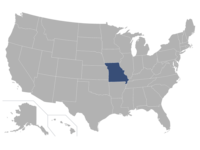
Jefferson City, MO