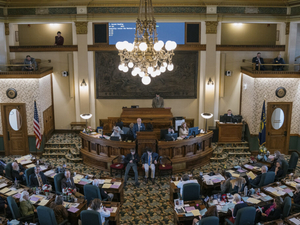
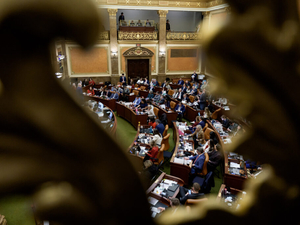
Vermont Democrats regain supermajorities in Statehouse amid nationwide ‘blue wave’
Nov 04, 2026 | 12:55 pm ET
Description
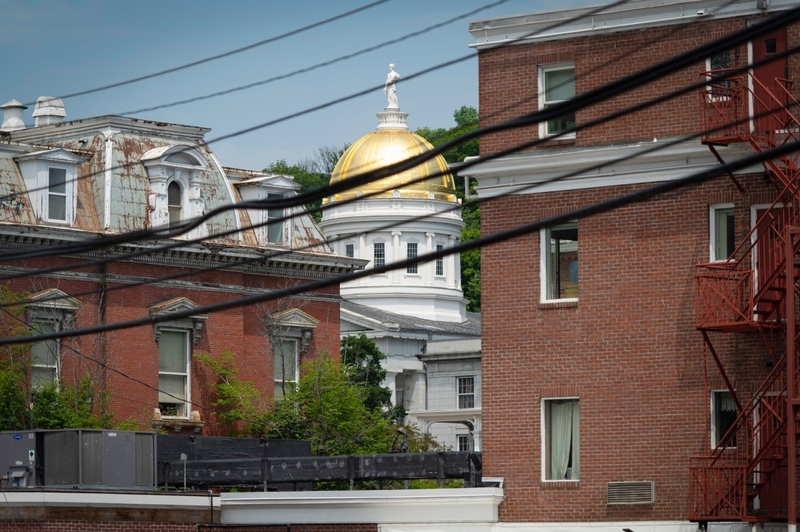
The Vermont Statehouse in Montpelier on Tuesday, June 30, 2026. Photo by Glenn Russell/VTDigger
Theo Wells-Spackman is a Report for America corps member who reports for VTDigger.
This article was updated at 5:37 p.m.
The Democratic “blue wave” felt across the country swept through Montpelier too on Tuesday.
Two years after the party saw its supermajorities shattered in both state legislative chambers with significant Republican wins, Democrats returned to two-thirds majorities in both the Senate and House. Progressive wins in the House will extend the left flank’s advantage even further, though a number of races remained too close to call Wednesday afternoon.
“We were confident we’d pick up seats,” said Vermont Democratic Party Chair Lachlan Francis in an interview Wednesday. But “I certainly think it’s safe to say we are surprised.”
In the Senate, Democrats flipped four closely watched seats in Orange County, Addison County, Grand Isle County and the Chittenden-North district. Dave Wolk, an independent former Rutland County senator, will return to his old position after ousting embattled Republican Sen. Terry Williams.
Democrats currently hold 87 House seats to Republicans’ 56, with other parties making up the remaining seven seats, according to Ballotpedia. Tuesday saw Democrats flip a host of GOP districts, netting more than a dozen seats as some final results remain pending.
Vermont Democrats’ wins came alongside historic gains for their party nationwide, which longtime journalist and political observer Chris Graff called a “once-in-a-lifetime event.”
“The only person who was impervious to the tsunami was (Republican Gov.) Phil Scott,” he said.
But Scott’s win may have come at a cost for his party’s legislative candidates, according to Natalie Silver, a Vermont-based political operative who has worked for state Treasurer Mike Pieciak and U.S. Rep. Becca Balint, D-Vt.
“He was not able to really pound the pavement for the Senate candidates, for the House candidates,” she said. “I think that the downballot Republican ticket suffered because he had to focus on his own race.”
Francis agreed that the national political context played a major role in local results.
“I think the horrors of what we’ve seen from this federal administration absolutely motivated Democrats, independents and even some Republicans in Vermont to stand up and say that we need to do something different,” he said.
The energy of Democrat/Progressive Amanda Janoo at the top of the ticket, Francis added, was also likely a key factor in the legislative victories despite Scott’s eventual win in that race.
Paul Dame, the state’s Republican Party chair, said he too believes anger at the Trump administration was likely the dominant factor in Tuesday’s legislative outcomes.
“Pretty much all the gains that we had (the) last two years are essentially wiped out,” he said.
One difference Tuesday, Dame said, was the departure from a longstanding pattern in which candidates for state office tend to outperform federal hopefuls across the Vermont GOP.
“That was completely eliminated in the results last night,” he said.
Democrat Kim Gleason, who bested Republican Sen. Pat Brennan in the race for Grand Isle County’s single Senate seat, said that although she thought fuel prices and tariff impacts were keenly felt in her district, she heard more from voters about complex local issues such as education reform. Colchester, a key fraction of her soon-to-be constituency, recently went through an eyewatering reappraisal process, bringing property taxes to the fore, she said.
Gleason previously served on the State Board of Education and was previously vice chair of the Vermont Pension Investment Commission.
She had heard continual interest from voters, she said, “in having perhaps a fresh perspective on all of these perennial problems.”
For Graff, the dramatic Senate results were tied in part to the “unusually strong” Democratic candidates and the energy behind their campaigns.
Silver added that she believed Democratic lawmakers were “outmaneuvered” in 2024 by Scott when it came to communicating their legislative work. The party’s strategies in connecting with voters about issues this time around were more effective, she argued.
“I think that they learned that lesson pretty hard,” she said.
And the state’s basic political demographics are also a crucial factor in evaluating such a swing, Graff said.
“You can never get away from the fact that Vermont is the most Democratic state in the nation,” he said.
It’s a fact that Sen. Steve Heffernan, the Republican who fell to Democrat Hannah Sessions in Addison County, said he was reminded of Tuesday night. Local voters had shifted their focus away from taxes to an extent, he said in an interview Wednesday, partly due to concerns over the Trump administration’s actions.
Independent Dave Wolk, who will take Williams’s place in Rutland County, said he thought his success was entirely separate from Republican losses across the country. Wolk has served in a variety of public positions in the past, from state commissioner of education to Rutland County assistant judge, and has built deep connections to his community.
“I know a lot of people,” he said in an interview Wednesday. “I’m a Rutland guy.”
Wolk, who last served in the Senate as a Democrat in 1992, said he has no interest in formal affiliation with either major party and may be involved to an extent in meetings on both sides of the aisle.
“If it’s about something that will help me be a senator, I’ll be there,” he said. “If it’s about political strategizing — you know, how we’re going to win over the other party — I’m not interested one bit.”
Read the story on VTDigger here: Vermont Democrats regain supermajorities in Statehouse amid nationwide ‘blue wave’.
Montpelier, VT