Indiana makes progress in cutting childcare voucher waitlist
Nov 03, 2026 | 5:00 am ET
Description
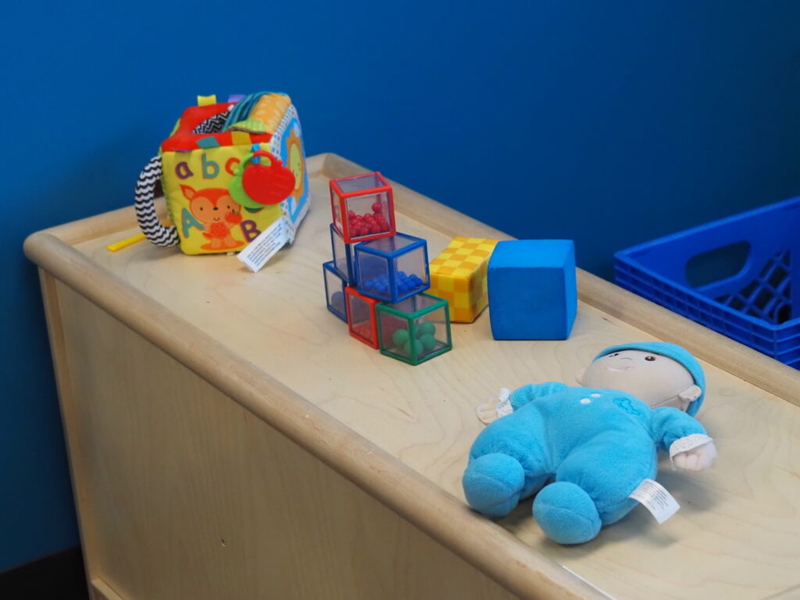
Toys are scattered along a shelf at Shepherd Community Center's Minnie Hartmann Neighborhood Childcare facility on Tuesday, July 21, 2026. (Photo by Leslie Bonilla Muñiz/Indiana Capital Chronicle)
The waitlist for a childcare voucher in Indiana declined from 41,175 children in May to just 9,006 children at the end of October — a 78% decline Gov. Mike Braun credits to a major investment by his administration following a year-and-a-half hiatus for new sign-ups.
“Making life more affordable for Hoosiers is a top priority of mine,” the governor said in a news release Monday. “These results reflect focused efforts to deliver immediate relief to families and accelerate access to affordable child care.”
The Child Care Development Fund, or CCDF, is a state-administered federal program offering childcare vouchers to low-income families.
The state paused sign-ups for childcare vouchers in late 2024, pushing more families onto a waitlist for assistance.
Braun asked lawmakers on the State Budget Committee in April to redirect $200 million from the Financial Responsibility and Opportunity Growth Fund to the Child Care and Development Fund, with the goal of moving 14,000 children off the waitlist.
In a statement Monday, Braun said nearly 48,000 Hoosier children are now receiving CCDF vouchers. That’s up from 40,000 children in May, according to the state’s CCDF dashboard.
He described the voucher system as an economic engine for the state, granting families the flexibility to pursue better jobs and new skills.
“What we have is a crisis of affordability, and so to get more families access to these dollars and to reduce the waitlist is a very good thing,” said Sam Snideman, vice president of government and sector relations for the United Way of Central Indiana.
Still, Snideman said the investment came too late for childcare providers forced to close in the interim, and still exclude hundreds of families pinched by inflation who don’t meet the income threshold.
Childcare subsidies are typically restricted to families who are at or below 135% of federal poverty, or $44,000 for a family of four.
“The reality is that we probably have hundreds, if not thousands, of other kids and families who still need access to some sort of support in order to afford childcare,” he said.
Reimbursement rates remain low too, in some cases the equivalent of $1 a week, Snideman said.
“We still have some work to do as a state to ensure that a voucher has the value that it takes to provide the care for a child. We want to make sure that it doesn’t cost more to process a payment than the payment is worth.”
The latest round of funding prioritized enrollment of siblings of current voucher holders, as well as infants, toddlers and pre-school age children.
The state also created exemptions for children of foster and kinship families, children with special needs, homeless children, children of childcare workers and children of Ivy Tech students.
Indianapolis, IN