Three authors sue over Alabama library restrictions on transgender content
Nov 02, 2026 | 2:20 pm ET

Description
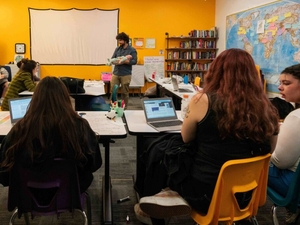
Books in the young adult section of the Ozark - Dale County Library Wednesday, Aug. 30, 2023 in Ozark, Ala. A lawsuit filed by three authors and a nonprofit alleges that Alabama Public Library Service administrative code changes restricting books with LGBTQ+ themes violates the First Amendment. (Stew Milne for Alabama Reflector)
Three authors and a free-speech organization Friday filed a federal civil lawsuit against the state board overseeing Alabama’s libraries, alleging a rule that limits minors’ access to books with transgender-related content violates the First Amendment.
The plaintiffs argue the code changes approved by the Alabama Public Library Service last November amount to content-based discrimination.
“I think that having a small group of people decide what is right, not only for their own children but for the children and the families of every family in Alabama, is unconstitutional,” said Kit Rosewater, an author and one of the plaintiffs in the lawsuit, in an interview Monday. “I think it violates the First Amendment, freedom of speech, which I believe includes the freedom to read. Whether appointed or not, I think this level of power is outside of the position that anyone should hold of dictating what access families have to different literature.”
A message seeking comment was sent to APLS Board Chair John Wahl, the Republican nominee for Alabama lieutenant governor, on Monday. APLS had not filed a response as of Monday afternoon.
Rosewater authored a book called “Buried Feelings,” published in July. The book is about the friendship between two high school students, one of whom is a transgender boy. However, Rosewater said that one library told her it feared stocking the book, named a Junior Library Guild Gold Standard Selection, because of the Board’s restrictions on transgender content.
APLS voted to change the administrative code to prohibit library materials with transgender-related content in the children’s section of libraries last November.
The board added language stating that “any materials regarding transgender procedures, gender ideology, or the concept of more than two biological genders shall be considered inappropriate for children and youth.”
Board members did not define the meaning of gender ideology in the proposed changes.
It marked the second time since 2023 that APLS modified its administrative code to limit minors from having access to specific library materials. In May 2024, APLS revised the code to require local libraries to create policies that prevent books that are either obscene or considered “sexually explicit or other material deemed inappropriate for children or youth” from areas in libraries designated for minors.
Two other authors are also plaintiffs in the case. Page Powars wrote “But I Hate Him,” which features that features two teen boys locked in an academic rivalry at an elite summer camp. Phoenix McDonald wrote “The Hidden Continent,” which has LGBTQ+ characters.
Plaintiffs allege in the lawsuit that the rule is unconstitutional because it violates the First Amendment rights of specific groups, like members of Read Freely Alabama, a grass-roots organization whose members are unable to borrow library books with transgender-related content, and hinders the financial interests of authors who write books about transgender issues.
The lawsuit also states the language in the administrative code is vague and overly broad. One example cited in the complaint is “Twelfth Night” by William Shakespeare because “the character Viola disguises herself as a young male page and falls into a love triangle in which the other two characters mistake Viola’s gender.”
“Readers, specifically young readers, who walk into places like libraries, look around and either not see themselves reflected if they identify as a transgender person, or they are just not going to see the mention of transgender people,” Rosewater said of the APLS rules. “Culturally, we lose empathy, we lose compassion, and then we lose support and validation of a very small part of the population who has already been picked on from every possible angle.”
Montgomery