Former school administrator challenges think tank founder for SC superintendent
Oct 29, 2026 | 12:00 pm ET

Description
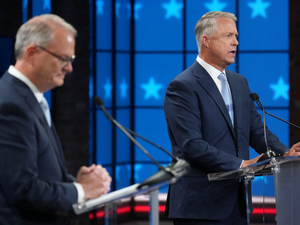
State Superintendent Ellen Weaver, left, is vying against Democratic challenger Sylvia wright, right, to lead the state's public school system. (Photos provided by candidate campaigns)
COLUMBIA — Voters’ choice to run the state’s Department of Education could determine agency support for a taxpayer-funded education voucher program over the next four years.
Democrat Sylvia Wright is challenging Republican Ellen Weaver for the position overseeing policy for the state’s 72 public school districts. While both want to continue improving students’ test scores, they differ in their opinions of a program giving students funds for education-related expenses, including private school tuition.
Weaver, who’s seeking a second term, previously led Palmetto Promise Institute, a conservative education-focused think tank she co-founded in 2013 with her former boss, U.S. Sen. Jim DeMint, after he left office.
Wright most recently worked as a district coordinator for Dorchester 4, where she oversaw curriculum, reviewed testing data and helped train teachers. She resigned last fall to focus full-time on her campaign.
The last time voters chose a Democrat as state superintendent was in 2006, when Jim Rex won with fewer than 500 votes.
Still, Wright said she’s optimistic, pointing to polls showing significant support for Democratic candidates even in traditionally safe Republican areas during the midterm.
“This is a unique election cycle,” Wright said.
The job is also getting less attention this round. In 2022, the superintendent’s race was the most crowded field on South Carolina’s primary ballots, with six Republicans and three Democrats competing to replace retiring Superintendent Molly Spearman. Four years later, Weaver had no GOP opposition, and Wright became the Democratic nominee in June by defeating the party’s last nominee for the job.
Education Scholarship Trust Fund program
The place where Wright and Weaver vary most starkly is on whether to support the Education Scholarship Trust Fund, which provides money to pay for children’s K-12 educational needs, including private school tuition.
No money is sent directly to parents. Rather, quarterly installments are deposited into online accounts controlled by parents, who direct where the dollars go.
Since the program is written into state law and uses taxpayer dollars, the Department of Education must award scholarships to at least 15,000 students, no matter who wins.
By law, the scholarship amount adjusts yearly based on per-student funding to public schools. This year, that calculation provided roughly $7,600 each to parents earning up to 500% of the federal poverty limit.
Providing less would require a Legislature-approved change in state law.
The state superintendent can ask for more money through the agency’s annual budgeting process to open up more slots in the program. The decision of whether to fund those spaces is ultimately up to legislators.
Weaver has long advocated for a broader program, including as head of Palmetto Promise Institute, the state’s leading proponent of school choice legislation since she launched it. The think tank wants the K-12 scholarships to be “universal,” which means available to all parents.
K-12 scholarships through federal tax credits start in January. Nonprofits will oversee spending.
A federal tax credit program set to start in January could end up dwarfing the state’s numbers, without oversight by the state’s K-12 agency.
In an emailed statement to the SC Daily Gazette, Weaver said she wants to enroll more students in the state’s program. This year, roughly 20,000 families applied for 15,000 slots, leaving thousands of students on the waitlist, she said. She asked legislators to expand enrollment to 20,000 students this year, but the state budget kept the cap at 15,000.
“My commitment is to continue to implement the law faithfully, strengthen accountability and program operations, preserve meaningful flexibility for eligible families, and work with lawmakers to responsibly expand access,” Weaver said.
Wright wouldn’t ask legislators for more slots, she said. She has concerns about how the program has worked so far.
Officials have no idea how well students who used the money to pay for private school are performing, she said.
Schools submitted inconsistent and incomplete data for the program’s first year, making it impossible to analyze or give legislators results as required by law, according to an Education Oversight Committee report. A report on the second year’s results is expected in December.
Questions over whether homeschooled students should receive state funds also rankled legislators this year.
When legislators passed the law, both in its original form in 2023 and to reinstate funding for private school tuition in 2025, senators made it clear they didn’t want the money going toward homeschooling. That came at the request of homeschooling parents, who worried about government oversight.
Yet, the Department of Education awarded roughly 1,000 students money for homeschooling expenses, Weaver told senators earlier this year. Since the program excludes students homeschooled under the three methods allowed under state law, the education department essentially created a fourth option in which the agency oversees learning.
Senators, including the Senate’s majority leader and chairman of the education committee, accused Weaver of exploiting a loophole in the law and betraying their trust. Weaver told them she was just following the law as written.
“On matters of implementation, I have always believed that the law — not political pressure — must guide the department’s decisions,” Weaver said. “Reasonable people can disagree about policy, and the General Assembly has every right to clarify or change the law. My responsibility is to administer the law as written, communicate openly, and continuously improve how we serve South Carolina families.”
The questions over whether the law was implemented correctly raised concerns for voters, Wright said.
“That lack of transparency, the dishonesty as far as the homeschoolers receiving those vouchers — people are mad about that, and not just Democrats,” Wright said.
If she were superintendent, she would make sure money went where it was supposed to go, she said. That also means making sure low-income students get priority, as legislators said they intended, she said.
Applications for the funds open in windows, with lower-income students coming ahead of their more affluent peers. Wright wants more data on how many low-income students the program is actually helping, she said.
Instead of putting more money toward vouchers, Wright said, she’d rather put those funds toward improving public schools.
“My focus is going to be more on fully funding our public schools and making them a viable option,” she said.
Test scores and teacher retention
When it comes to improving students’ test scores and keeping teachers in classrooms, Weaver wants to stay the course, she said, pointing to improvements in both areas in recent years.
“Four years ago, I promised South Carolinians that we would raise expectations, support our teachers, strengthen our schools, and put students first,” Weaver said. “We have delivered on those promises, working shoulder to shoulder with the governor, General Assembly, and educators across our state.”
This year, more schools than ever received top scores on the state’s revamped report cards, which measure test scores, classroom surveys and student progress, following years of upward trends. At the same time, the number of schools in the lowest possible category declined.
More SC schools get top scores than ever, but education leaders say there’s still work to do
More students are reading and doing math on grade level in recent years, with both reaching their highest scores since the SC READY tests began in 2015. Just over 61% of all students tested in the spring could read on grade level, while nearly 48% could do math as expected for their grade.
Meanwhile, the number of vacant teacher positions has dropped since a record high during the 2023-24 school year. At the start of last school year in 2025, schools reported 706 open positions, the lowest number in at least five years, according to an annual survey.
“These are real results, earned through the hard work of South Carolina’s teachers, students, and families,” Weaver said.
Teachers’ advocates and state leaders credited changes in how students learn to read as a big reason for improvements in English scores. A similar program for math began this spring, with hopes of similar advancements in math.
Weaver has backed initiatives to keep teachers in classrooms. She asked for money to give certain teachers performance-based bonuses in an effort to reward student progress. And she’s supported the governor’s push to get base salaries for first-year teachers over $50,000, which legislators did this year.
If reelected, Weaver would keep building on that success, she said, without giving specifics.
“Our next chapter is about going further and faster — strengthening early literacy and math instruction, better preparing and rewarding excellent teachers, modernizing school facilities, and continuing to expand educational opportunity,” Weaver said.
Wright would want to look at other creative ways of continuing that progress if elected, she said.
Student success should start with early education, Wright said. She wants to push for universal pre-kindergarten for 4-year-olds and work more closely with First Steps, the agency overseeing state-paid preschool in private daycares.
Gov. Henry McMaster recommended legislators pay to expand eligibility for state-funded preschool to every 4-year-old in the state, but that didn’t make it into the final budget. Wright would look for other funding sources, potentially using local grant money, she said.
“There are so many issues that we’re seeing in K-12 because they’re not being addressed in the early, pre-K, birth-to-5 realm,” she said.
Along with continuing to push for higher teacher salaries, Wright would like to put in place a statewide training program for administrators. For a lot of teachers, the quality of their principals and superintendents can be a deciding factor in whether they want to continue teaching, she said.
Having a statewide training program could create more consistency in school environments, she said. Teachers who want to become administrators might also be more encouraged to stay in their local districts with more support from the state, she said.
“For me, it goes beyond just the incentives and the pay,” Wright said. “We have a leadership problem in South Carolina. As superintendent, I want to strengthen our leadership pipeline.”
Columbia