NJ Supreme Court rules in favor of Mantoloking in public records dispute
Oct 29, 2026 | 1:37 pm ET
Description
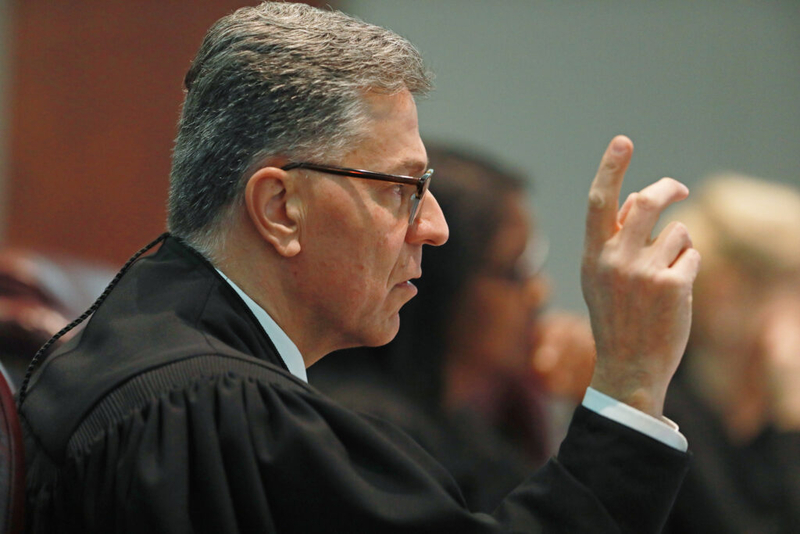
Justice Douglas M. Fasciale wrote Thursday’s decision blocking the release of the name of an attorney who emailed advice to a municipal prosecutor in Ocean County. (Photo by Amanda Brown/New Jersey Monitor)
Mantoloking can shield the identity of a private attorney who emailed advice to a government lawyer on how to handle a case, the New Jersey Supreme Court ruled Thursday in a divided decision.
The email, sought in a local dispute over traffic violations, is indeed subject to disclosure under the state Open Public Records Act, but the sender’s privacy interests and two balancing tests still weigh against releasing the private attorney’s name, the high court ruled.
“It is the sender’s reasonable expectation of privacy, which outweighs any interest in disclosure here, that protects the sender’s identity,” Justice Douglas Fasciale wrote for the majority in the 5-2 decision.
The conflict began when Jakob Weingroff, a former state trooper, filed a civilian complaint for alleged traffic violations against Donald Burke Sr., who sought Weingroff’s criminal and disciplinary history in response, suspecting Weingroff had previously falsified records.
A municipal court denied the request, and while the case was on appeal, Elizabeth Leahy, the municipal prosecutor appointed to oversee the proceedings due to a conflict of interest with the regular prosecutor, revealed a letter where she asked a colleague for advice about the admissibility of expunged records.
The colleague, whose name Leahy redacted in the letter provided in court, told her the expunged records were not admissible, citing statute. The trial court denied Burke’s request, but an appeals court said the circumstances entitled him to Weingroff’s expunged records.
Prosecutors dropped the charges against Burke after that ruling, but the case persisted because a separate group, the Association for Governmental Responsibility, Ethics, and Transparency, sued to reveal the colleague’s identity. Burke represented the group.
A trial court judge denied the request, ruling the email was a private communication on a private server and therefore exempt from disclosure. A divided appeals court affirmed the ruling, adding that even if it weren’t exempt, the sender’s identity would be shielded from disclosure that guards lawyers’ work product.
The Supreme Court’s majority ruled the email between the municipal prosecutor and her friend is disclosable under the Open Public Records Act because it was sent in the course of her official business. That it was sent on a private server was irrelevant and would not shield the email, the court said.
But when considering a balancing test weighing the sender’s privacy interests against the public’s right of access, the high court ruled the lawyer’s privacy won out.
“Attorneys might be discouraged from reaching out to their colleagues to discuss legal issues — and their colleagues may be reluctant to respond — if they believe personal identifying information might be released as a result,” Fasciale wrote for five members of the court, adding, “This is especially concerning to the extent it chills constructive attorney communications such as those here.”
With the case dismissed, the sender’s identity was irrelevant anyway, the high court ruled.
Donald Burke Jr., who represented his father and the association, did not immediately return a request for comment, nor did Robin La Bue, who argued the case for Mantoloking.
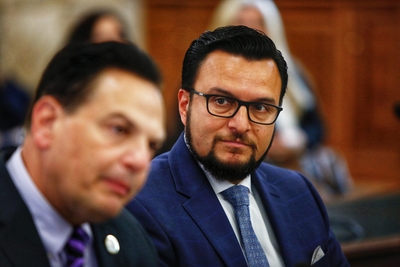
The dissent, by Justice Michael Noriega and joined by Chief Justice Stuart Rabner, said the email is a government record and that a balancing test favors disclosing the sender’s name.
Any reasonable expectation of privacy the sender had evaporated when Leahy introduced the letter in open court, Noriega wrote.
“A government actor cannot voluntarily disclose the substance of a government record in a public court proceeding and then continue to claim a reasonable expectation of privacy in the record’s sender,” he wrote.
Leahy had waived her interest by sharing the email instead of just reading the statute it cited, he added.
The majority’s ruling “turns accepted practice regarding reasonable expectations of privacy on its head,” Noriega said.

Trenton, NJ