Competing US Senate endorsements highlight tension between tribal sovereignty and investment
Oct 29, 2026 | 4:51 am ET
Description
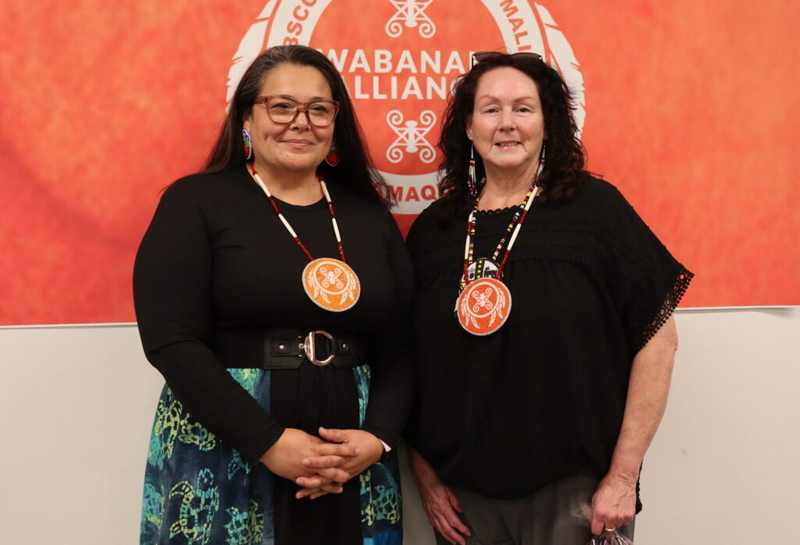
Maliseet Tribal Chief Clarissa Sabattis and Mi'kmaq Nation Chief Sheila McCormack at the Wabanaki Alliance's annual celebration on Oct. 1, 2026, in Freeport. (Photo By Emma Davis Maine Morning Star)
Citizens of Wabanaki Nations are divided in their pick for who should represent Maine in the U.S. Senate, highlighting the tension the tribes face between the need for investment and their ultimate goal of full sovereignty.
The tribal councils of the Houlton Band of Maliseet Indians and the Mi’kmaq Nation endorsed Democratic nominee Troy Jackson, citing his commitment to advocating for the Wabanaki Nations’ sovereignty. Meanwhile, the two chiefs of the two reservations of the Passamaquoddy Tribe endorsed incumbent Republican U.S. Sen. Susan Collins, pointing to her ability to secure federal funding as chair of the Senate Appropriations Committee.
Neither the Passamaquoddy Tribe at Indian Township nor the Passamaquoddy Tribe at Sipayik have endorsed Collins. As a tribal citizen of the Passamaquoddy community at Sipayik emphasized in a recent op-ed, their chief is not authorized to endorse political candidates on the Tribe’s behalf.
But the individual endorsements still mark a departure from elections past, as the five-term senator had never before received such endorsements. They also illustrate the competing interests the candidates are appealing to as the Nov. 3 election nears.
The reasoning behind Collins’ endorsements underscore the central component of her pitch to voters: her ability to secure federal funds for Maine.
“Her ability to deliver has really made a difference in our community and we are so grateful,” Chief of the Passamaquoddy Tribe at Sipayik Amkuwiposohehs Bassett said in an Oct. 14 letter endorsing the senator.
Bassett highlighted that the Tribe met with Collins last year when their wastewater treatment plant was at risk of failing due to extreme weather effects, and she got them $5 million for a new system.
Hoping compromise is thing of past, Wabanaki Alliance eyes path to full sovereignty
Chief of the Passamaquoddy Tribe at Indian Township William Nicholas Sr. similarly highlighted federal funding he credits the senator with securing, including nearly $3 million to construct new affordable housing units during the 2026 fiscal year.
“She has consistently advocated for and delivered crucial federal assistance for our community, including providing much-needed funds to upgrade tribal housing,” Nicholas said in a statement. “She has been a loyal friend to us in Washington.”
The Wabanaki Nations have less sovereignty than other federally recognized tribes because of a 1980 land settlement agreement subjecting them to state laws in a manner more akin to municipalities. Remaining barriers to self-governance have left persistent disparities between tribal citizens and other Mainers, such as health inequalities and limited economic mobility.
Given the continued fight to restore full sovereignty, other tribes in the Wabanaki Nations see their champion in Jackson, citing his legislative record on the issue. That includes the Houlton Band of Maliseet Indians and the Mi’kmaq Nation. The Penobscot Nation has yet to endorse.
“With his fervent support of the Mi’kmaq people, his consistent advocacy and his track record in the Legislature, there is no question that he will be a true partner to restore tribal sovereignty and improve outcomes for both the Mi’kmaq Nation and Maine people in the U.S. Senate,” Chief of the Mi’kmaq Nation Sheila McCormack said in a statement.
In 2019, the Legislature convened a task force to review and reform that agreement. That work was initiated under the leadership of Jackson, then-president of the Maine Senate, and the speaker of the Maine House of Representatives at the time, Sara Gideon, who unsuccessfully ran against Collins in 2020.
“As Senate President, Troy didn’t just talk about tribal sovereignty, he put it into action,” Chief of the Houlton Band of Maliseet Indians Clarissa Sabattis said in a statement. “From championing clean drinking water initiatives to his role in creating the commission to reexamine the 1980 Maine Indian Claims Settlement Act, Troy has consistently proven that he listens to indigenous voices and stands with the Wabanaki people.”
Jackson backed state legislation that gave the Wabanaki Nations more authority, as well as sweeping bills to overhaul the settlement act, though the latter were ultimately vetoed by Gov. Janet Mills. Because of his work, the Wabanaki Alliance, an advocacy coalition formed in 2020 to push for sovereignty, has long recognized Jackson as a champion of the Wabanaki Nations.
Gov. Mills, Wabanaki Nations shelve sovereignty overhaul in compromise measures
On the federal level, Collins has not championed sovereignty in the same way.
The senator has supported specific extensions of tribal authority, including provisions in the Violence Against Women Act that allowed the Wabanaki Nations to exercise criminal jurisdiction over certain crimes and the Native American Child Protection Act to ensure tribes have tools to prevent and respond to child abuse. Collins did not actively support nor publicly share her stance on a federal proposal to provide the Wabanaki Nations access to future beneficial federal laws.
“There are decisions around tribal sovereignty that are the responsibility of the Maine Legislature and the Governor on which they have yet to act,” Collins said in response to a question about whether she supports tribal sovereignty for Maine Morning Star’s voter guide.
Jackson told Maine Morning Star decisions shouldn’t be made for tribal communities by politicians in Augusta or Washington.
“To me, this is pretty simple,” he said, “the Wabanaki Nations deserve the same respect, rights and opportunities as other federally recognized tribes across this country.”
Augusta, ME