In Tennessee, church mobilization efforts send message that voting rights attack is unacceptable
Oct 28, 2026 | 6:02 am ET
Description
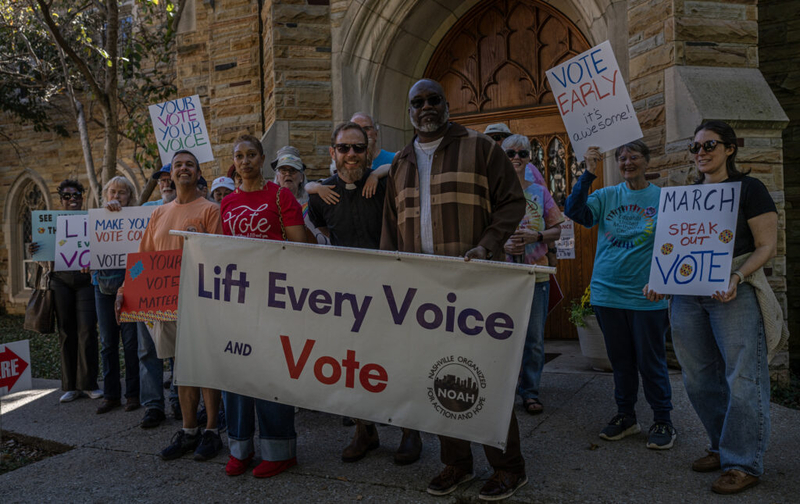
A group marched from Edgehill United Methodist Church in Nashville to a early voting site as part of a weekend "Souls to the Polls" voting event. (Photo: John Partipilo/Tennessee Lookout)
A crowd of no more than 20 at Souls to the Polls in Bordeaux, a traditionally Black North Nashville community, prayed with Rev. Paula Smith, who invoked the memory of voting rights activists and their sacrifice 60 years ago.
About half the crowd were organizers or co-sponsors of the event on Saturday. Even fewer had yet to vote, which is what the longstanding tradition in historically Black churches is meant to counteract.
“We remember those who were beaten, threatened, jailed and even killed because they dared to believe that every person deserves a voice in shaping the future of this nation,” Smith, pastor of Gordon Memorial United Methodist Church (UMC), said in an opening prayer.
That history is more pertinent this year after the U.S. Supreme Court gutted a key provision of the Voting Rights Act of 1965. Then, the state’s Republican supermajority legislature redistricted Tennessee’s only majority-Black congressional district in Memphis.
“There’s a lot at stake. There are a lot of attempts to silence different perspectives and views,” resident Dara Ogelsby said at Souls to the Polls. “We are here to still be heard.”
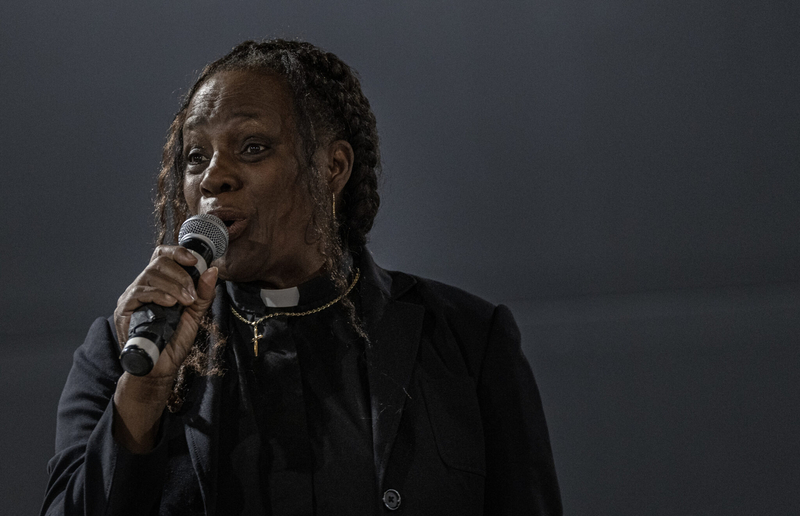
Though Ogelsby already voted, she still thought it was important to attend. Her pastor, Rev. Perry Wiggins III, spoke at the event and their church is involved with Nashville Organized for Action and Hope (NOAH), which organized the march. When they arrived at the Bordeaux library polling location, members of Alpha Phi Alpha, a Black men’s fraternity, were also there for a voting block party.
However, the lower turnout at Souls to the Polls illustrates a tension that pastors of historically Black congregations and other community organizers are observing. This November is an opportunity to send a message that the reversal of voting rights protections is unacceptable. Yet, the same barriers to voter awareness and education persist.
“It could be the level of steepness of the mountain is so high that although we’re doing good, we’re not doing great,” Rev. Earle Fisher, Senior Pastor of Abyssinian Baptist Church in Memphis, said. “There are people who are motivated because they were angered by what happened in the state legislature several months ago. And I would like to believe our activism and advocacy is going to have a concrete impact on the ground.”
Fisher, who also leads a Memphis nonprofit for voter engagement and education, said he helped organize a recent Souls to the Polls in Memphis that was well-attended. Also, early voting turnout in Shelby County as of Oct. 22 was 70% higher than it was in 2022, according to recent state data.
Still, Fisher said he feels like the enthusiasm and anger in response to the redistricting has “tapered off” since the August primaries. He’s gone as far as to identify precincts with historically low voter turnout and churches in those precincts. Then, Fisher touches base with pastors of those churches to urge them to host a town hall, Souls to the Polls, or a phone-banking event.
There are people who are motivated because they were angered by what happened in the state legislature several months ago. And I would like to believe our activism and advocacy is going to have a concrete impact on the ground.
Rep. Harold Love, a Nashville Democrat who has a foot in both worlds as both a lawmaker and a pastor, recently gave presentations on voter mobilization to a ministry for senior citizens and older adults and to a separate gathering of area clergy.
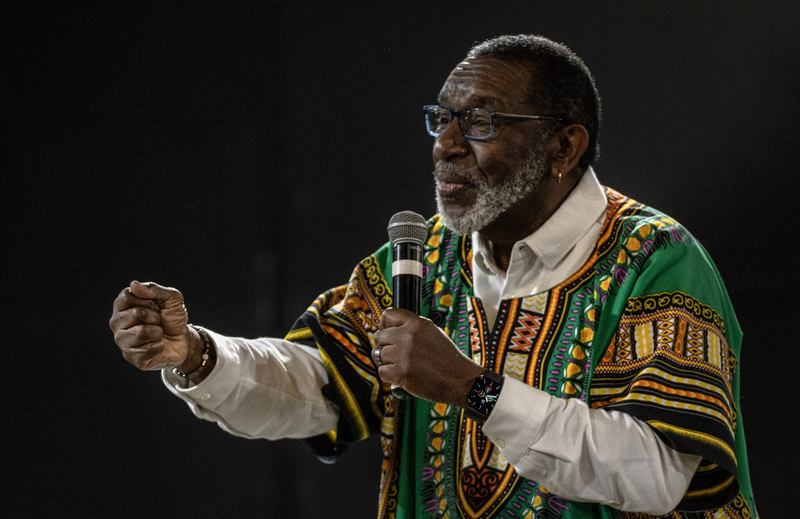
In both instances, he emphasized the importance of deputizing church members who are already registered to inform a “second wave” — be it children, grandchildren or neighbors — about the importance of doing the same.
“If you think about it, isn’t that the same process that is used in the spreading of the gospel? I’m giving the members what the Lord gave me,” Love, pastor of Lee Chapel African Methodist Episcopal (AME) Church in Nashville, said. “They leave from here and they disseminate that information to those who may not be members of the church but are close to members of the church.”
A study that Love received from the nonprofit Black Voters Matter Fund showed that voters ages 50 and older, who are often more regular churchgoers, need less of a push to go vote, some motivated by the memory of their parents and grandparents who marched for the right during the Civil Rights Movement. Meanwhile, voters ages 18-49 are willing to vote insofar as they have information and a plan to go to the polls.
Just as Love relied on different partner agencies to help with his presentation to different community groups, Dallas pastor Rev. Mike Waters said, “The work of the church does not end with the benediction.”
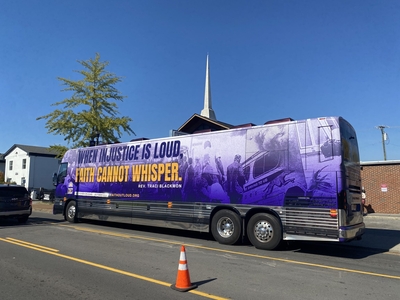
Waters is spearheading a nationwide tour called The Ride, which traces the steps of the Freedom Riders of 1961 and that made a stop in Nashville on Sunday. The group joined a service at Jefferson Street Missionary Baptist Church in Nashville. There, they handed out cards with information about the local history of the Freedom Riders and about early voting in Tennessee. Also, they invited Jefferson Street congregants to use markers to sign their names on one of the buses that the troupe is traveling on, emblazoned with, “When justice is loud, faith cannot whisper.”
In addition to churches, The Ride has gone to college campuses and set up a booth in the middle of Washington D.C, Waters said. “We need to connect with people in other places and spaces where they are gathered, where they are present. To invite them into the process,” he added.
There are other examples of leaders of historically Black churches and denominations, several of which are headquartered in Nashville and Memphis, following in the footsteps of their predecessors — some of whom played key roles in civil rights demonstrations that helped secure the Voting Rights Act of 1965.
To Fisher, that zeal is genuine. But achieving measurable change entails grueling work, like his recent effort to identify precincts with historically low turnout. That won’t change overnight.
“The concrete challenge is going to be what does it take to get the coalition of the willing to stay committed long enough to have a 10- or 15-year plan,” Fisher said. “And stop trying to scramble at the 11th hour every election cycle.”
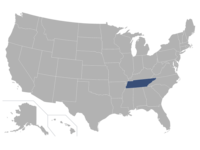
Nashville, TN