Comstock, Hosein face off for NU Regents District 1 in Lincoln, northwest Lancaster County
Oct 28, 2026 | 6:45 am ET
Description
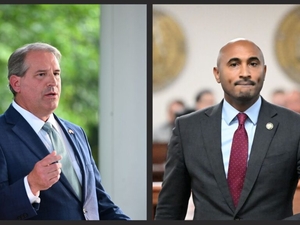
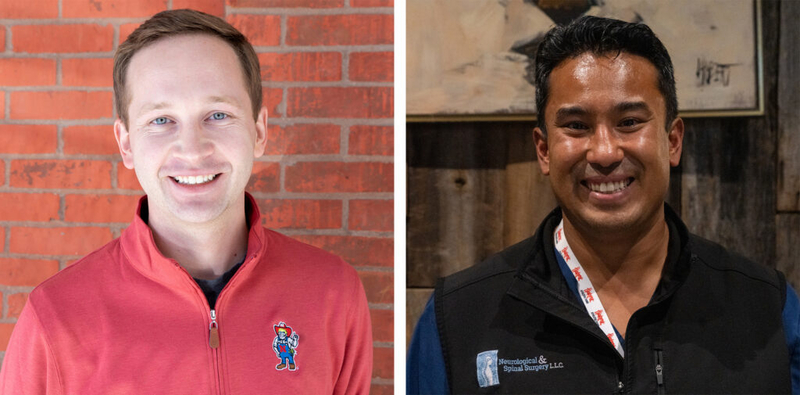
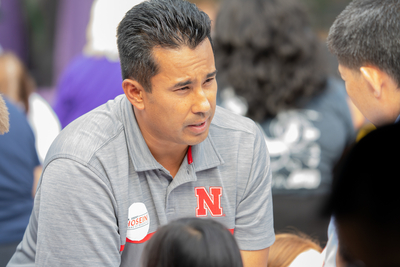
Brent Comstock and Dr. Jeremy Hosein, both of Lincoln, are facing off for an open seat on the NU Board of Regents. (Photos by Zach Wendling/Nebraska Examiner)
LINCOLN — A founder of an advertising and marketing firm who also does political consulting and a neurosurgeon who is a former student regent are asking for voters’ trust for an open seat on the NU Board of Regents in Lancaster County this fall.
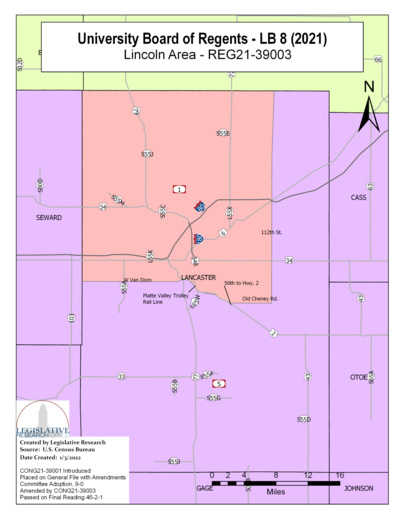
Brent Comstock and Dr. Jeremy Hosein, both of Lincoln, are seeking to succeed University of Nebraska Regent Tim Clare. Clare won election in 2008 and ran unopposed for reelection in 2014 and 2020. NU Regents District 1 includes much of Lincoln and northwest Lancaster County — Emerald, Malcolm, Raymond, Agnew and Davey.
Both candidates say they want to focus on affordability, lead NU into its next chapter, listen to campus voices and be more active in connecting with policymakers than previous regents. Each has faced criticism over their political party registration.

Comstock, 31, said voters are glad to know they would have access to their regent. He’s pitched quarterly town halls to work on practical solutions for NU’s future, including affordability.
“They care about the university being a resemblance of how strong our state is,” Comstock said. “If the university is succeeding and thriving, and we’re winning academically and in the arts and athletically, it’s perceived that the state is successful and vice versa.”
Hosein, 44, the 2013-14 University of Nebraska Medical Center student regent, said he views NU as being at one of its “inflection points.” He said regents and NU leaders “don’t have time to spin our wheels here” and that every Nebraska decisionmaker will know who he is if elected.
“If we don’t have the right leaders there that are making the right types of decisions, then we risk being one of those universities where we miss that opportunity for creating that next-generation workforce that we need,” Hosein said.
Both candidates sat down with the Nebraska Examiner in Lincoln to discuss how they would approach NU’s budget, tuition, community outreach, partisanship and more if elected.
Managing the state budget
Hosein said he has heard a disconnect as regents make cuts and raise tuition while investing mostly private dollars in large construction projects, such as UNMC’s Project Health or University of Nebraska-Lincoln athletic facilities.
“I think this just doesn’t square with the math that Nebraskans have here in our district,” Hosein said. “Trying to explain that and the funding sources does not work with our population.”
Hosein said slowing state support for NU, as well as a major projected state deficit, will require some “bold, innovative and fresh leadership.” He said NU can’t miss an opportunity to prevent itself from “continually sleepwalking into mediocrity.” He thinks NU should break down silos across campuses and eliminate redundancy, such as consolidating leadership roles across campuses.
“Rotating that model so it’s not so top-heavy, that’s where you can find a lot of cost savings at the university,” Hosein said.
Comstock is calling for a 10-year vision for NU that could allow legislators, the governor, regents, business leaders, philanthropists and more to be on the same page and decide where to invest in and build infrastructure.
“Some people may opt out,” Comstock said. “But we owe it to the constituents and to the voters, Democrats, Republicans, people that always vote, people that are disenfranchised from voting, we owe it to them to come together after this election and say, ‘this is where we want our state to go.’”
If tuition increases are a “lever” in that plan, “we cross that bridge, and we get there,” Comstock said. He said NU’s trajectory needs to be future-looking and growth-oriented.
Comstock said he would rather have consistency, even if that’s smaller year-to-year bumps, over volatility in the state budget for NU. He said he’s in favor of getting appropriators, the governor and NU on the same page about what would be needed for further investments.
“I like competition. I like to win,” Comstock said. “I think that we should be held to a standard, but that standard needs to be known, publicly known.”
Tuition, fees and affordability
Comstock, an Auburn native, said he is an example of a homegrown Nebraskan who wanted to go to NU. However, affordability and an out-of-state scholarship led him to North Carolina.
“Like a lot of people, I packed up and left, but there are so many people, myself included, who, when given the opportunity, would run towards that opportunity,” Comstock said.
Hosein said at NU’s current tuition rates — even if competitive in the Big Ten — he’s not sure his parents, an enlisted airman and a homemaker, could have afforded NU. He got his undergraduate degree from New York University and completed a pre-med graduate program at UNL before graduating from UNMC.
“Whether you’re 18 or you’re in your 50s, you should be able to pursue your dreams,” Hosein said.
Comstock said nearly half of the hundreds of parents he’s spoken to whose children also ended up leaving were “retainable,” yet other universities “headhunted” and recruited them first.
Hosein has pitched a “name, image and likeness” model for academics, bringing that incentive for recruiting student-athletes to “all-star” students, faculty and researchers. He is also interested in creating a greater bond between academics and athletics, such as a model from Vanderbilt where a donation on the academic side could lead to athletic benefits for donors.
The role of a regent
Comstock said NU needs to be a place where every student feels welcome. He said it’s not NU’s job or the job of a regent to tell someone what political party to belong to or to convince them that their personal opinion is right.
He said recruiting more international and out-of-state students could help with NU’s budget, because those students could earn a quality education at a slightly higher price than in-state students.
“The role of the regents, I do believe, is to be a good steward of the university,” Comstock said, “and even if it’s not politically popular with either side of the aisle, to say we stand up for students, faculty and staff, whether you are a Nebraskan or out of state, whether you are a person of color or not, whether you are gay, or trans, or straight, you belong here.”
Hosein said campus should be welcoming, which he said means getting back to NU’s primary mission of education and personal and professional development. He said that parents shouldn’t fear their children’s political thoughts will be influenced, and that a student’s time at NU will offer a place where they can think freely.
He said NU should be agnostic to someone’s faith or the color of their skin and be “institutionally neutral.”
“I don’t think that’s a violation of academic freedom,” Hosein said at a Sept. 30 listening session. “I think it’s a fundamental tenet of professionalism.”
An ad agency and political consultant
Hosein and Comstock have each faced partisan pushback for their ties to Republicans, in the case of Hosein, or Democrats, in the case of Comstock. Hosein is a registered Republican while Comstock is a registered nonpartisan.

Comstock’s firm, BCom Solutions, works with corporations, chambers of commerce, rural health organizations, energy companies, nonprofits and capital campaigns for crisis prevention centers. It also does work with candidates, most Democrats but a few Republicans.
“If you have a conflict of interest, you disclose it, and then you move forward from it,” Comstock said. “But I’ve knocked on tens of thousands of doors, and not a single person has asked me about any conflict of interest that seemingly the other side spends a lot of time talking about.”
Hosein has said Nebraska deserves “better” than a political consultant in the office, and he’s alluded to concerns about Comstock’s nonpartisan party registration and “authenticity.”
“If you don’t have a relationship with our federal delegation or a statewide delegation, then you are in essence unable to fulfill the mission, and then you become more a talking head than an actual effectuator of outcomes,” Hosein said.
Comstock has worked on campaigns for former President Joe Biden, former Vice President Kamala Harris and various state and federal candidates nationwide.
For the 2025-26 election cycle, according to state records, BCom has been paid $321,000 by former Democratic state Sen. Lynne Walz of Fremont, who is challenging Gov. Jim Pillen, and $119,000 by state Sen. John Fredrickson of Omaha, a Democrat who is running for reelection.
BCom has received $3.6 million this election cycle federally, according to the Federal Election Commission. The top three FEC clients are the WelcomePAC, which supports center-left candidates ($378,000); the Blue Dog PAC, which supports center-to-center-right fiscal Democrats ($364,000); and Democratic Rep. James Walkinshaw of Virginia ($212,000). BCom has also worked with the Democratic parties of Virginia ($194,000), Alaska ($125,000), Nebraska ($98,000) and New Hampshire ($72,000) this election cycle.
But Comstock countered that he’s endorsed by Republican and Democratic regents, past and present, and that his organization employs people of all political stripes.
“I’m not worried about it because I know how to build relationships with people and my business is not running for Board of Regents,” Comstock said.
A policy adviser
Comstock’s campaign has criticized Hosein’s endorsers and financial backers, including Pillen and U.S. Sen. Pete Ricketts, compared to more cross-partisan endorsers for Comstock.
“He claims to believe in bipartisanship, but he’s backed by a roster of partisan politicians and even campaigns as a ‘runs red Republican,’” a Comstock ad states.
Hosein said his endorsements reflect those who have confidence in his judgment, character and ability to get the job done, not that he necessarily shares or agrees with all their views. Asked how he would be independent, he said, “It’s who I’ve always been, and it’s who I continue to be.” He noted that his wife, Dawn, is a Democrat and has supported him in the race.
“This isn’t a Unitarian executive position. It is working within a team to move the ball forward, and who has a greater chance to do that for a faculty than someone who has the ability to work with our elected policymakers to make that change happen?” Hosein said.
Hosein previously worked as a policy adviser to former Nebraska Govs. Mike Johanns and Dave Heineman, and he was selected for a prestigious, competitive White House fellowship during President Donald Trump’s first term.
Comstock’s campaign has also sought to criticize the White House work as working on “presidential priorities” tied to Trump.
During the fellowship, Hosein said, he worked on nonpartisan priorities like kidney health, drug pricing, surprise billing and vaccines in Colombia related to the Venezuelan refugee crisis. The fellowships are awarded on a “strictly non-partisan basis” and often include military personnel prohibited from engaging in political activities.
“I trust the voters to decipher through that messaging. I really do,” Hosein said of criticisms.
Closing messages
Comstock said his elevator pitch to the NU community is that the university is Nebraska’s most important public institution and that he’ll listen to faculty, staff, students and constituents broadly, not because it’s a campaign slogan or talking point but because he believes in it.
“I think that we have a gem of a university system, and we need to do everything we can to protect it.”
Hosein said NU is facing an unprecedented “crisis” and the stakes are high. He said the most difficult challenges aren’t the budget but a “fundamental doubt about the power of higher education to transform lives.”
“I think selecting people with character and integrity and honesty, but more importantly, a workable vision,” Hosein said, “I think that’s what the university needs at this moment.”
The election is Nov. 3. Early voting is underway.
Lincoln, NE