NJ’s low-cost health clinics see rising demand as insurance gaps widen
Oct 28, 2026 | 6:53 am ET

Description
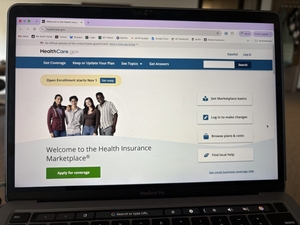
New Jersey’s system of free or low-cost healthcare clinics will be even more important as the impact of federal funding cuts takes hold, advocates say. (Photo by Anne-Marie Caruso/New Jersey Monitor)
For Franz Murat of Irvington, the idea of getting sick or hurt at work is almost too much to think about.
The 24-year-old nursing assistant has no health insurance and is still paying off the $5,000 he owed after being hospitalized last year, when he said the cold weather overwhelmed his still-new-to-the-Northeast immune system. Murat was raised in Ecuador.
“For God’s sake, I hope that never happens because I don’t have insurance to go to the hospital,” he said.
Murat, a union member with 1199SEIU United Healthcare Workers East, is far from alone. More than 9% of New Jerseyans under age 65 don’t have health insurance, a percentage experts say will grow as cost-saving measures enacted by the Trump administration take full effect. These changes have already made Obamacare plans unaffordable for many and are expected to force more than 300,000 people from NJ Family Care, the state’s Medicaid plan.
The impact of these changes, many driven by a law Trump signed in July 2025 to reduce federal spending by trillions of dollars, reflects a national trend and a growing concern for healthcare advocates, lawmakers, and state officials nationwide, including in New Jersey.
“People’s lives are stressed enough, in terms of trying to just go to work every day, earn a living, and provide for their family. Now they have to worry about what happens if someone gets sick,” Sen. Joe Vitale (D-Middlesex), the Senate health committee’s chair, said during a meeting the panel held last week.
The federal changes are expected to reduce federal funding for hospitals and doctors here by as much as $6 billion annually by the end of the decade, state officials say, and create new bureaucratic barriers for those now on NJ Family Care.
“Now we’re going to lose literally thousands of people who have enjoyed that kind of coverage, like all of us enjoy that kind of coverage. We know when we put our head on a pillow at night that we can wake up in the morning and, God forbid there’s an issue, we can gain access to care,” Vitale said.
People like Murad often depend on free or low-cost clinics for medical services, a system advocates and state officials agree will be even more important as the impact of the federal funding cuts takes hold. The newly formed New Jersey Free Clinic Association represents five established no-cost providers that treat patients in Bergen, Camden, Cape May, Monmouth, and Ocean counties.
The five free clinics depend on small paid staff, volunteer doctors and nurses, and creative partnerships with hospitals, labs, and others to offer primary and outpatient specialty care at no cost. They do not take any insurance or receive federal funding, factors experts said insulate them a bit from the pending changes.
Suzanne Dyer is executive director of the Parker Family Health Center, a free clinic in Red Bank and chair of the new association’s board. Founded 26 years ago, Parker offers pediatrics, mental health, cardiology, and more, including a dental clinic that opened this spring in conjunction with Brookdale Community College.
The association is working with the state health department and others to raise awareness around the free clinics’ work, Dyer said. They are also developing a formal referral process so hospitals and other providers know where to send uninsured patients for primary care, and a toolkit for creating new clinics, something she said is now underway in Union County.
“As residents lose their insurance, or see their premiums escalate, many will delay care, or skip preventative or routine visits altogether. They may wait until their health conditions become very serious. When this comes, patients disproportionately tend to seek care through emergency departments, which is the costliest setting,” Dyer told the Senate panel Thursday.
But the reach of free clinics is limited. Patients must live in the same county, earn less than a certain amount, and meet other qualifications to get care. At some clinics, it can take weeks to get an appointment, something healthcare leaders said is likely to get worse in months to come.
The Bergen Volunteer Medical Initiative offers free primary and specialty care in Hackensack and recently opened a second location in Garfield. The practice had about 120 people on its waiting list last month, 27 of whom are now being enrolled as patients, according to Joanne Murad, who oversees their fundraising.
The initiative’s staff expects this to grow as more people lose insurance.
“We’ve already seen an increase in applications in the pipeline,” Murad told the New Jersey Monitor.
Murad said patients frequently come for routine care and are diagnosed with chronic conditions that require additional treatment, including undiagnosed mental health issues. Services are available in multiple languages, including Spanish, Korean, and Polish, and staff members work to link patients with other medical care and support as needed.
As residents lose their insurance, or see their premiums escalate, many will delay care, or skip preventative or routine visits altogether.
Nationwide, there are more than 1,400 free clinics in 21 states, primarily in the South and Midwest. Pennsylvania has more than 90. New Jersey has just a handful, but there are other models of low-cost care here — programs also threatened by the federal changes.
Medina Health Center began as a free care program that matched Mercer County patients with volunteer doctors, but in 2024 it opened a physical clinic in Trenton that also accepts insurance, executive director Mira Sadeghi told the New Jersey Monitor.
Medina serves many patients who are undocumented immigrants and do not qualify for NJ Family Care, Sadeghi said. Others think they have Medicaid coverage only to discover it has lapsed, something she anticipates will be increasingly common.
“It just puts the safety net healthcare organizations in a really bad position because every time someone shows up and their Medicaid’s not working, we’re getting paid significantly less for that visit. And it’s tough on the patients that are suddenly asked to pay on a sliding scale,” Sadeghi said.
New Jersey’s network of 24 federally funded clinics faces a similar problem. These clinics provide primary and some specialty care at 130 locations around the state, accepting Medicaid and other insurance or billing patients directly based on what they earn. This network received at least $32 million from the state under the current budget, plus federal funding, and cares for some 645,000 patients.
Selina Haq, president of the New Jersey Primary Care Association, which represents these providers, told the Senate committee that despite reimbursements from the state, federally funded clinics lose $142 on average on each uninsured patient. A majority of the clinics are struggling financially, she said, and several faced bankruptcy in recent years.
Medicaid now covers three-quarters of their revenue stream, Haq said, so the more patients that lose coverage, the bigger the financial gap clinics face. She urged the state to provide more funding.
“This is going to be even more devastating for our centers,” Haq said.
The state Department of Health created a website to help residents follow the federal shifts and find care, even if they no longer have insurance. NJ for Health Care, a coalition led by consumer advocacy group NJ Citizen Action, created its own website listing free and low-cost care options.
Dr. Stephen Cha, commissioner of the state human services department, which oversees NJ Family Care, told the health committee his goal is to limit the number of eligible members who lose their Medicaid coverage. He said his team has worked to alert people about the changes through multiple mailings and outreach through community groups. The department also launched a website to help NJ Family Care members navigate the new rules.
But benefits were eliminated on Oct. 1 for more than 10,000 noncitizens when the state was unable to confirm their immigration status, he said. That number is expected to grow significantly after new rules take effect in January that require more than 500,000 of the 1.8 million members to document that they are working, volunteering, in school, or providing care for others at least 20 hours a week. These members will also have to reapply for the program every six months, instead of annually.
Cha said he remembers caring for people without insurance before the Affordable Care Act, the 2010 federal law that provided extra federal money to states to expand Medicaid.
“I do not want to go back,” he said.
Trenton, NJ