Hotter Than Ever: Hawaiʻi Preps Kūpuna For Extreme Heat
Oct 27, 2026 | 6:01 am ET
Description
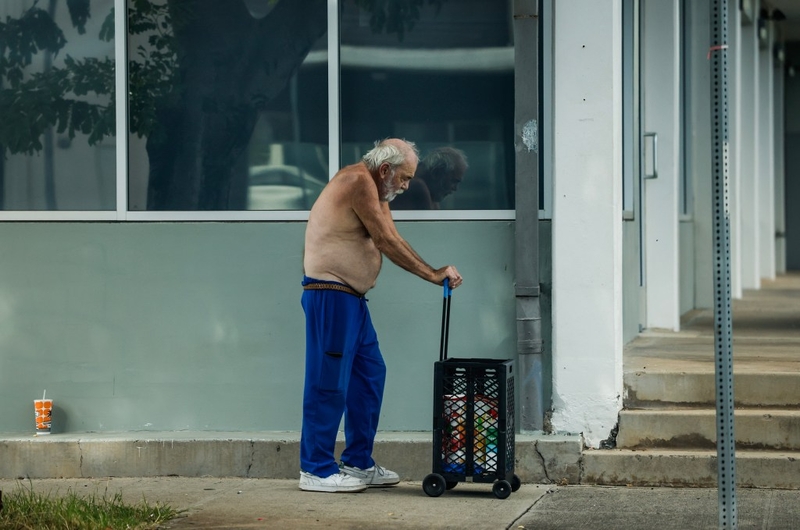
Photo courtesy of Honolulu Civil Beat
Maria Sherow, 63, was at a friend’s house on a warm day in 2023 when she started to experience what she now believes to be heatstroke.
The sun was low in the sky, causing it to shine directly into the room, raising the temperature fast. Sherow started to feel irritated and disoriented.
“It was hard to concentrate,” the retiree recalled. “I couldn't understand what people were saying or why they were saying it.”
Sherow made her way to her car, where she blasted her air-conditioner and waited for her body to cool off. Half an hour passed before she could drive.
The Puna resident recounted the incident at a recent workshop focused on staying resilient in the face of rising temperatures. Attended by about a dozen other Puna residents, the event was part of a series co-hosted by Hawaiʻi County’s relatively new Office of Sustainability, Climate, Equity, and Resilience and the Hawaiʻi Public Health Institute, which oversees a coalition called Climate & Health Hawaiʻi. The workshops were open to everyone, but the outreach was mainly targeted to kūpuna, who — along with children and pregnant people — are most susceptible to heatstroke and other heat-related illnesses.
The workshops built on the sustainability office’s work to monitor rising temperatures on the island. Education efforts are ramping up as experts say 2026 could be the planet’s hottest year on record.
In the past decade, the number of hot and humid days and very warm nights all around the state has more than doubled due to climate change and is expected to increase. Hawaiʻi’s average air temperature has increased 2 degrees since 1950. In urban parts of the islands, where trees are limited and asphalt raises temperatures, it has risen even further.
In Honolulu, for instance, it’s gone up 2.6 degrees in that same time period.
If those numbers seem modest compared to some parts of the continent where temperatures regularly rise above 100 degrees in the summer, it’s worth remembering the humidity in Hawaiʻi drives up the heat index — the measure of how hot people feel. Humidity can prevent sweat from evaporating, leading to higher risk of heat stroke and exacerbating heart and kidney-related conditions.
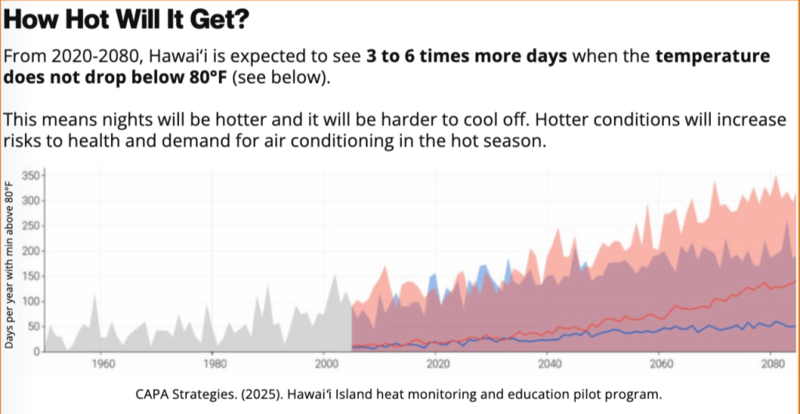
Temperatures in the state are predicted to rise more as the climate warms globally. Between 2020 and 2080, Hawai‘i is expected to see 3 to 6 times more days above 80 degrees. Trade winds, which have a cooling effect on the islands, are also becoming less common due to climate change.
“Part of the issue we face with heat is that we don't hit the triple digits. A lot of times, people don't think heat is as much of a risk,” said Molly Dolphin, the sustainability office’s information and education specialist. “But they're not factoring in the impacts of humidity.”
That perception gap has led to a delay in the state’s response, she said.
As more people understand the impacts of humidity on the body, government offices have begun to prioritize efforts to help vulnerable people stay cool.
Now that Sherow knows she is more vulnerable to a repeat instance of heat stroke, she is careful to limit her activities during the warmer months. She goes out to buy groceries in the early morning and doesn’t leave the house much otherwise.
Hottest Summer In Memory
This year’s El Niño weather pattern and overall warming trends may help some islanders get more comfortable talking about the dangers of extreme heat.
“Anecdotally, at these workshops people are saying this has been the hottest summer that they can remember,” James McCallen, Hawaiʻi Public Health Institute’s director of community preparedness and resilience said.
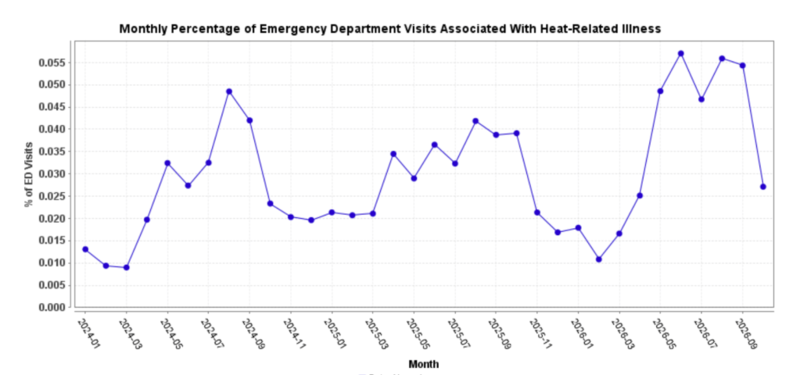
Emergency room data supports that hunch. Between May and September of 2026, according to the Hawaiʻi State Department of Health, 182 people presented at emergency rooms with heat-related illness. In 2025 that number was 155, and in 2024 it was 126.
That data likely only tells part of the story, McCallen said.
“It's tricky to track cases of heat-related illness,” he said. Not all the symptoms that are related to heat are coded that way in the data collection process, although heat often exacerbates other preexisting conditions. The microclimates all across the islands also make it difficult, especially in rural places.
“You could be experiencing heat in one part of the island, but then your health provider is somewhere else, and so it may not get added to the patient notes,” said McCallen.
Tools For Cooling
At last week’s workshop at Star of the Sea Painted Church in Puna, co-hosted by Red Road Resilience Network, the sustainability office and public health institute employees were joined by Anne Pollock, a registered nurse from the Hawai'i Island Community Health Center in Pāhoa.
The sustainability office program manager, Kendra Obermaier, shared island-level data showing 14 heat sensors installed around the island since 2025. The effort, a collaboration with the nonprofit Vibrant Hawaiʻi, found that “most areas regularly experience heat conditions that affect health risk and daily activity, not just on the hottest days, but as an ongoing, everyday challenge for some communities,” according to a report published in 2025. .
Obermaier shared localized data, just as she had in the six other workshop locations around the island.
“The hottest time of day here is 12 p.m,” she said in lower Puna, “and temperatures tend to be above 80 degrees from 8 a.m. to 5 p.m., which is one of the longer windows on the island.”
That’s an important threshold, Obermaier added, because “once you get to 80 degrees, it starts to get harder and harder for the body to cool down.”
Pollock explained the effects of heat on the body, and shared medications — used to treat everything from allergies to heart disease to ADHD — that can make it more challenging to stay cool and hydrated. She recommended drinking water consistently, but avoiding chugging, because it doesn't lead to consistent hydration.
Facilitators then shared tips for keeping participants’ homes cool, such as shade sails outside and silver mylar blankets as temporary, heat-deflecting curtains.
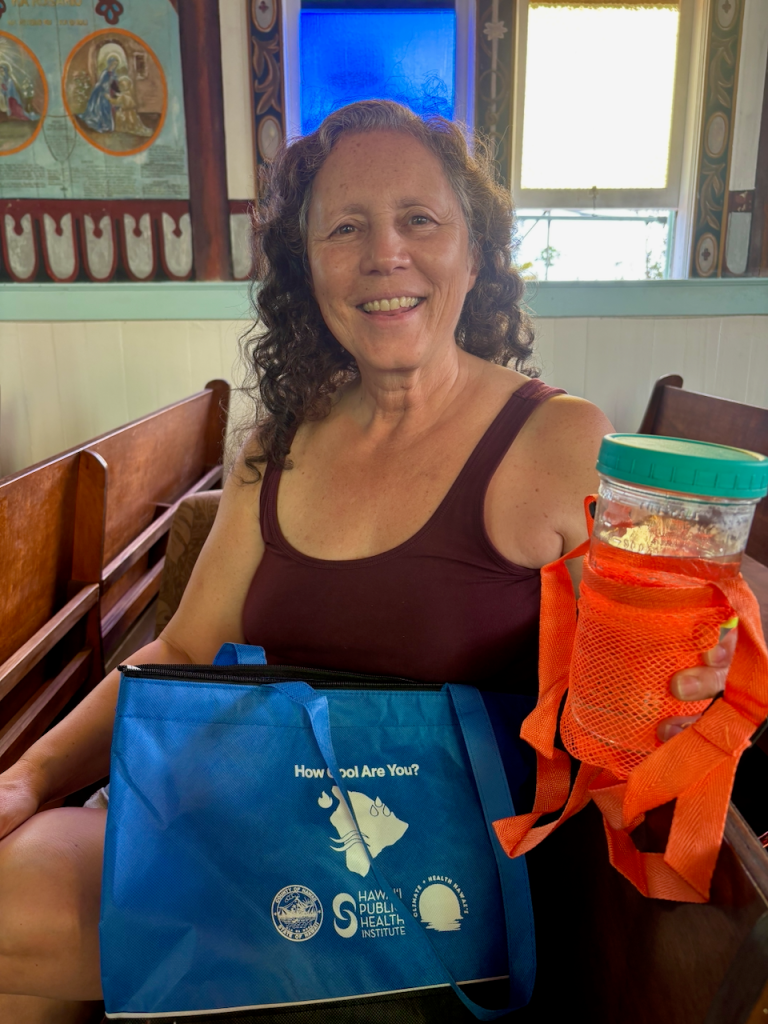
The participants shared their own strategies — from cold baths to frozen water bottles, peppermint oil in spray bottles and an acupuncture point designed to move heat out of the body. They also received cooling kits that included towels designed to be placed on the back of the neck, water bottle holders with straps to be worn across the body, electrolytes, a paper fan and a thermometer.
The hosts said they hoped to provide a more comprehensive experience than you’d typically see with heat awareness work. They gave away over 200 cooling kits in the seven workshops — which ranged from around around 10 to 50 participants — and reinforced the roles of community hubs and their dedicated volunteers as supportive resources for vulnerable groups moving forward.
The funding for this series only covered events on the Big Island, but McCallen said he hopes to see the series replicated on other islands.
“It would be awesome if this work could continue to grow, and we could host similar types of workshops covering all the other different climate health risks down the road,” he said.

What About Air Conditioning?
The workshops focused on low-tech solutions, but cooling towels and paper fans can only go so far, especially during prolonged heat waves.
“AC is one of the easiest ways to cool down," Dolphin said. "But I just don't know if it's a realistic solution for most people."
Even if they own them, many folks can’t afford to use them with much frequency due to the state’s electricity costs, the highest in the nation. But some probably would if they had financial support.
People whose incomes meet a specific threshold— $42,000 for a person living alone, $68,000 for a family of three— can apply for support paying their energy bills from the Hawaiʻi Home Energy Assistance Program’s Energy Credit program.
In 2025, the first year the Low Income Home Energy Assistance Program started funding cooling assistance in Hawaiʻi, 7,500 people, or only 6% of eligible households, received cooling assistance. The Trump Administration has repeatedly proposed cuts to the federal program behind the fund over the last two years. The staff was fired, but so far, the program has remained afloat.
Both Dolphin and McCallen said they’d like to see more support for kūpuna who want air conditioning.

Multiple states have found ways to leverage Medicare to help seniors pay for air conditioning, McCallen said. According to one 2024 study, 13 states offered air conditioner assistance at the time, and most of those had obtained waivers under the Social Security Act.
It should be something doctors can prescribe, in some conditions, McCallen said.
“It's a medical intervention to reduce your risk, especially if you have preexisting conditions or you're taking medications that can get exacerbated,” he said. “It's totally warranted.”
In the meantime, the workshops focused on identifying public spaces, such as libraries, stores and banks, where people can comfortably spend time on extra hot days. One elder said she plans to walk the aisles of the supermarket on hot days, McCallen said.
“When we went to Kohala,” Dolphin said, “everybody in the room was like, "Oh yeah, the credit union out here has the coldest AC.”
One workshop participant suggested that already-struggling movie theaters should consider taking advantage of the growing number of overheated people throughout the summer.
It would be a “voucher program during high-heat days where people could get discounted prices” for matinees, Dolphin said.
"That's such a unique solution,” she said. “It’s exactly what we've been seeking from the community to offer up.”
Honolulu, HI