Pa. legislative roundup: What lawmakers sent to Gov. Shapiro this week
Oct 22, 2026 | 6:29 pm ET

Description
The Pennsylvania Capitol dome. (Photo by Peter Hall/Capital-Star)
The Pennsylvania General Assembly sent dozens of bills to Gov. Josh Shapiro’s desk in a final legislative push this week before the midterm elections.
As of Thursday afternoon, Shapiro has signed 58 measures into law. Because the legislature is still in session, the governor has 10 days to sign or veto legislation after passage, otherwise it becomes law automatically.
Here’s a rundown of the legislation lawmakers got across the finish line, ranging from a ban on students using cellphones in school to modernizing raffles and other small games of chance.
Hang up and learn
Starting no later than the 2027-2028 school year, students in Pennsylvania schools would be required to refrain from using cellphones during the school day. Exceptions will be allowed for students with medical conditions or individualized learning plans that require a personal communication device.
Lawmakers and teachers said Senate Bill 1014 is crucial to restore a learning environment free from the constant distractions of phones and social media. The bipartisan sponsors of the legislation noted sharp increases in teenage depression and suicide correspond to the rising popularity of smartphones.
The Pennsylvania State Education Association, which represents 177,000 current and retired teachers, added that the bill allows individual school districts to determine how to limit cellphone possession.
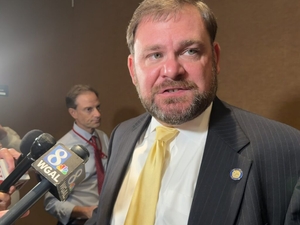
“Local leaders, educators, parents and students are in the best position to oversee implementation in a way that reflects needs in their local communities,” PSEA President Aaron Chapin said.
The bill was a priority for parents organizing as part of PA Unplugged, many of whom showed up for hearings and personally urged lawmakers to take action.
“For too long, access to a phone-free school day depended on which school a student attended. Once this law takes effect, every student in the Commonwealth will have freedom from addictive algorithms, from the first bell to the last,” said Alex Bird Becker, a co-lead of PA Unplugged.
The measure only needs Shapiro’s signature to become law — though he previously endorsed the effort.
Ending warrantless searches
Under existing state law, Pennsylvania Game Commission officers have the authority to enter private property and conduct investigations without a warrant or probable cause.
Legislation to change that was introduced in the Senate in 2025 but wasn’t considered until after the state Supreme Court ruled in July that the practice was unconstitutional.
House Bill 1431 passed each chamber of the General Assembly unanimously and Shapiro signed it Thursday. The new law takes effect in December.
The bill’s prime sponsor, Sen. Daniel Laughlin (R-Erie) said it ends enforcement powers held by the game commission that went far beyond what law enforcement agencies may typically do without a warrant or probable cause to suspect a crime occurred.
Do you take Venmo?
Volunteer fire companies, youth sports leagues and other nonprofits depend on small games of chance to raise money to support their missions and activities.
Senate Bill 416, which Shapiro signed, allows such organizations to accept payment cards and online payments through platforms such as Venmo and PayPay as payment for raffle tickets and other games.
“Pennsylvania’s nonprofits and volunteer organizations work hard to support and serve their communities, and our laws should reflect the way people make purchases today,” the bill’s prime sponsor, Sen. Devlin Robinson (R-Allegheny) said.
The bill’s passage was also seen as a priority following the state Supreme Court decision in June that skill game machines are illegal under state law to make up for lost revenue nonprofit clubs and fire companies collected from the machines.
Reporting deepfakes
Teachers and other workers who deal with children are required to report suspected child sexual abuse material, including deepfakes created by artificial intelligence, under a new law clarifying the requirements.
House Bill 2474’s prime sponsor, Rep. Nikki Rivera (D-Lancaster), introduced the measure after dozens of students at a private school in her district became victims of sexually explicit deepfakes created by a pair of classmates.
School officials were aware of the situation and questioned the perpetrators, but did nothing more. The deepfakes continued for months, victimizing additional students, until the victims’ parents notified law enforcement.
The students responsible were adjudicated delinquent in juvenile court after admitting to 59 felony counts of child sexual abuse and other offenses.
Rivera said the delay in reporting resulted in lost evidence and additional harm to the victims. The bill, which Shapiro signed, will make certain law enforcement is notified at the earliest opportunity, she said.
Speeding up rape kit testing
On the heels of a new pilot system to track the testing of sexual assault evidence kits, law enforcement agencies will now be held to a statewide standard under a law sponsored by Sen. Tracy Pennycuick (R-Montgomery).
Senate Bill 1212, also signed by Shapiro, tweaks the definition of “awaiting testing” under Act 122 of 2024, which required the state to establish an online tracking system so sexual assault survivors could track evidence processing at each step.
Pennsylvania rolls out sexual assault evidence tracking system
According to a release from Pennycuick, local agencies had the discretion to determine whether or not kits “should undergo DNA testing or other forensic analysis, creating the potential for inconsistent practices across the commonwealth.”
“Survivors’ evidence should not sit untested due to inconsistent local practices,” said Pennycuick. “By clarifying the law, Senate Bill 1212 seeks to strengthen accountability, improve consistency in the handling and tracking of sexual assault evidence, and support survivors’ ability to access information about their cases.”
A $2.5 million grant from the U.S. Department of Justice will pay for the tracking system. Between 2023 and 2025, 3,800 cases of rape were reported to law enforcement, on average. Less than half of cases were cleared, meaning police made an arrest or the case was resolved by other means.
This and that
Among the laws signed Thursday are two Democrats previously highlighted as part of a package of bills to address the commonwealth’s housing shortage: one making parking fees transparent for renters and another capping rental application fees.
Not included are bills striking down local prohibitions on unrelated roommates and accessory dwelling units, which were also promoted as a way to ease the ongoing housing crunch.
The legislature did make a move that could net the commonwealth more funds under the Rural Health Transformation Program. Last year, Pennsylvania received $193 million under the federal program — though the state lost technical score points by not participating in licensure compacts.
In the state’s initial application for dollars, it named a compact for Physician Assistants as a goal to expand its healthcare workforce, allowing for the providers to work across state lines. With Shapiro’s signature, Pennsylvania will become the 30th state to join the national compact.
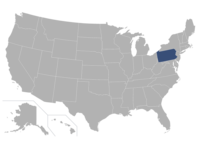
Harrisburg, PA