Legislative District 18 race pits financial adviser against AI strategist
Oct 22, 2026 | 2:48 pm ET
Description
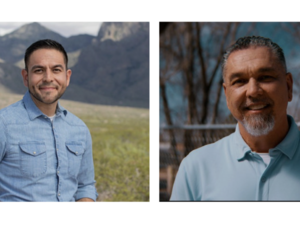
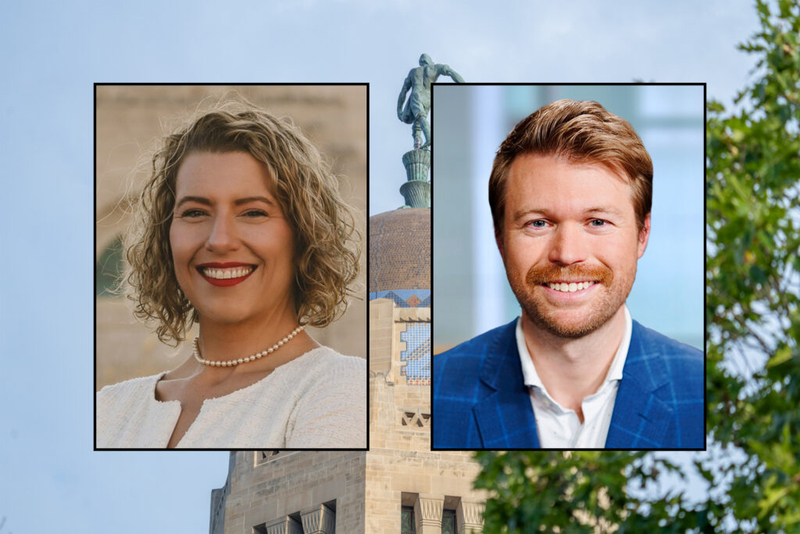
The 2026 candidates for Legislative District 18, from left: Jess Goldoni of Omaha and Taylor Royal of Bennington. State Sen. Christy Armendariz of Omaha declined to seek reelection. (Photos courtesy of the candidates/campaigns | Nebraska Capitol photo by Zach Wendling/Nebraska Examiner)
BENNINGTON — It was the crack of dawn when legislative candidate Jess Goldoni opened a listening session at a local cafe, fielding concerns ranging from data centers to technology overreach and tax-burdened startups.
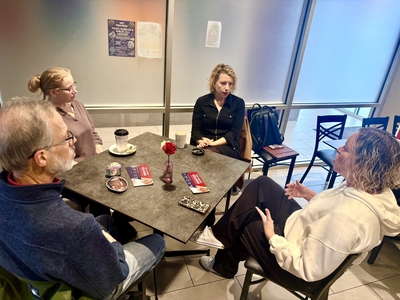
To the visitors who showed up at her Friday “coffee hours,” Goldoni underscored her background that includes co-founding a small business that educates clients on artificial intelligence capabilities. She’s studied AI risks and opportunities. If elected, she’d push to create a “special tech committee” to help guide the state’s use of such rapidly growing technologies that are triggering debates nationwide.
“The bench of technology experience is very thin in government right now,” said Goldoni, 43, who is facing off with Taylor Royal, 36, to represent District 18 in the Nebraska Legislature. “The policies we’re going to have to make — to protect our workforce, protect our kids — require that technology. But we’re not even asking the right questions.”
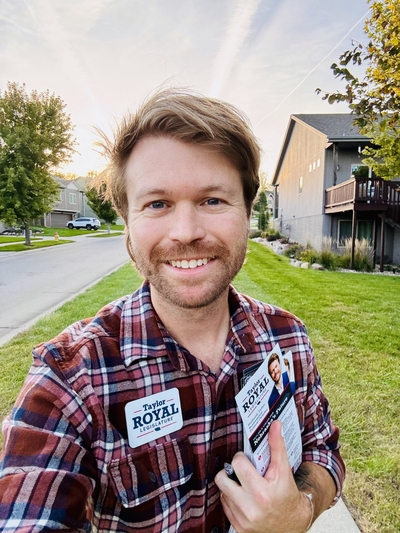
Meanwhile, opponent Royal knocked on his 13,000th or so door, touting a financial prowess he believes positions him to help rightsize the state budget and determine where Nebraska should invest and grow. Royal is a certified public accountant, financial adviser and co-owner of Royal Wealth Partners.
Nebraska’s projected deficit is $208 million by the end of the current budget period that wraps up next June. An $846 million deficit is also projected for the next biennium, which ends in June 2029.
“If there was ever a time where you’d want a CPA in office, I think now is that time,” said Royal.
Indeed, each of the District 18 candidates argues that their respective skill set and professional background they’d bring to the Nebraska Unicameral are more valuable to constituents and useful to growing the state’s economy.
Hot contest
The two contenders — she’s Democrat and he’s Republican — are in the final days of a hotly contested matchup, currently the third most expensive among legislative races on the Nov. 3 ballot. At last report, a total of about $600,000 had been raised, with Goldoni outpacing Royal by garnering about 61% of overall fundraising.
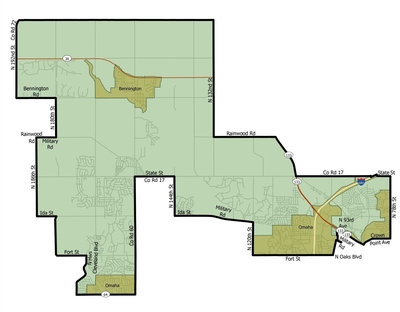
The winner will represent a north-central Douglas County legislative district that includes parts of northwest Omaha and Bennington. Viewed as among the most competitive and possible swing districts in the state, the gate flew open when incumbent state Sen. Christy Armendariz, a Republican, opted against running for a second four-year term.
Officially, the Nebraska Legislature is nonpartisan, and candidates’ political party affiliations won’t appear on the ballot.
Of roughly 41,000 people living in District 18, about 31,000 are eligible to vote, according to voter registration data from the Nebraska Secretary of State’s Office. Republicans outnumber Democrats about 12,500 to 9,700. A large chunk of the district, more than 8,100 voters, is registered nonpartisan.
Appeal to nonpartisan voters
Both Royal and Goldoni are seeking to appeal also to that independent voter pool.
Goldoni said she is “not afraid” to break rank with her political party.
“I’ve been told that I’m not liberal enough, that I’m not progressive enough. My answer to that is I’m representative of the district … they care about, ‘Can I buy groceries, can I fill my gas tank.”
Said Royal: “Hypothetically, I will likely agree with conservatives. At the same time, I’m not going to shoot down an idea because it didn’t come from a Republican, so to speak.”
In Royal’s case, fellow Republican Armendariz was among those nudging him to run for office. He said he admired her tenacity and negotiation expertise on the budget-writing Appropriations Committee.
The two diverge, however, on their approach to public education, he said. Armendariz championed state funding for the private education of kids in low-income households. Royal said his wife, Katie, is a public school educator who now stays at home to care for their two young children. He said he doesn’t support state funding for private education.
“I want to make sure we are going to fully fund public schools and maintain the gem of great public education we have in our state,” he said.
Royal said he supports increased access to child care subsidies — which he considers more of a “Democrat idea” that would have placed him on “that side of the table.”
Goldoni’s ‘ultimate fix’
Goldoni graduated from the University of Nebraska at Omaha with a degree in journalism and public relations advertising. For the past 20 years as a marketer, the Omaha native helped clients build businesses in industries ranging from finance to law, healthcare and agriculture. The company she co-founded last year is Nebraska AI.
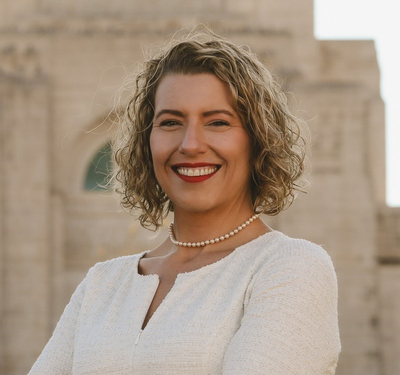
As a new lawmaker, she said, she’d hold coffee hours monthly in her district to hear concerns and ideas. Her priorities, she said, are to help find a structural fix to the state’s money woes and relieve taxpayer burden.
“We have to have serious tax reform and that starts with a full audit of all incentives, exemptions, programs, everything,” Goldoni said during an interview at Hay Jay Cafe, where on the past few Fridays she hosted the early morning constituent conversations.
She said she has personally knocked on roughly 12,000 doors, some of them twice.
The “ultimate fix” for Nebraska’s economic health, Goldoni said, is growing Nebraska’s population and industries. She’s an advocate for an expanded homestead exemption to help retain retirees and opposes using public funds for private schools.
We have to have serious tax reform and that starts with a full audit of all incentives, exemptions, programs, everything.
Goldoni believes her experience in teaching how AI and new technology can impact students and workplaces is one of the assets that sets her apart. Of large data centers, she said, they’re already here — including a Google plant near her house. Rather than a ban, she supports “resetting Nebraska’s rules for a new era.”
Key to establishing statewide standards, she said, is “having somebody in government that knows what big tech is trying to do, and can see it and protect us,” including by demanding transparency and water and rate protection.
This is Goldoni’s first run at a political office. She said she was encouraged by lawmakers including term-limited state Sen. Justin Wayne of neighboring District 13.
Boosting state allure
For Royal, his run for Legislature follows unsuccessful bids for Omaha mayor in 2017 and Nebraska treasurer in 2018.

The UNL graduate said he returned to his home state in 2015 from Texas, where he earned a master’s degree and worked for an international tax firm. He said he watched Fortune 500 ConAgra Foods pull its headquarters from Omaha, despite having benefited from previous state tax and economic incentives — and contrasted that to Texas growth he said was propelled by outreach strategies from its elected officials.
“It’s important that businesses here and outside know that Nebraska is open for business and that we have the best professionals willing to move at a pace that can … get that business through the door,” Royal said.
Asked about recent staff reductions within the Nebraska Department of Economic Development, and how he might respond as a lawmaker, Royal said he was not aware of all the dynamics but that it was “not a good look.”
It’s important that businesses here and outside know that Nebraska is open for business...
As reported last month by the Examiner, in less than a year and a half, at least 61 employees left the state agency charged with boosting economic development, with only two of those involuntary terminations. DED at the time had 69 full-time workers left.
If elected, Royal said, he’d work to make the state more affordable and alluring by focusing on property taxes, insurance costs, homestead exemption expansion as well as economic development tools.
He’d like to see Nebraska implement a rate rollback, a budget mechanism where local governments automatically lower their property tax rates when overall property valuations increase.
Royal recalled a campaign-trail comment that set the stage for a new lawmaker. He said a woman watching her grandkids told him: “Nebraska, it feels like it doesn’t want its old people and doesn’t have a place for its young people.”
“I was like, dang, that sounds spot-on, unfortunately.”
Lincoln, NE