New Mexico workforce participation at prepandemic levels but lags behind nearby states, report says
Oct 22, 2026 | 2:28 pm ET
Description
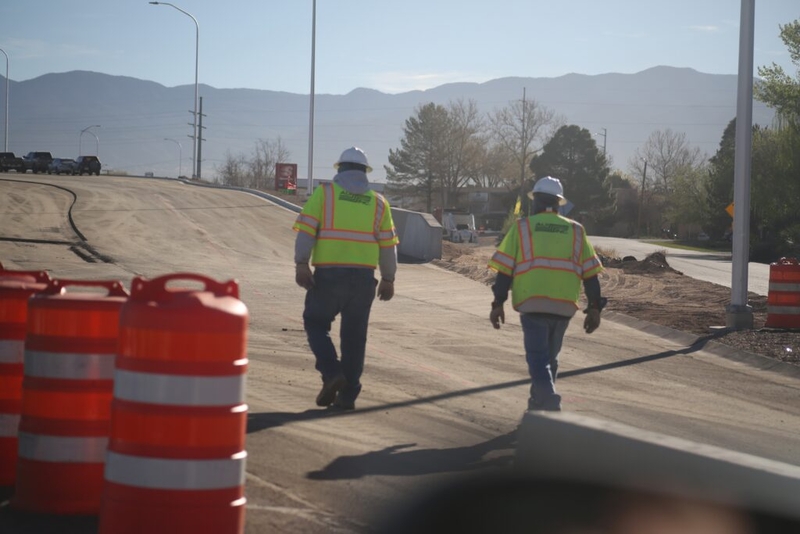
A new report from the New Mexico Department of Workforce Solutions surveyed more than 1,200 unemployed New Mexicans and found that the top barrier to entering the workforce is a lack of nearby jobs. (Danielle Prokop/Source NM)
New Mexico’s workforce participation rate has fully recovered to prepandemic levels but continues to lag behind neighboring states, according to a new report.
The state Legislature last fiscal year awarded the New Mexico Department of Workforce Solutions $750,000 to study the long-standing issue and identify practical solutions. The report, which Department of Workforce Solutions Secretary Sarita Nair presented to lawmakers on the interim Legislative Finance Committee Wednesday afternoon, distilled the department’s findings after surveying more than 1,200 unemployed New Mexicans.
“We tried to answer three questions,” Nair said. “Who is not participating in the labor force? How do New Mexicans experience the barriers to participation differently? And what could help people reengage with the labor force, how do we fix this?”
According to the survey, 58% of respondents said they are neither working nor seeking work. However, 60% reported participating in gig work, freelancing or cash-only work in the last year.
A lack of nearby jobs ranked as the most commonly listed reason for unemployment, according to the report. Caring for family, low wages, lack of skills or training, health issues and disabilities and housing instability were also high-ranking barriers to entry.
While the statewide workforce participation rate of 58% trails behind that of neighboring states and the national average of 61.8%, the new report found that some regions in New Mexico are faring much better. Portions of Albuquerque, for example, reported workforce participation rates of 69%. Northwest New Mexico, particularly a piece of San Juan County, posted the lowest rate at 48%.
The report also found that people with lower levels of education, particularly those who did not complete a high school diploma, have a significantly lower workforce participation rate.
“Clearly, rural economic development and remote work are going to be a big piece of the answers to these questions,” Nair said.
The Department of Workforce Solutions on Tuesday announced that New Mexico’s unemployment rate for September was 4.7%, above the national rate of 4.2%. Luna County had the highest unemployment rate of any New Mexico county at 10.9%, according to the department.
State lawmakers have grappled this year with how to fill gaps in New Mexico’s workforce. A summer report found that New Mexico outspends most states on public assistance programs but struggles to place participants in jobs. Another legislative report earlier this year found that some 32,000 young New Mexicans are neither working nor going to school. Recently, an interim legislative committee looked at an agricultural program in southern New Mexico that offers jobs to at-risk youth and wondered if the program could be replicated across the state in areas with high unemployment rates.
During her presentation, Nair pointed to efforts underway in other states as potential models to emulate.
In 2023, Minnesota established an “Indigenous Workforce Initiative,” which created a database to connect employers and Native American workers who face acute economic and employment disparities, she said. Pennsylvania created a “clean slate” program, which automatically seals certain criminal records after a waiting period, reducing the amount of paperwork job applicants with criminal histories need to complete.
State lawmakers asked Nair how state leaders can better address these problems. Sen. George Muñoz (D-Gallup) pointed to New Mexico’s historically high levels of reliance on social services like the Supplemental Nutrition Assistance Program.
He asked Nair how the state can serve people caught in the middle, who might only be able to attain a low-paying job but don’t want to work too many hours as it could jeopardize losing their SNAP benefits.
“It’s kind of a worker’s conundrum,” he said.
Nair in response pointed to the state’s Transition Bonus Program, which temporarily awards money to people who lose their Temporary Assistance for Needy Families benefits because their wages are too high.
“It’s been really successful. It helps people do things like fix their car so that they can reliably get to work,” she said. “Programs like that are probably the answer to some of your questions.”
Santa Fe, NM