Bill aims to study how self-driving vehicles can be integrated into Illinois transit
Oct 22, 2026 | 11:29 am ET
Description
The study would look at how driverless vehicles could be used at the beginning and end of mass transit systems.
CHICAGO — Legislation to test autonomous vehicles in Illinois may come up again in the November veto session, though the lead sponsor of a pilot bill says there’s still a lot of work to do.
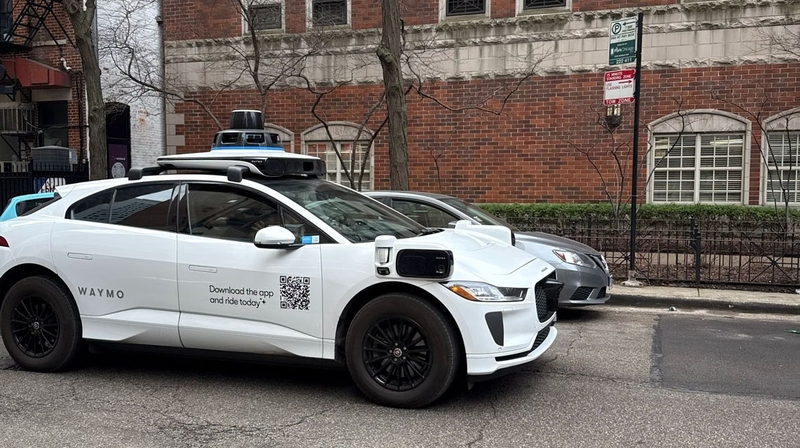
Autonomous vehicles, or AVs, are motor vehicles that have an automated driving system. Currently, AVs aren’t available for purchase, but robotaxis operate in places across the country, including San Francisco, Arizona, and Austin, Texas.
Driverless AVs are not yet authorized in Illinois. But state Rep. Kam Buckner, D-Chicago, has called for a formal framework, through House Bill 4663, to test and deploy self-driving cars in the state. The bill thus far has been stalled in the General Assembly.
Buckner has also urged the newly founded Northern Illinois Transit Authority, or NITA, to study how autonomous vehicles could work alongside the existing public transport network, if they’re made legal.
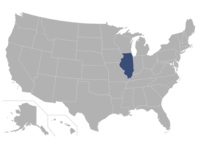
Buckner’s bill would create the Autonomous Vehicle Pilot Project Act, which would restrict testing to counties with over a million residents, as well as Sangamon County or the Metro East region of Madison, St. Clair and Monroe counties.
But this legislation will not authorize AVs on the streets immediately, Buckner said.
“What we’re asking for is a very controlled program with a certain number of cars on the road,” said Buckner. “We can actually take that data and figure out what’s the best way to implement the policy.”
Buckner also said the legislation aims to determine Illinois’ specific needs through research and proper implementation.
“I don’t want Illinois to take everybody else’s word for it. I want Illinois to actually do the work, to look through the processes and get the political processes in place, and to walk away and say what we did when no other state did, which is study this intensely, intentionally, and figure out what the way forward was,” Buckner said.
Jim Merrell, advocacy director with the Active Transportation Alliance in Chicago, said Illinois should allow local governments to pass regulations on AVs beyond what’s in state law. This differs from House Bill 4663, which he said preempts local authority in some ways, meaning state laws override local ones.
“We think that’s something that’s going to be really important for a city like Chicago to be able to regulate how and where autonomous vehicles are allowed to operate to make sure that they’re not interfering with other infrastructure or transit usage like bus stops or bike lanes,” Merrell said.
The Active Transportation Alliance pointed to another stalled piece of legislation in the General Assembly — House Bill 4789 — that would establish the Automated Driving Systems Development Act, which would introduce stronger implementation measures and create a review committee within the Illinois Department of Transportation.
The potential impacts
One issue AVs can solve in Illinois is the first- and last-mile problem, especially in neighborhoods where the last station of public transport is far from passengers’ homes, Buckner said.
“People who live on that side of the South Side, which is where I grew up, don’t have direct access to the transit hubs, right, and so we’re looking to change that,” Buckner said.
Merrell said there are more efficient ways to solve this problem, like expanding transit service, improving bus reliability, and creating bike lanes.
“Inside the city, you still would run into that space efficiency issue, while there are plenty of other alternatives that are much more efficient and sustainable that are already working,” Merrell said.
Although public transport is still the goal, it takes time to build, Buckner said. For instance, the Red Line Extension project, which would extend the CTA line to 130th Street in South Chicago, won’t be completed until 2030.
“In the meantime, we got to have ways for folks to get from their communities, specifically communities of color that are disconnected to these systems,” Buckner said.
But autonomous vehicles at high-congestion points may worsen traffic, said Dany Robles, senior legislative director at the Illinois Environmental Council.
“It really comes down to, how are they integrated into more congested areas so that we’re not continuing to exacerbate those congestions and pollution from other vehicles around them,” said Robles.
For the Illinois Environmental Council, the approach to analyzing AVs includes several angles, Robles said.
“A lot of AVs are electric vehicles — they’re pulling resources from renewable energy, but then there’s a lot of emerging concerns too surrounding the loss of jobs in the vehicle space or in the shared driver space,” Robles said.
This is the reason why some labor unions have opposed the Autonomous Vehicle Pilot Project Act. Among them is Service Employees International Union Local 1, which serves five Midwestern states.
Bailey Koch-Farwana, a union spokesperson, said that according to their economic analysis, every AV that hits the road replaces four human drivers. This is because AVs can operate 24/7 and do not need breaks.
But there are ways to balance this outcome, Koch-Farwana said.
“There’s a just transition that could happen, you know, for every driver that leaves the app, like the Uber or Lyft app, then a (driverless car) can enter the road,” Koch-Farwana said. “Right now, there’s nothing in that legislation that regulates that or even cares about the working people behind it.”
Buckner responded to criticism that AVs will take jobs away from rideshare drivers by saying that everyone needs to be part of the conversation as researchers explore how to implement these vehicles efficiently in the future.
On the other hand, Koch-Farwana said labor unions and rideshare drivers, who have been unionized since August, still haven’t been invited to the table.
What are the next steps?
Buckner, in his letter to NITA, pointed to the Bay Area as a potential model for integrating AVs into public transit.
The San Francisco Bay Area has a program that incentivizes autonomous vehicles to solve the first- and last-mile problem. Passengers who use Waymo, a company owned by Google that operates robotaxis, and go on to public transport within two hours get a $2.85 credit for future Waymo trips, according to Streetsblog San Francisco.
Buckner also said the state does not have to follow this exact example of regional planning.
“I am not going into this with my mind made up about what I want. The only thing I want is data,” said Buckner. “I want people to be able to utilize them (AVs) and see if they make sense for them. And I want data for it to come back and then make an informed decision.”
For research on potential AV implementation to begin, House Bill 4663 needs to clear the House Rules Committee, be assigned to a substantive standing committee, like the Transportation or Executive Committee, pass the Full House, and repeat the process in the Senate.
When asked whether the push could occur during the November veto session, Buckner said he is respecting the legislative process.
“I hope so, but I’ve also said that I am not interested in rushing this. We’re still having conversations and still negotiating,” Buckner said. “And when it’s ready to go, we’re going to go full speed.”
Capitol News Illinois is a nonprofit, nonpartisan news service that distributes state government coverage to hundreds of news outlets statewide. It is funded primarily by the Illinois Press Foundation and the Robert R. McCormick Foundation.
Springfield, IL